


Painted Landscape Mirror
These painted landscape mirror pieces bring quiet colour and depth to a room, catching the light across oil-painted panels and gilt frames.
Painted Landscape Mirror
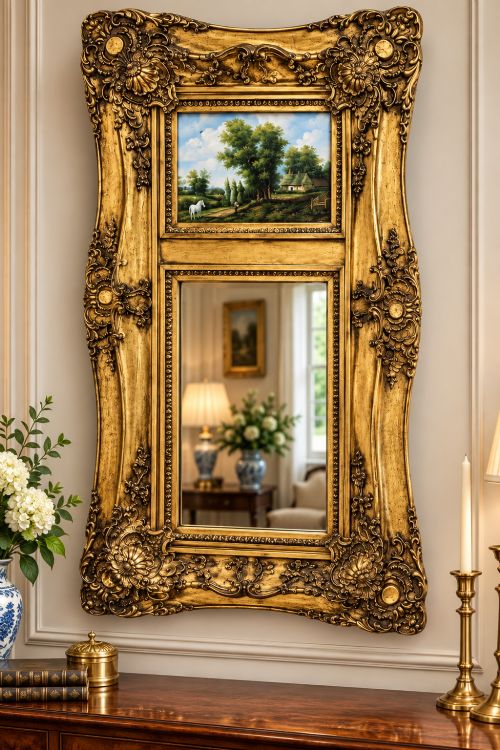
A painted landscape mirror combines a reflective glass plate with a decorative scene, often set above the main glass in a trumeau arrangement. Buyers seeking a painted landscape mirror will find wall mirrors, overmantel mirrors, and pier mirrors configured in this traditional manner.
The pieces appearing on this page span several stylistic periods, including Regency, Georgian, and the nineteenth century. Makers applied oil paint to canvas, wood, or reverse glass panels, known as eglomisé, to depict pastoral or architectural subjects above the mirror plate.
Overmantel mirrors and pier mirrors form the primary architectural options for larger interiors, whilst smaller wall mirrors suit tighter spaces. Each format integrates the painted scene directly into the framing structure, whether carved in giltwood, composite material, or painted wood.
How they were made
Craftsmen built the frames using timber, gesso, and giltwood, applying carved detail and parcel gilt finishes to achieve classical proportions. The surfaces received layers of paint or gold leaf, particularly within Regency and Georgian workshops.
Artists painted landscapes directly onto panels of wood or canvas, or used reverse glass painting techniques for eglomisé sections. These painted elements were then fitted securely into the upper portion of the mirror frame above the glass plate.
Listings feature eighteenth and nineteenth-century forms including Regency, Georgian, and French Empire styles.
What varies in quality
The finesse of the painted panel dictates the visual success of the piece, ranging from hurried decorative work to detailed oil painting. Brushes captured foliage and skies with varying degrees of precision, influencing how the artwork holds the eye.
Frame construction and carving depth set the better examples apart from simpler items. Crisp moulding, well-applied gesso, and harmonious proportions between the painted scene and the mirror plate define superior making.
The Painted Landscape Mirror Glossary
- Trumeau mirror
- A wall mirror featuring a painted or carved panel set above the glass plate, often designed to fit between windows.
- Eglomisé
- A technique involving cold painting and gilding on the reverse side of glass, producing a reflective and glossy finish.
- Giltwood
- Timber that has been coated in fine gold leaf over a prepared gesso ground, standard in Regency and Georgian frames.
- Pier mirror
- A tall, narrow mirror designed to hang on the wall space between two windows, frequently paired with a console table.
- Overmantel mirror
- A large horizontal mirror specifically scaled to hang above a fireplace mantelpiece.
Painted Landscape Mirror: Frequently Asked Questions
How do I hang a heavy overmantel mirror?
Heavy overmantel mirrors require secure wall fixings anchored directly into masonry or substantial timber studs to bear the considerable weight safely.
Professional installation is strongly advised for grand scale pieces to ensure the frame remains stable against the wall surface.
Where should I place a pier mirror?
Pier mirrors work best on narrow wall sections, particularly between two windows, where they reflect natural light back into the room.
Positioning them at eye level enhances the sense of space and draws attention to the vertical proportions of the wall.
How do I clean the painted panels?
Painted panels require gentle dusting with a dry, soft cloth to avoid disturbing the oil paint or canvas surface over time.
Liquid cleaners must be kept away from the painted sections and eglomisé glass to prevent moisture damage to the old materials.