

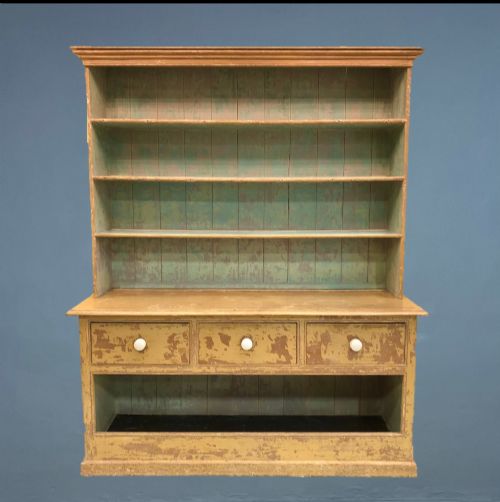

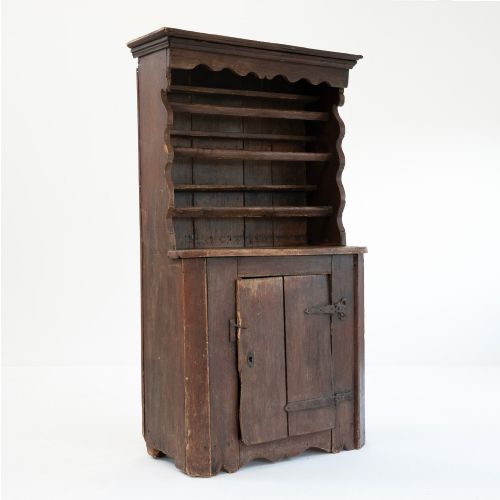


Painted Kitchen Rack
A painted kitchen rack brings rustic utility into domestic spaces, offering open display and storage across diverse regional forms.
Painted Kitchen Rack
A painted kitchen rack encompasses an array of storage furniture, primarily appearing as dressers, wall shelves, baker's racks, and spoon racks designed for culinary spaces. Pieces span the eighteenth century through the early twentieth century, originating from English, Irish, French, Danish, Dutch, and Alpine traditions.
The most common formats found here are pine dressers with upper display racks and wall-mounted shelves, often finished in period paint colours. Regional vernacular styles dominate the selection, including West Country, Georgian, and French provincial examples.
Domestic utility defines these objects, which served historically to store and display crockery, provisions, and kitchen utensils. Scale varies widely from miniature furniture to large nine-foot baker's racks and substantial farmhouse dressers.
How they were made
Construction relies heavily on pine and painted wood, shaped by regional carpenters using traditional joinery appropriate for domestic furniture. Metal elements such as brass, iron, wrought iron, and steel appear in industrial and field kitchen variants.
Surface treatments involve historical paint applications, including specific heritage colours like Pompeian Ash, alongside distressed metal finishes on utilitarian pieces. Timber structures are joined to support heavy plate displays, pot boards, and open shelving.
Painted Kitchen Rack Retail Price Guide 2026
Typical asking prices for painted kitchen rack among the pieces listed under this phrase on Sellingantiques today, from the lower quarter to the upper quarter. They describe what is for sale here now, not the wider market.
Materials documented across the inventory include pine, painted wood, wrought iron, brass, steel, and general metal.
What varies in quality
Gradations in quality rest upon the integrity of the original construction and the preservation of early paint surfaces. Pieces retaining authentic regional character and untouched structural timber stand apart from heavily altered examples.
Proportion and decorative restraint dictate the distinction between fine vernacular pieces and standard utilitarian storage. The sophistication of joinery and the subtlety of regional detailing distinguish workshops across English, French, and Alpine traditions.
Dubois of Lyon
The Painted Kitchen Rack Glossary
- Pot board
- A low slatted shelf fitted near the floor of a dresser, historically used for storing heavy pots and pans. This lower tier anchors the larger case pieces in country kitchens.
- Vaisselier
- A traditional French term for a plate rack or dish dresser designed for displaying tableware. These pieces combine open upper shelving with lower enclosed storage or drawers.
- Vernacular
- Architecture and furniture built by local craftsmen using regional materials and traditional methods rather than academic architectural designs. West Country and Alpine examples display these localized building traits.
- Baker's rack
- A tall, open shelving unit originally utilised by bakers for cooling loaves and storing ingredients. Industrial variants incorporate heavy iron and steel frameworks.
- Spoon rack
- A narrow wall-mounted hanging rack featuring notches or small shelves specifically arranged to display spoons upright. Dutch examples often display decorative carving alongside functional storage.
Painted Kitchen Rack: Frequently Asked Questions
What is a painted kitchen rack used for?
These racks provide open storage and display for kitchenware, ceramics, and provisions, continuing their historical domestic function.
In modern interiors, they serve as focal points for organising tableware while adding textural warmth to dining and kitchen areas.
How do I identify an 18th-century piece?
Eighteenth-century examples typically display hand-planed surfaces, pegged joinery, and timber ageing consistent with early regional construction.
Details such as pot board bases and vernacular proportions set these older pieces apart from later nineteenth-century adaptations.
Where did regional styles originate?
Regional styles developed according to local timber availability and domestic customs across England, Ireland, France, Denmark, and the Alps.
West Country, Alpine, and French provincial pieces each utilise distinct structural layouts and paint treatments unique to their localities.
How should I care for painted wood?
Painted surfaces benefit from gentle dusting with a dry or slightly damp cloth, avoiding harsh chemical cleaners that strip historic finishes.
Maintaining stable room humidity prevents timber movement and protects the integrity of both the pine structure and the paint layer.