





Painted French Credenza
A painted french credenza brings continental elegance and practical storage to a room through decorative surfaces and stone tops.
Painted French Credenza
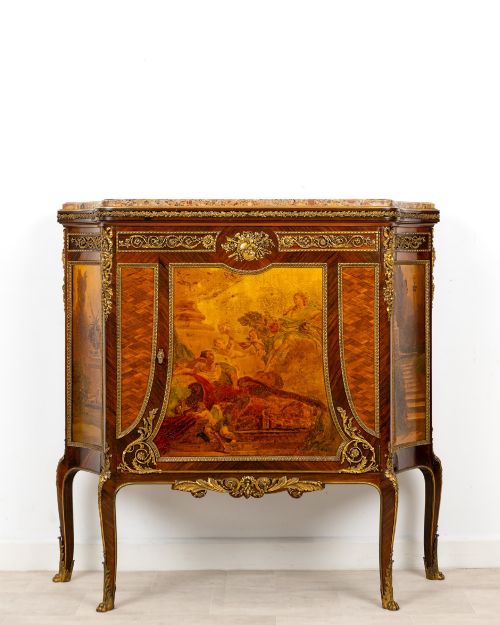
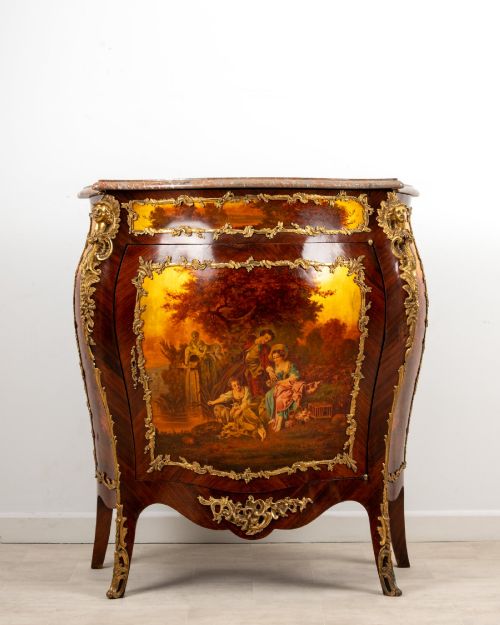
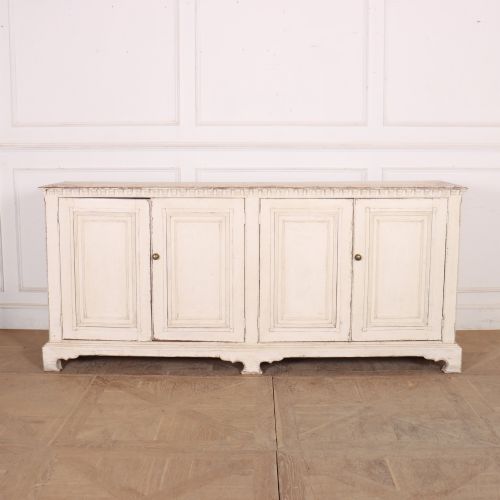
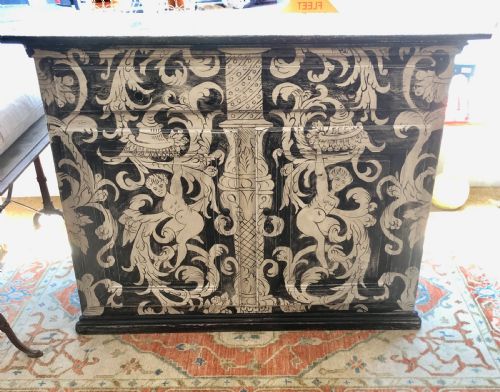
When you search for a painted french credenza, you encounter a variety of side cabinets, sideboards, buffets, and commodes originating from periods such as the eighteenth, nineteenth, and early twentieth centuries. These pieces serve as functional storage furniture designed with decorative painted finishes.
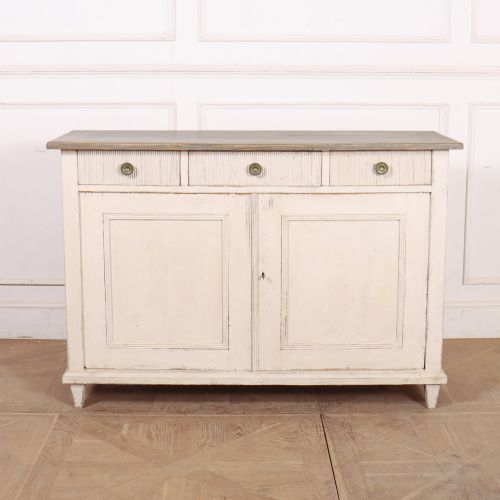
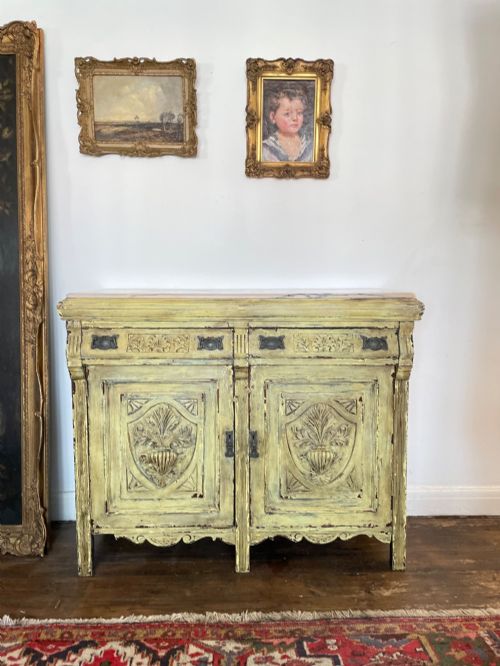
The selections available range from French Provincial and Louis XV Revival styles to Italian Neoclassical and French Chateau designs. Most examples encountered on this page date from the nineteenth and early twentieth centuries, featuring wood construction finished with paint.
Forms vary from compact side cabinets and demi-lune commodes to larger enfilades and breakfront sideboards. Many incorporate marble tops, glass panels, and brass or ormolu mounts alongside their painted decoration.
How they were made
Wood serves as the primary structural material, incorporating timber such as walnut, rosewood, kingwood, and satinwood beneath the painted surfaces. Artisans applied hand-painted finishes directly to the wood or created specialised decorative panels using techniques like Vernis Martin.
Many cabinets incorporate fitted marble tops in shades such as pink, adding weight and a smooth display surface to the wooden base. Metal elements including brass and ormolu mounts provide structural accent and decorative detail around doors, corners, and mounts.
Painted French Credenza Retail Price Guide 2026
Typical asking prices for painted french credenza among the pieces listed under this phrase on Sellingantiques today, from the lower quarter to the upper quarter. They describe what is for sale here now, not the wider market.
Materials recorded across the selection include kingwood, satinwood, rosewood, walnut, marble, and ormolu.
What varies in quality
The refinement of the painted decoration distinguishes finer pieces from simpler utilitarian versions, with detailed brushwork and pictorial scenes commanding greater attention. The presence of specialised techniques like Vernis Martin finishes elevates the standing of a cabinet.
Quality also depends on the integration of supplementary materials, such as heavy marble tops, cast ormolu mounts, and intricate brass hardware. The structural joinery of the underlying wood carcass and the preservation of the original painted surface dictate the overall standard of the piece.
The Painted French Credenza Glossary
- Vernis Martin
- A simulated Japanese lacquer finish developed in eighteenth-century France by the Martin brothers. It involves multiple layers of translucent varnish over painted decoration.
- Ormolu
- Gilded bronze used for decorative mounts, feet, and key escutcheons on fine furniture. It provides a bright metallic contrast to wood and painted surfaces.
- Enfilade
- A long dining room sideboard or buffet designed with multiple doors in a row. These storage units often feature painted panels and marble tops.
- Demi-lune
- Half-moon shaped furniture, commonly applied to small side cabinets and commodes designed to sit flush against a wall.
- Commode
- A low French chest of drawers or cabinet with doors. These pieces frequently incorporate marble tops and decorative painted finishes.
Painted French Credenza: Frequently Asked Questions
What is a french credenza?
A French credenza is a decorative side cabinet or storage unit featuring continental styling, often finished with paint and topped with marble.
These pieces function as serving surfaces, display units, or storage consoles in dining rooms and living spaces.
How do I identify the period?
Dating relies on construction methods, hardware, and stylistic indicators associated with specific eras like the nineteenth century or the Edwardian period.
Examining the underlying wood types, the wear of the paint, and the casting of any ormolu mounts helps determine age.
Are marble tops original?
Many nineteenth and twentieth-century French cabinets were designed with fitted marble tops to provide a durable and decorative surface.
Matching the stone type and edge profile to the style of the cabinet helps confirm originality.
Where were these cabinets used?
Historically, these sideboards and credenzas stood in dining rooms, salons, and hallways for storing tableware and displaying decorative objects.
Today, they adapt easily to modern interiors as media consoles, hallway storage, or statement side tables.