


Painted Farmhouse Kitchen Table
A painted farmhouse kitchen table brings working character to a room, offering sturdy timber and time-softened pigment ready for daily meals.
Painted Farmhouse Kitchen Table
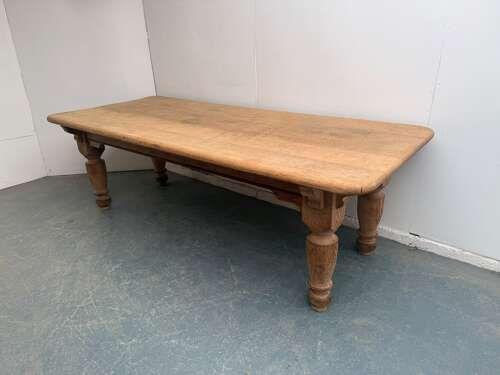
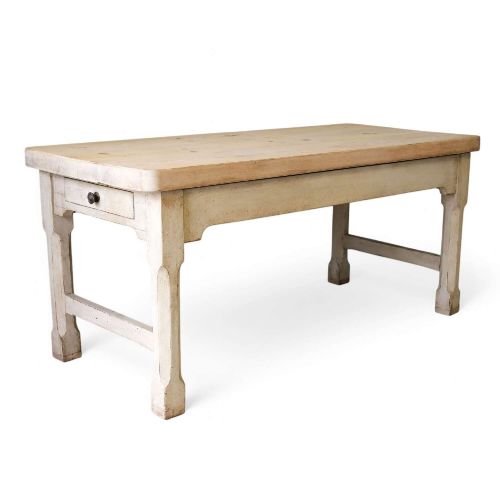
A painted farmhouse kitchen table unites utilitarian function with domestic charm, serving as the central work surface for preparation and dining. When searching for a painted farmhouse kitchen table, buyers encounter nineteenth-century examples spanning English, French, Welsh, and Scandinavian origins. These pieces range from compact drop-leaf formats to expansive refectory and harvest tables seating many guests.
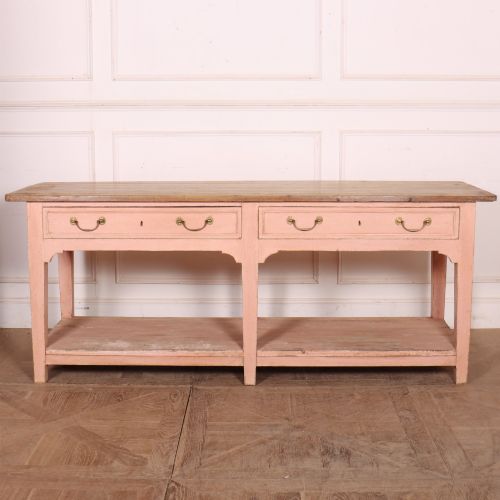
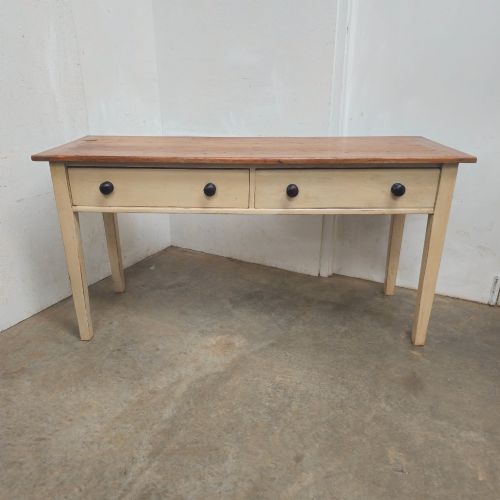
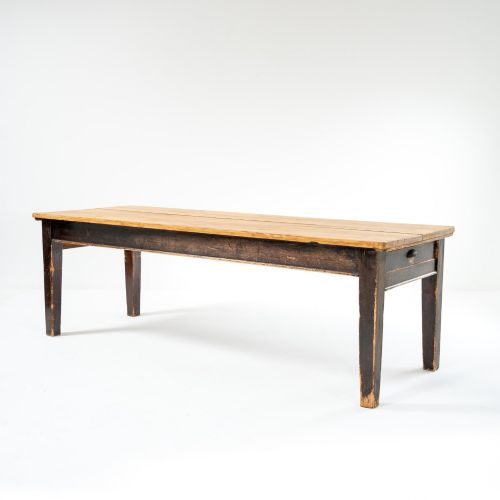
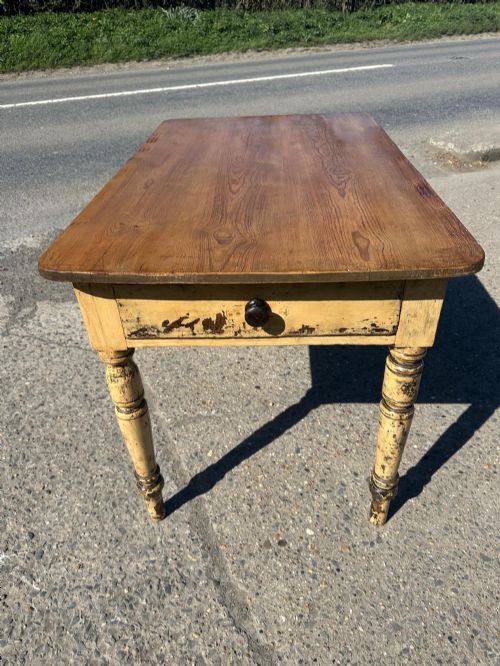
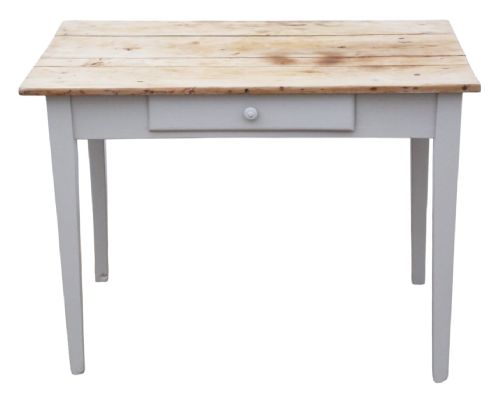
The standard version met on this page is constructed primarily from pine, featuring a scrubbed or natural wood top paired with painted legs, bases, or aprons. Many incorporate practical additions such as drawers for utensils or lower potboards for storage. Styles lean towards rustic farmhouse, country house, and vernacular traditions shaped by regional needs.
How they were made
Makers relied principally on solid pine, oak, and pitch pine for structural stability and thick plank tops capable of enduring heavy use. Frames were joined using traditional carpentry techniques, often supporting cleated ends or X-framed trestles on tavern variants.
Surfaces received finishes such as layers of historic paint, Falu red, or distressed pigments, while working tops were left bare to withstand repeated scrubbing. Iron and brass hardware occasionally appear on drawers and serving attachments.
A stubborn patch of old Falu red paint tells the quiet story of a Swedish kitchen warmed by generations of winter stews.
What varies in quality
The distinction between tiers rests upon the authenticity of the surface finish and the integrity of the underlying timber. Pieces retaining original paint layers command greater interest than those with later or stripped applications.
Proportion and scale also dictate worth, as exceptionally long boards, unaltered potboards, and untouched vernacular forms represent superior craftsmanship from their respective periods.
The Painted Farmhouse Kitchen Table Glossary
- Potboard
- A lower open shelf fitted beneath the table top, traditionally used for storing pots and kitchen utensils. This feature is frequently seen on dresser bases and server variants.
- Scrub-top
- A solid wooden surface left unpainted and cleaned repeatedly with water and sand, producing a pale, weathered grain. This finish allowed bakers and cooks to prepare food directly on the timber.
- Refectory table
- An elongated dining table originally designed for communal meals in large halls. Nineteenth-century country interpretations utilise this long format for domestic farmhouse kitchens.
- Falu paint
- A traditional deep red Swedish paint mixture derived from copper mine waste. It provides a durable matte finish on Scandinavian country furniture.
- Cleated ends
- Wooden battens fixed across the ends of plank table tops to prevent warping and splitting. This method accommodated the natural expansion and contraction of solid timber.
Painted Farmhouse Kitchen Table: Frequently Asked Questions
How do I clean a scrubbed pine top?
Scrubbed pine surfaces respond best to warm water, mild soap, and a stiff brush moved along the grain. Avoid harsh chemical cleaners that strip the natural character from the aged timber.
Allow the wood to dry thoroughly after washing to prevent moisture damage. Regular gentle maintenance preserves the pale, weathered texture expected on authentic kitchen tables.
Are these tables suitable for daily dining?
These tables were built for heavy domestic labour and daily meals, making them exceptionally durable for modern use. Solid plank tops and sturdy frames accommodate regular family gatherings without difficulty.
Using mats and coasters helps protect the historic timber from heat and moisture rings. The existing wear and distress only absorb further marks of daily life gracefully.
What is the difference between a harvest table and a refectory table?
Harvest tables generally offer lighter construction intended for seasonal gatherings and easy movement around the farmhouse. They often feature simple turned legs and pine plank tops.
Refectory tables provide a longer, narrower profile with substantial framing and structural stretcher bases. Both served central roles in country kitchens but fulfilled slightly different spatial needs.
How can I tell original paint from later coats?
Original paint shows natural wear patterns, integration with the underlying wood, and subtle craquelure accumulated over decades. Subsequent layers often reveal contrasting colours beneath chips or around joints.
Examine the texture and depth of the pigment under natural light to assess the age of the finish. Multiple historical layers frequently indicate long periods of domestic use in country homes.