

Painted Display Vitrine
A painted display vitrine is a glazed cabinet designed to showcase fine objects, bringing colour and structure to a room.
Painted Display Vitrine
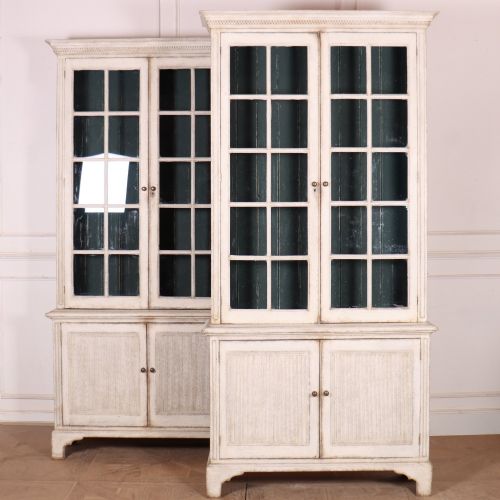
A painted display vitrine serves primarily to exhibit porcelain, glassware, and small collections behind protective glass panels. These pieces combine utilitarian storage with decorative presence, often acting as the focal point of a formal room.
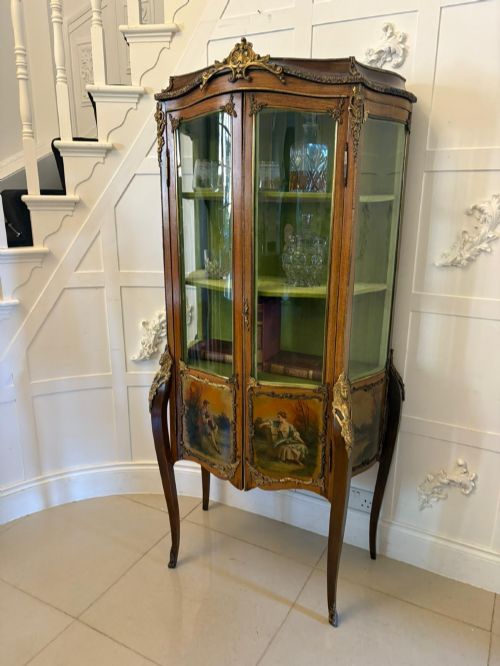
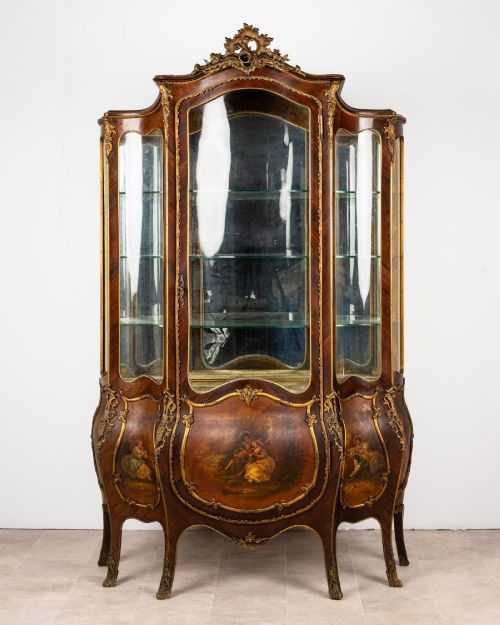
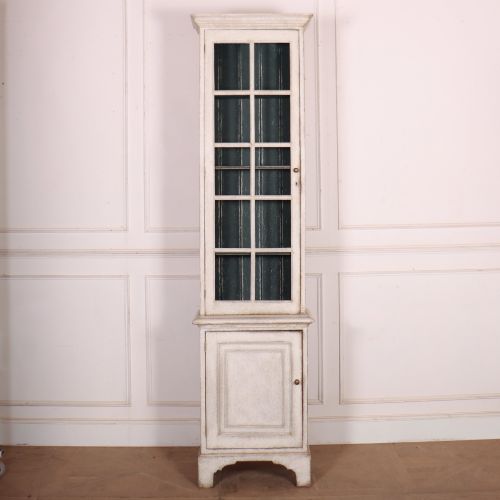
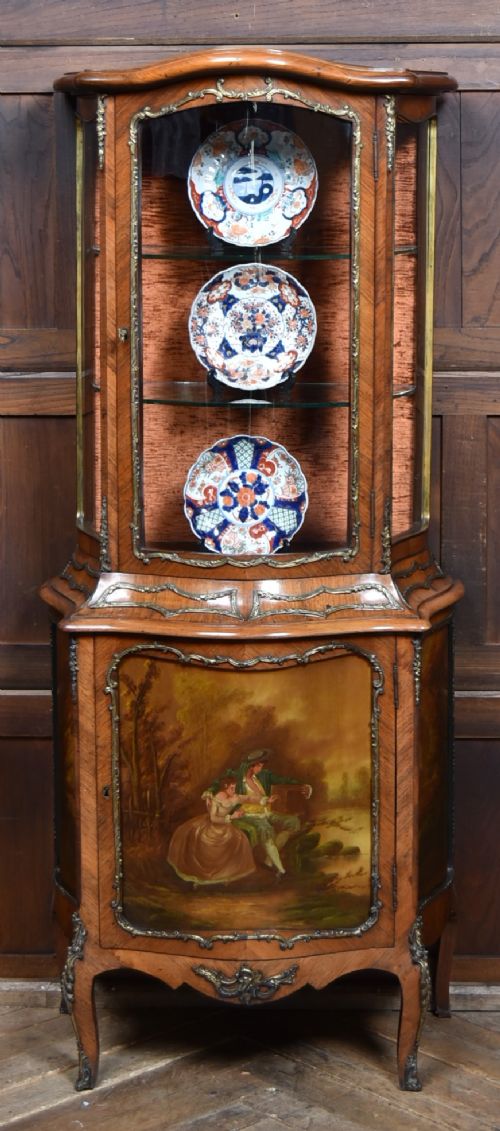
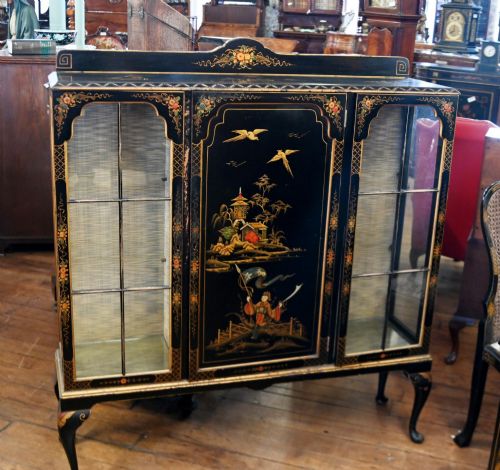
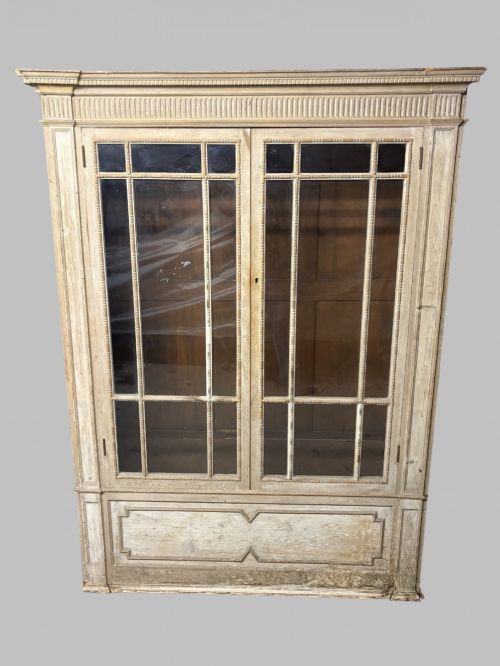
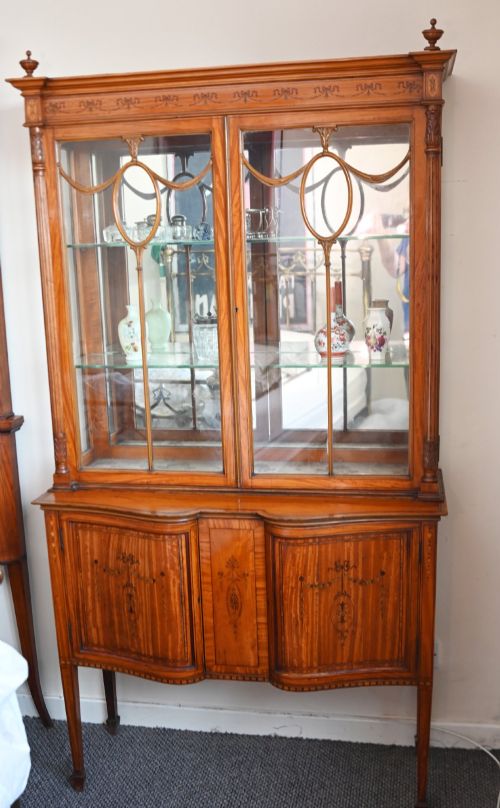
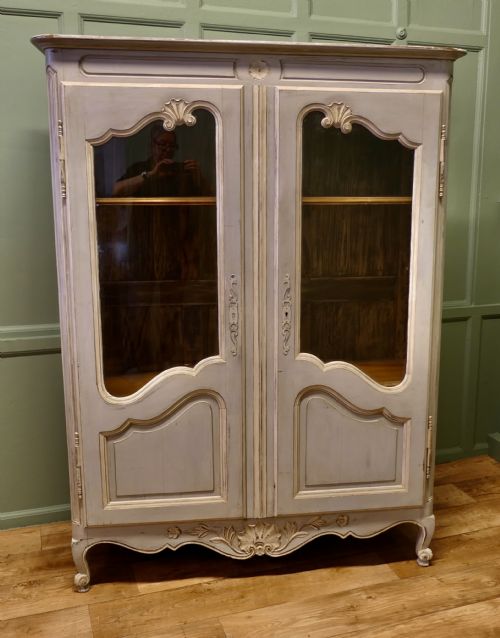
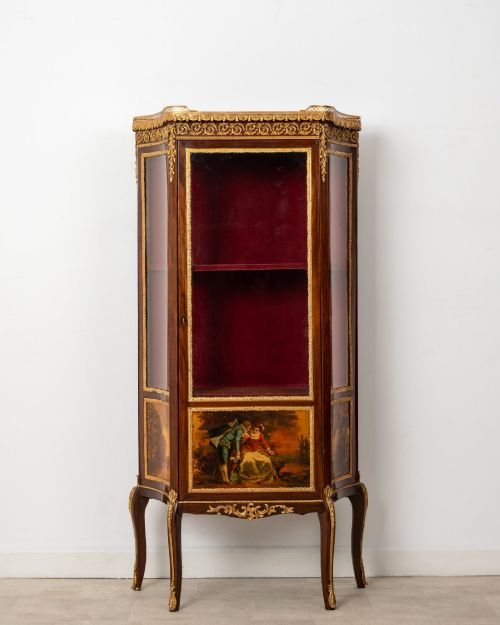
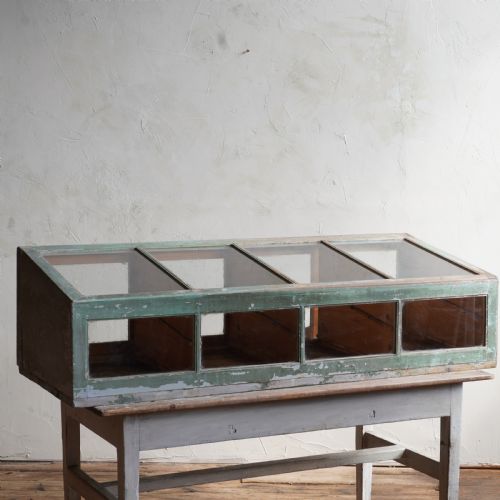
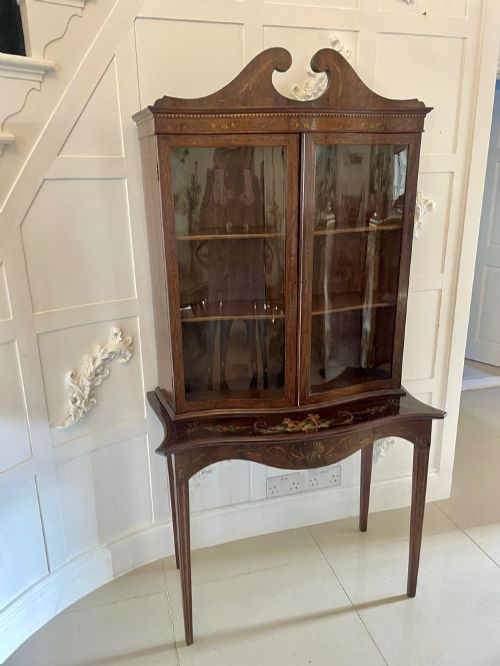
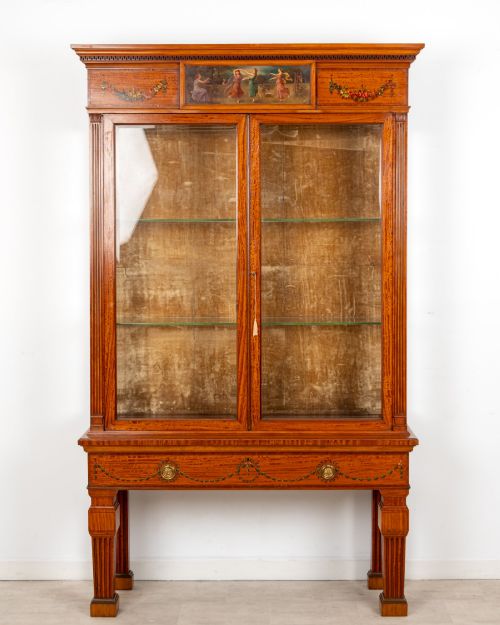
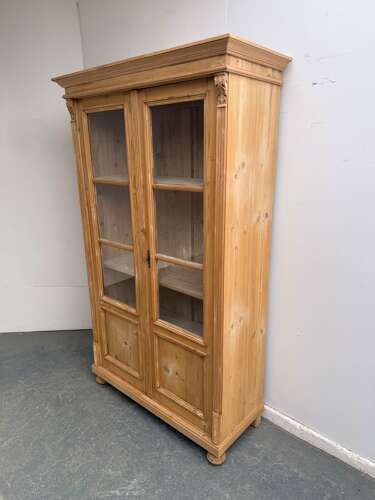
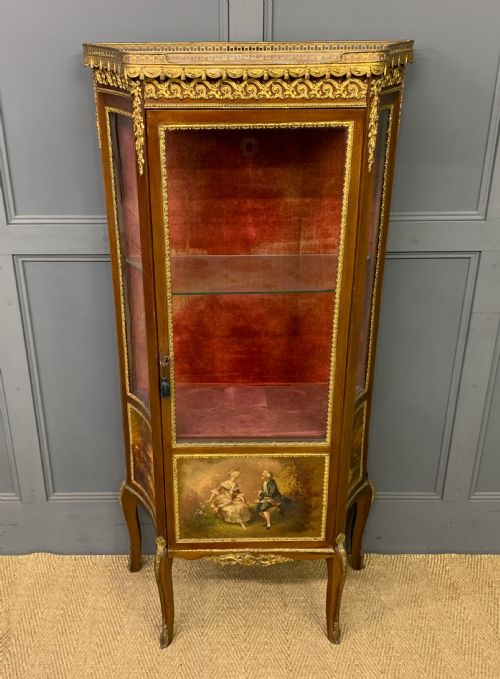
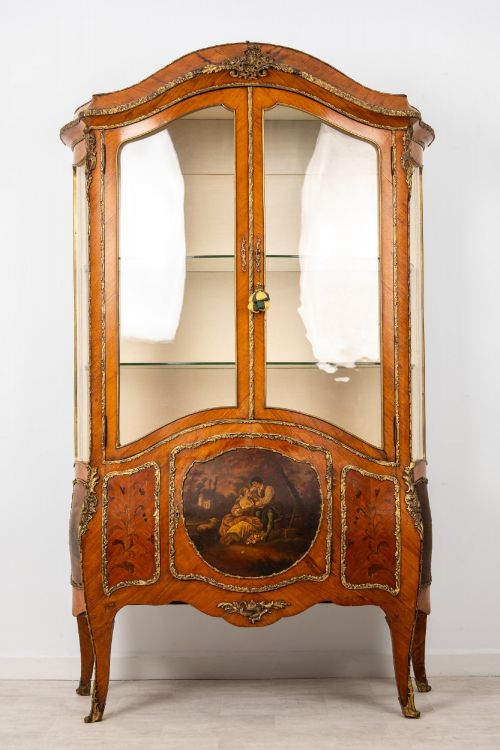
The varieties seen here range from French Rococo Revival pieces adorned with narrative painted panels to straightforward Edwardian satinwood cabinets and rustic pine cupboards. French examples frequently incorporate serpentine fronts and gilt bronze mounts, while English pieces lean towards restrained satinwood or mahogany frames.
Origins span across the eighteenth, nineteenth, and early twentieth centuries, with a strong representation of nineteenth-century French production and Edwardian English craftsmanship. Buyers frequently encounter glazed bookcases and wall-hanging vitrines alongside free-standing floor cabinets.
Materials and Construction Methods
Cabinet makers utilised foundational timbers such as mahogany, kingwood, and satinwood, often applying decorative paint directly onto the wood or employing Vernis Martin techniques to mimic traditional lacquer. Ormolu mounts and marble tops frequently complete the construction of French revival pieces.
Glazing techniques involve curved or flat glass panels fitted securely into wooden frames to allow maximum light penetration onto the internal shelves. Painted decoration ranges from delicate floral motifs on satinwood to figurative pastoral scenes on lower cabinet panels.
Painted Display Vitrine Retail Price Guide 2026
Typical asking prices for painted display vitrine among the pieces listed under this phrase on Sellingantiques today, from the lower quarter to the upper quarter. They describe what is for sale here now, not the wider market.
Materials documented across the pieces include mahogany, kingwood, ormolu, marble, and painted pine.
Distinctions in Execution
The division between standard items and exceptional pieces rests upon the precision of the painted artwork and the integration of metal mounts. Finely executed Vernis Martin panels and hand-painted floral details demonstrate superior workshop standards compared to simpler surface decoration.
Structural harmony also dictates standing, where fluid serpentine lines and well-fitted marble tops show a higher degree of artisan skill. The weight and chasing of ormolu mounts provide a reliable indicator of the original workshop ambition.
Hampton & Sons·Jewell of Holborn
The Painted Display Vitrine Glossary
- Vitrine
- A glass-fronted cabinet designed for the display of curiosities and ornaments. These pieces typically feature glazed sides as well as doors.
- Vernis Martin
- A simulated Japanese lacquer technique developed in eighteenth-century France by the Martin brothers. It produces a glossy, translucent finish often decorated with pastoral scenes.
- Ormolu
- Gilded bronze applied as decorative mounts on furniture frames. The process involves mercury amalgamation or electroplating.
- Serpentine
- A curved shape consisting of a convex centre flanked by concave sides. This contour adds visual movement to cabinet fronts.
- Satinwood
- A durable, lustrous timber native to the tropics, frequently used for fine Edwardian and eighteenth-century English furniture.
Painted Display Vitrine: Frequently Asked Questions
What is a painted display vitrine?
A painted display vitrine is a glazed cabinet used for showing off objects while adding decorative colour to an interior space.
These pieces combine wooden frames, glass panels, and painted finishes to protect and highlight contents.
How were these cabinets used?
Owners used them to store and exhibit prized possessions like ceramics, glassware, and small ornaments away from dust.
The glass doors allowed guests to view the contents without handling them directly.
Where do these cabinets originate?
They originate from various European workshops, with significant numbers produced in France, England, and the Netherlands.
Stylistic influences range from Dutch Rococo to French Louis XV Revival and English Edwardian design.