





Painted Demi Lune Console
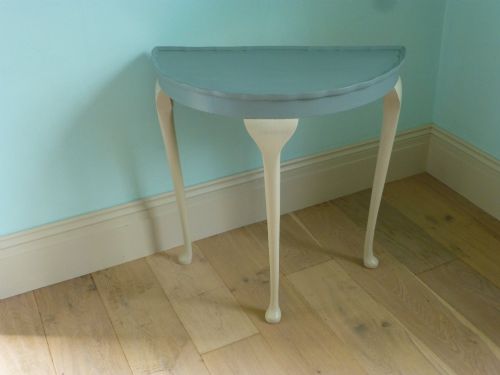
A painted demi lune console is a half-round wall table that brings architectural elegance to a hallway or drawing room.
Painted Demi Lune Console
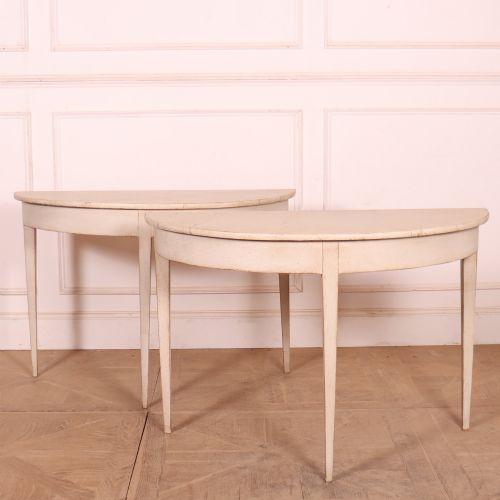
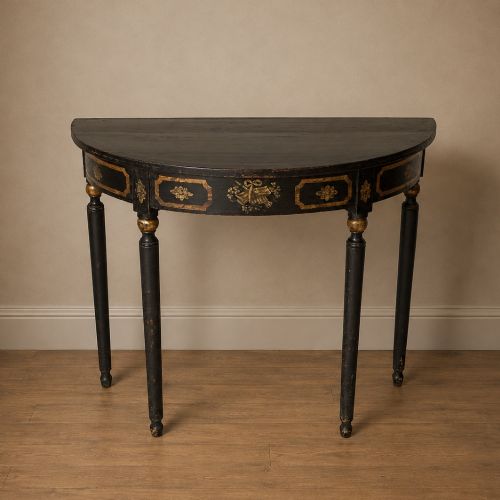
A painted demi lune console sits flat against a wall, offering a shallow surface that saves floor space while providing a striking focal point in a narrow hall or principal room. When you search for a painted demi lune console, you encounter pieces originating from the eighteenth century through to the early twentieth century, spanning English, French, and Swedish workshops.
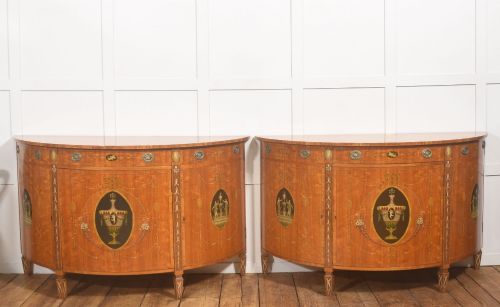
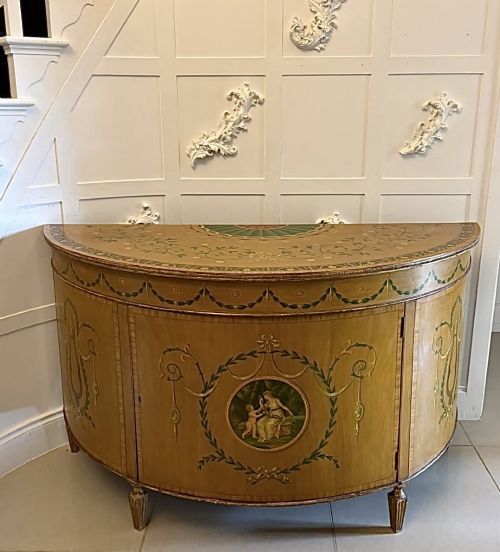
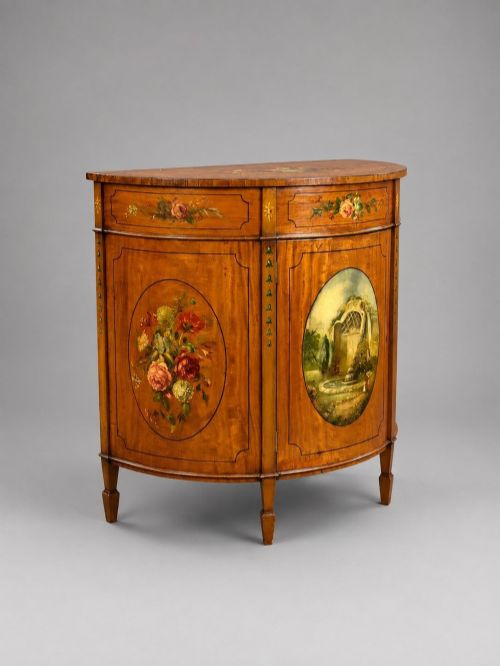
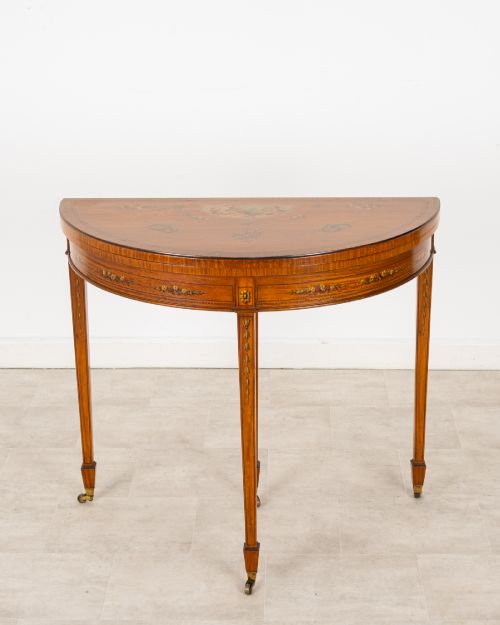
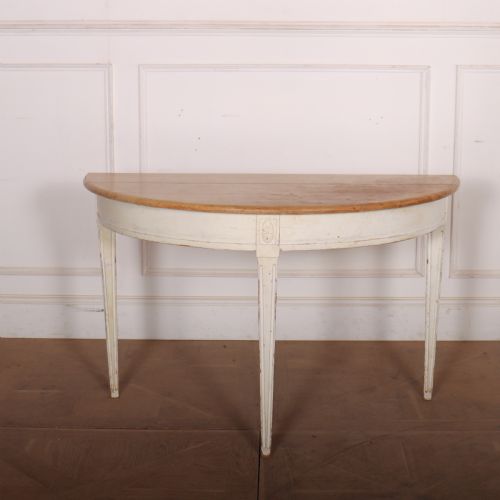
The most common formats on this page are console tables and side cabinets rendered in satinwood or timber with painted or decorated surfaces. Many examples date from the nineteenth century, including Sheraton Revival interpretations and Swedish painted pieces that rely on pale, luminous finishes.
Beyond simple console tables, the selection encompasses related half-round forms such as card tables, games tables, and commodes. These multi-functional pieces demonstrate how cabinetmakers adapted the characteristic semicircular footprint to serve as gaming surfaces or enclosed storage.
How they were made
Cabinetmakers constructed the frames primarily using timber, pine, and fine satinwood, building the curved aprons and legs to support substantial stone or wooden tops. Some examples incorporate rouge marble inserts or parcel gilt detailing to enhance the richness of the timber substrate.
Surface decoration relies on applied paint, hand-painted classical panels, and occasionally red lacquer or Chinoiserie motifs. Artisans built up these decorative layers on wood bases, often pairing painted finishes with inlaid details or giltwood enrichments.
Painted Demi Lune Console Retail Price Guide 2026
Typical asking prices for painted demi lune console among the pieces listed under this phrase on Sellingantiques today, from the lower quarter to the upper quarter. They describe what is for sale here now, not the wider market.
The listings show pieces spanning the eighteenth to the twentieth centuries, utilising satinwood, pine, and marble alongside painted and gilded finishes.
What varies in quality
Quality rests in the crispness of the joinery along the curved rail and the precision of the hand-painted panels. Finer examples display delicate, deliberate brushwork on satinwood, whereas lesser pieces rely on simpler, heavier timber grounds with routine surface decoration.
The integrity of the structural frame and the preservation of the original painted or parcel gilt surface dictate the standing of a piece. Tables retaining their authentic eighteenth or nineteenth-century decorative schemes command greater appreciation than those with later or heavy-handed overpainting.
The Painted Demi Lune Console Glossary
- Demi-lune
- Half-moon or semicircular in shape. This descriptive term identifies tables and cabinets designed to stand flush against a wall.
- Satinwood
- A hard, yellowish-brown timber with a natural sheen. It serves as a prime canvas for painted neoclassical decoration in eighteenth and nineteenth-century furniture.
- Parcel gilt
- Partially gilded with gold leaf. This technique highlights carved details, mouldings, or specific motifs against a painted background.
- Gustavian
- The Swedish interpretation of Louis XVI and neoclassical styles. It is characterised by pale painted finishes, restrained carving, and functional elegance.
Painted Demi Lune Console: Frequently Asked Questions
Where should I place a demi lune console?
These half-round tables work exceptionally well in entrance halls, narrow corridors, and reception rooms where floor space is at a premium. Their flat backs sit securely against the wall while the curved front softens the geometry of the room.
They also function effectively beneath mirrors or flanking doorways, providing a convenient surface for lamps, decorative bowls, or correspondence without obstructing movement through the space.
Are these tables sturdy enough for daily use?
While console tables are primarily designed to stand against a wall rather than endure heavy central weight, sturdy eighteenth and nineteenth-century examples are robustly built from timber such as pine and satinwood.
Many styles, including card tables and games tables, feature fold-out leaves supported by swing legs to create a stable surface for occasional use. Placing them on a level floor ensures the frame remains balanced and secure.
How do I care for painted wooden surfaces?
Dust painted and satinwood surfaces regularly with a soft, dry cloth to prevent the accumulation of grit. Avoid using harsh chemical cleaners, modern furniture polishes, or abrasive cloths that can damage the underlying paint or historic finish.
Keep the timber away from direct heat sources and strong sunlight to prevent the wood from drying out and the painted decoration from fading or cracking over time.
What is the difference between a console and a commode?
A console table is an open piece of furniture designed to rest against a wall, typically supported by two or four legs with an open apron underneath. It serves a decorative and display purpose.
A commode is a fully enclosed cabinet featuring drawers or doors for storage, though half-round commodes share the same characteristic semicircular footprint as demi lune consoles.