
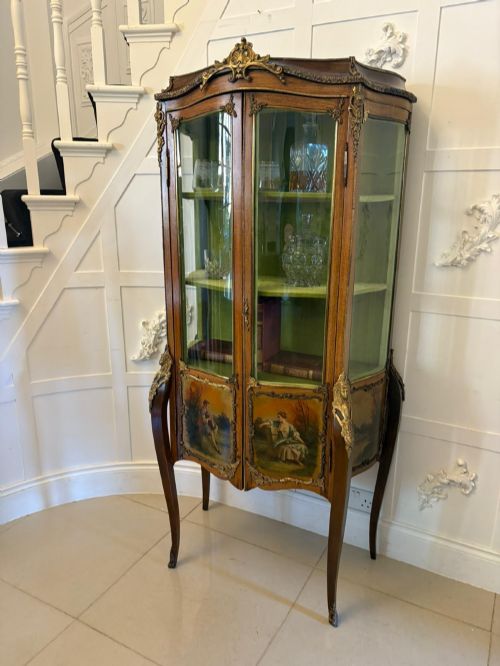
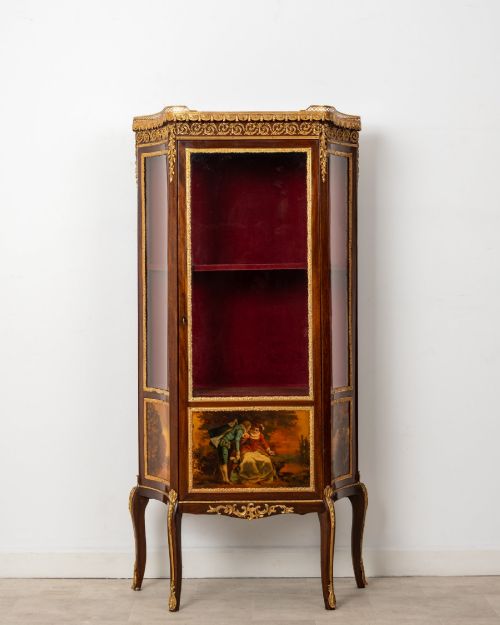
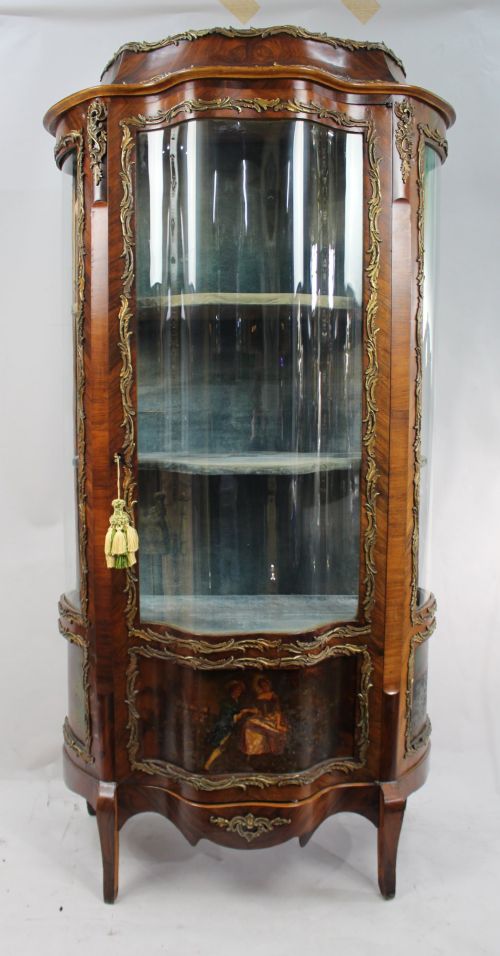
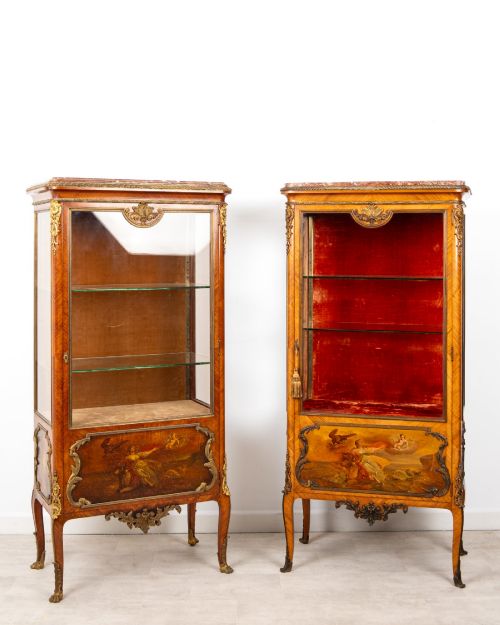


Painted Curio Cabinet
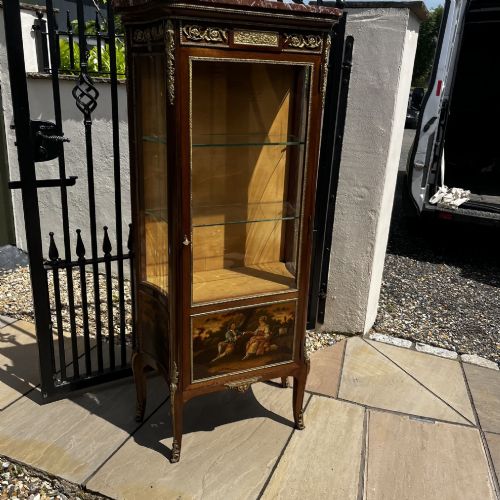
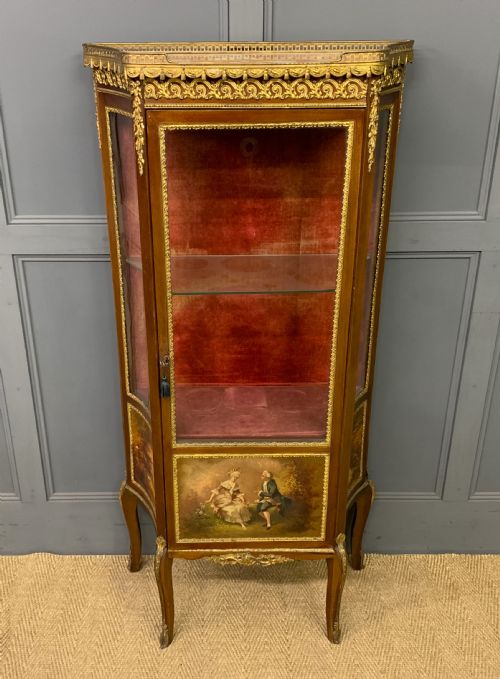
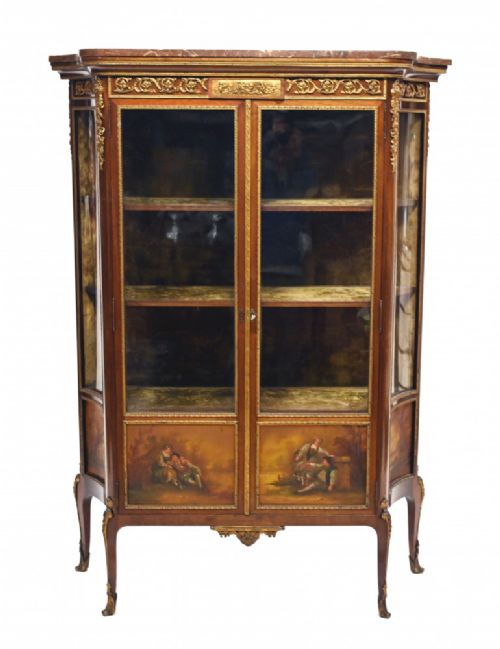
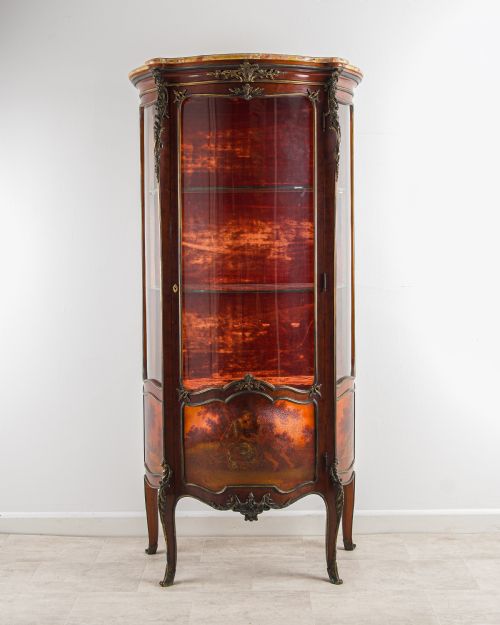
A painted curio cabinet displays precious objects behind glass while showing off decorative painted panels and gilt mounts.
Painted Curio Cabinet
When you search for a painted curio cabinet, you encounter display furniture designed to hold small treasures while presenting an ornate exterior to the room. The pieces found on this page span the nineteenth century through the Edwardian era, taking the form of freestanding vitrines, serpentine cabinets, wall-hanging vitreens, and oval or sedan-style display pieces.
The dominant aesthetic draws heavily on French revivals, featuring Louis XV and Louis XVI styles alongside Sheraton influences and Chinese lacquer work. Mahogany, kingwood, and satinwood form the primary carcasses, whilst glazed doors and glass sides invite uninterrupted viewing of the interior shelves.
Painted decoration is central to these items, frequently incorporating Vernis Martin techniques or pictorial panels that depict pastoral scenes. Makers combined these painted surfaces with gilt bronze and ormolu mounts, creating focal points that served as both storage and salon decoration.
How they were made
Cabinetmakers constructed the frames using dense timbers like mahogany and kingwood, often veneered over sturdy softwood carcases and shaped into serpentine or bombe contours. These wooden structures received multi-layered painted finishes, including the distinctive translucent Vernis Martin varnishes applied over decorative panels.
Glazing required substantial glass panes fitted securely into doors and side panels to enclose the display space. Gilt bronze and ormolu mounts were cast and chased separately before being affixed to corners, legs, and pediments with metal screws or pins.
Many examples incorporated inset marble tops requiring precise stonecutting to fit the upper profile of the cabinet. Fabric linings, frequently silk or velvet, were traditionally glued or tacked to the interior backboards to cushion displayed items and reflect ambient light.
Common decorative elements across these pieces include ormolu mounts, marble tops, and detailed painted panels.
What varies in quality
The standard of a painted curio cabinet rests largely on the execution of its painted panels and the crispness of its metal mounts. Hand-painted pictorial scenes displaying depth, fine brushwork, and well-rendered figures elevate a piece far above simple stencilled or mass-produced decoration.
Mount quality dictates much of the visual weight, with heavily chased ormolu exhibiting sharp relief and refined gilding compared to softer, flat brass alternatives. The joinery of complex shapes, such as curved serpentine doors and bombe sides, requires advanced carpentry that determines the structural integrity over time.
Timber selection and veneer matching further separate ordinary examples from exceptional ones. Continuous grain flow across drawer fronts and doors, alongside choice cuts of kingwood or satinwood, reflects the ambition of the original workshop.
François Linke
The Painted Curio Cabinet Glossary
- Vernis Martin
- A simulated Japanese lacquer developed by the Martin brothers in eighteenth-century France, using layered varnishes to produce a glossy, translucent finish over painted scenes. This technique was revived with great skill during the nineteenth century.
- Ormolu
- Gilt bronze ornamentation applied to the mounts, feet, and cornices of fine furniture. The alloy is cast, chased by hand, and coated in gold leaf or mercury gilt.
- Vitrine
- A glass-fronted display cabinet specifically built to exhibit porcelain, curiosities, and small collectibles. The sides are frequently glazed to allow light to enter from multiple angles.
- Bombe
- A swelling, outward-curved contour found on the front and sides of furniture carcasses. This shape requires specialised joinery to maintain strength while achieving flowing, organic curves.
- Chinoiserie
- European artistic style reflecting Chinese motifs, often featuring hand-painted landscapes, figures, and pagodas rendered in lacquer or fine paint upon wood.
Painted Curio Cabinet: Frequently Asked Questions
What is a painted curio cabinet used for?
These cabinets were originally designed to display delicate porcelain, miniatures, and precious keepsakes collected during travels or inherited as family heirlooms. The glass panels and doors protected these fragile items from household dust while keeping them visible to visitors in a drawing room or salon.
Today, owners continue to use them for their traditional purpose of exhibition, allowing modern collections of ceramics, glass, or small sculptures to be safely arranged on internal shelves.
How do I care for the painted panels?
Painted surfaces and delicate varnishes require gentle maintenance using a soft, dry microfiber cloth to remove dust. Avoid chemical sprays, abrasive cleaners, or excess moisture, which can damage old lacquers and lift fragile finishes.
Keep the cabinet away from direct sunlight and strong heat sources to prevent the wood from warping and the painted panels from fading or cracking over the decades.
Are these cabinets freestanding or wall hanging?
The majority of pieces in this category are freestanding floor models, often featuring serpentine fronts, glass side panels, and substantial marble tops. These rest directly on the floor and provide generous height for multiple display shelves.
A smaller selection consists of wall-hanging vitreens or wall cabinets, which are lighter in construction and built with back brackets intended to be secured directly to wall studs.