

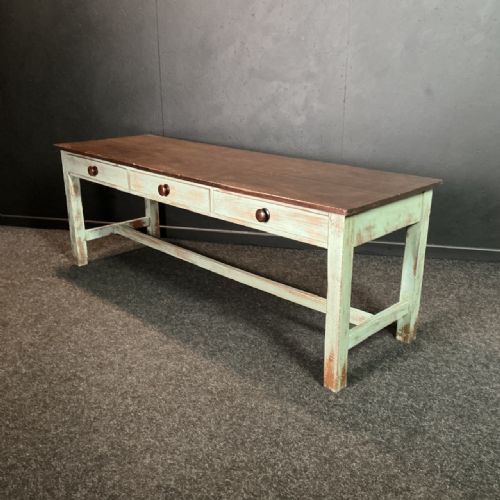
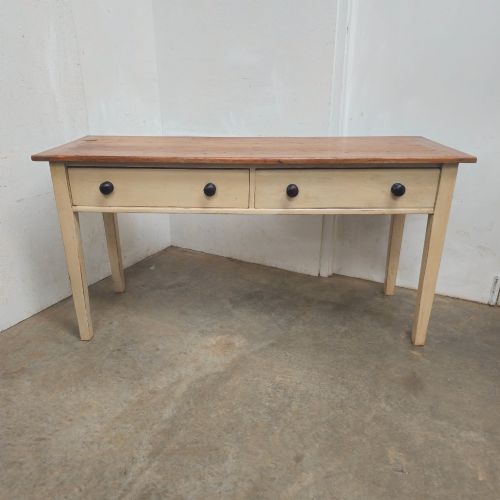
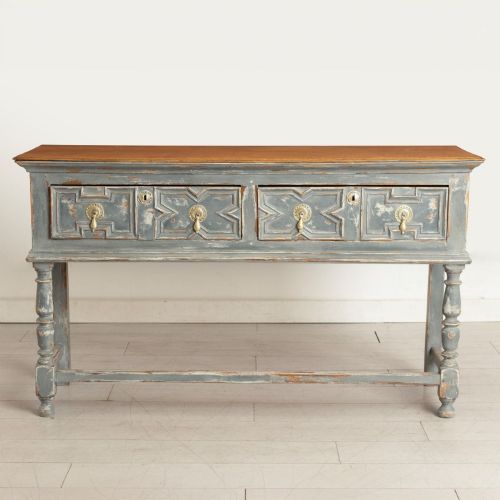
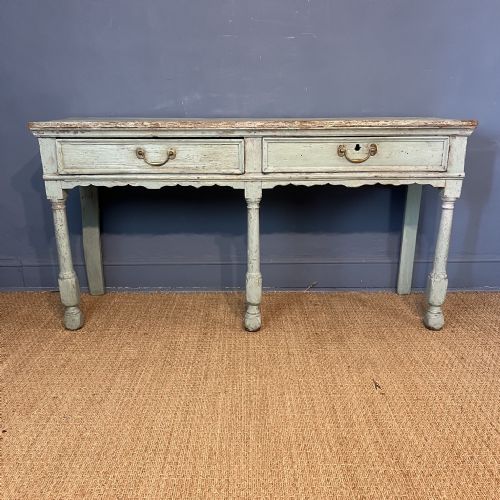
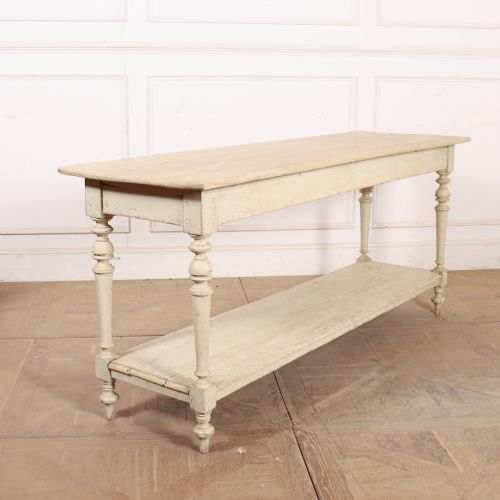
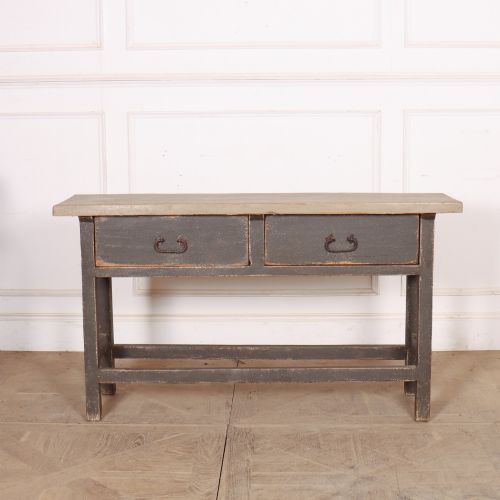
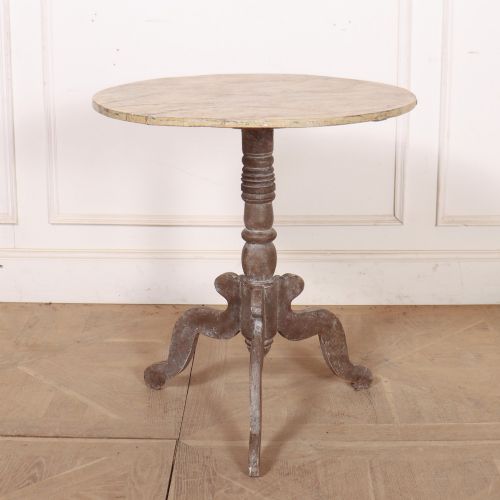
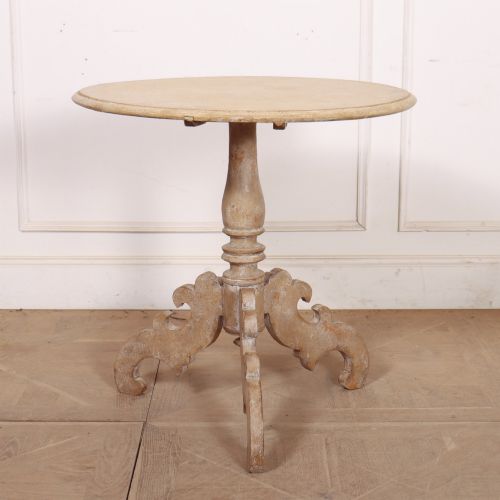
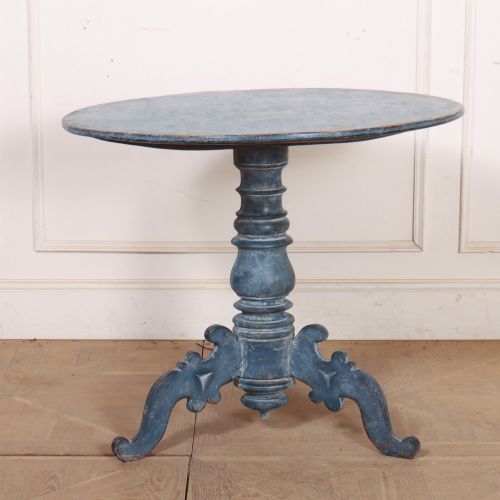
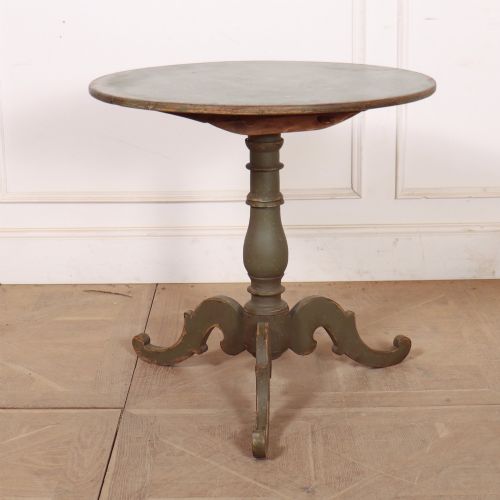
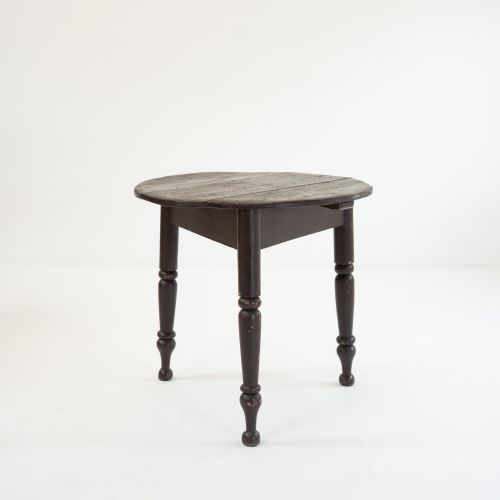
Painted Country Side Table
A painted country side table brings honest utility and time-softened colour to a room, grounding the space with regional character.
Painted Country Side Table
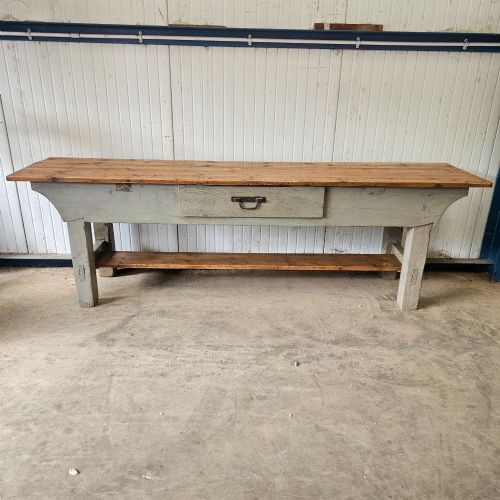
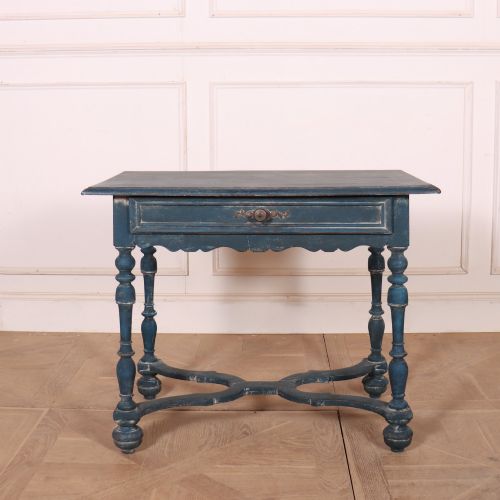
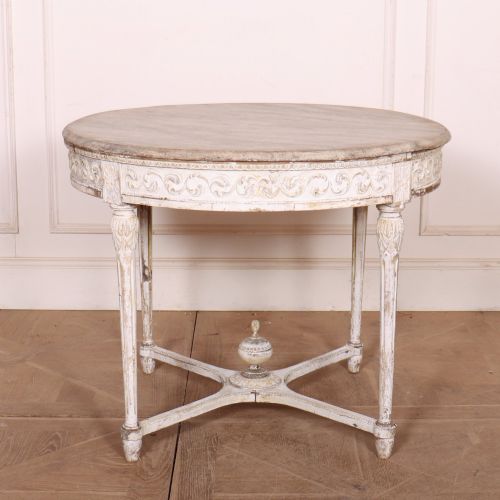
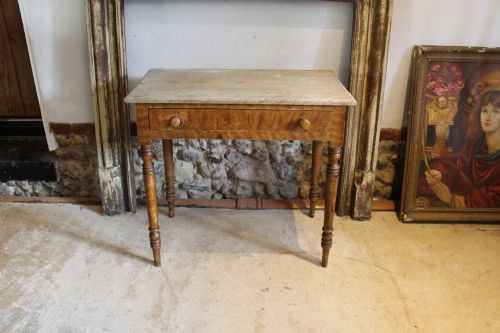
When you search for a painted country side table, you encounter domestic furnishings made for practical use across English, French, Scandinavian, and Italian rural homes. These pieces range from compact lamp tables and bedside units to longer prep tables and console bases, mostly built during the nineteenth and early twentieth centuries.
Pine and oak form the backbone of these listings, often shaped into simple forms such as cricket tables, dairy tables, and low boys. The surviving examples display regional aesthetics, with Swedish and French variants sitting alongside English country house pieces.
How they were made
Carpenters constructed these utility items from accessible local timbers, predominantly pine and oak, relying on straightforward joinery suited to daily service. Surfaces received coats of pigment that protected the wood and evolved through layers of wear and later re-decoration.
Details such as box stretchers added structural rigidity to smaller lamp tables, while brass hardware occasionally completed drawers on writing tables and servers.
Many a hardworking dairy table survived simply because its stubborn milk stains proved too deep for scrubbing.
What varies in quality
The integrity of the surface finish dictates much of the distinction across these pieces, particularly where original paint surfaces survive beneath generations of use. Tables retaining their initial pigment demonstrate greater historical value than those bearing later overpainting or stripped timber.
Proportion and structural honesty also separate standard utilitarian items from finer regional interpretations, such as carved Swedish lamp tables or robust English dairy tables with undisturbed joints.
The Painted Country Side Table Glossary
- Cricket table
- A small, three-legged occasional table with a round top, designed to stand steady on uneven flagstone floors. This form relies on splayed legs for stability.
- Scumble
- A translucent or semi-opaque glaze applied over a lighter base coat to simulate wood grain or create mottled decorative patterns. This technique appears on nineteenth-century vernacular furniture.
- Dresser base
- A low, heavy storage unit featuring drawers and sometimes cupboards beneath a flat top. These pieces originated in farmhouse kitchens for food preparation and storage.
- Box stretcher
- An interconnecting framework of horizontal wooden rails running between the lower legs of a table. This construction detail provides extra bracing for heavy use.
Painted Country Side Table: Frequently Asked Questions
How do I identify original paint?
Original paint displays natural craquelure, soft edges from hand application, and uniform wear patterns that match the age of the timber beneath. Examination under magnification often reveals microscopic layers of accumulated dust and wax embedded in the pigment.
Later repainting tends to look flat or uniform across high-contact zones where hands and objects naturally abrade the surface over decades of domestic service.
Are these tables suitable for daily use?
Most pieces were built specifically for demanding environments like dairies, kitchens, and country house utility rooms. Their sturdy pine and oak construction handles regular placement of lamps, books, and household items with ease.
Care should be taken to protect older painted surfaces from excessive moisture and direct heat to prevent lifting or further flaking of the historic pigment.
What is the difference between Swedish and English styles?
Swedish country furniture frequently employs lighter palettes, such as pale greys and creams, alongside simplified neoclassical details or carved accents. English country pieces generally lean towards darker pine, scrubbed oak tops, and utilitarian forms dictated strictly by function.
Both regional traditions prioritize local materials, but the Scandinavian workshop aesthetic often feels more restrained compared to the vernacular variety found in English farmhouse tables.