

Painted Country Chest Drawers
These painted country chest drawers bring practical domestic storage with layers of historic colour and honest timber surfaces.
Painted Country Chest Drawers
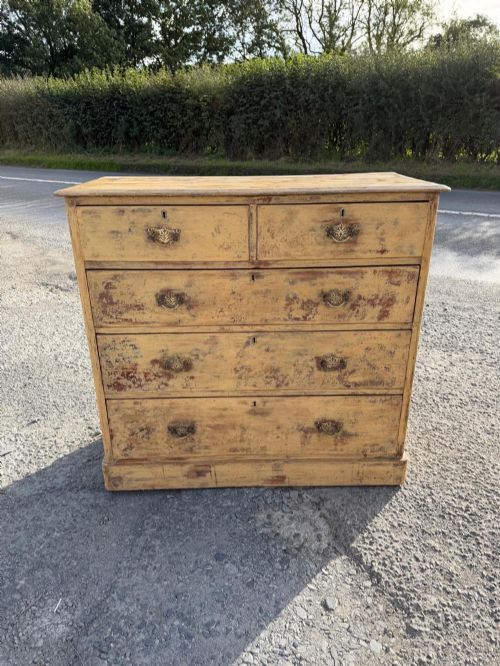
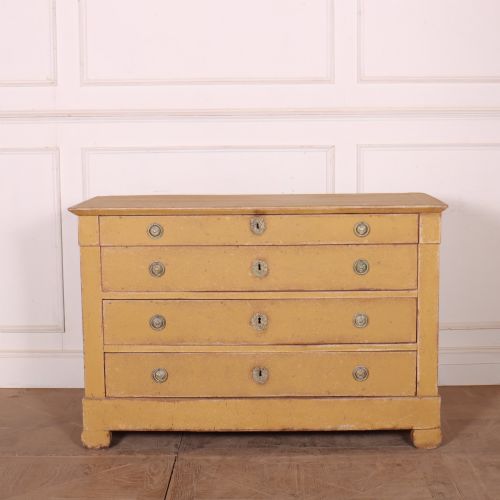
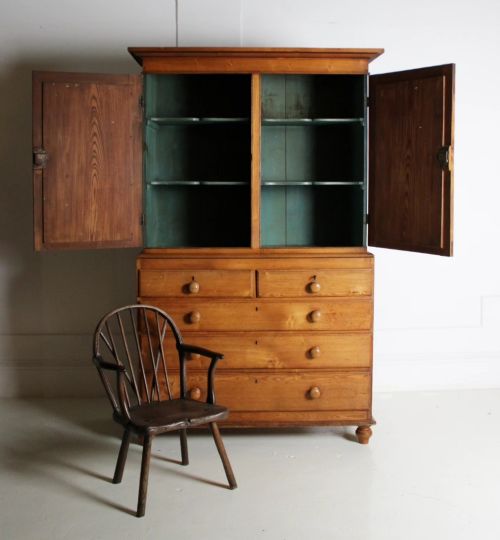
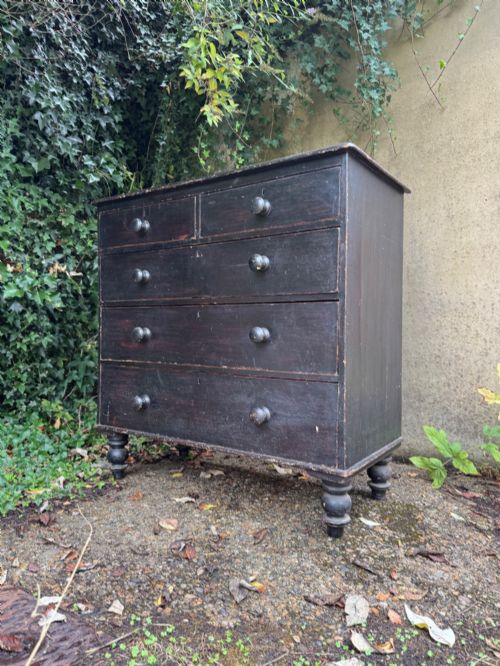
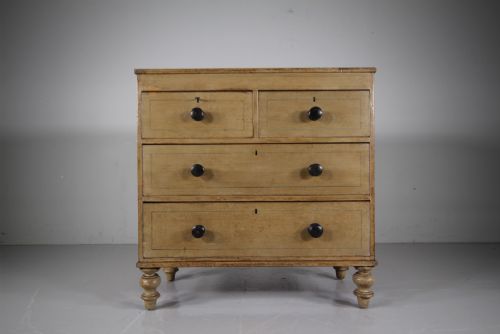
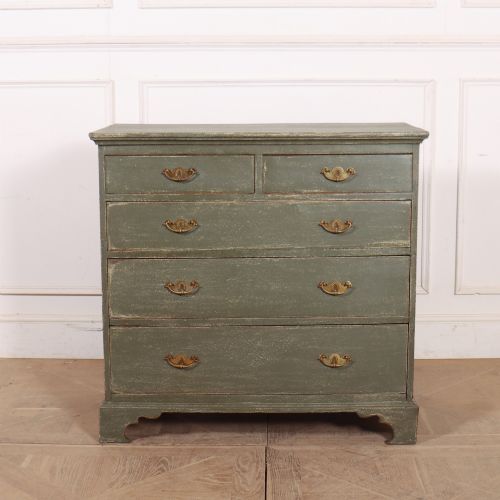
When you search for painted country chest drawers, you encounter utilitarian bedroom and parlour storage built from domestic softwoods and hardwoods. The most common form on this page is the pine chest of drawers originating from nineteenth-century English, Welsh, or West Country workshops.
Beyond standard drawer configurations, the category encompasses regional variants like North Country chests, tall linen presses, and compact bedside tables. Makers constructed these pieces for daily use in farmhouses and country houses, leading to robust proportions and straightforward drawer arrangements.
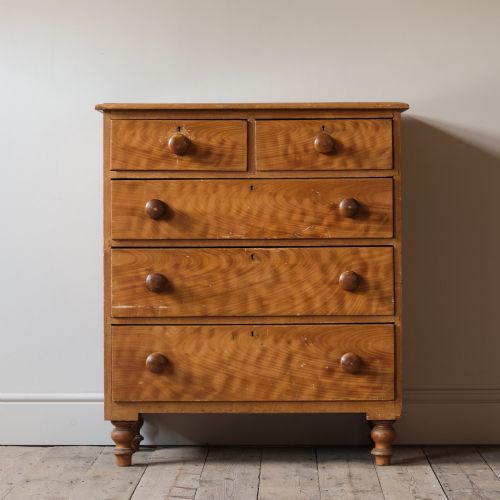
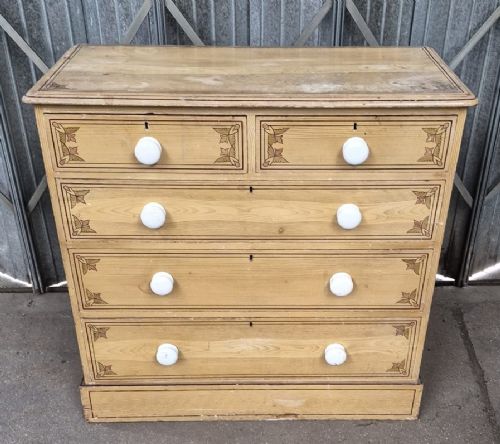
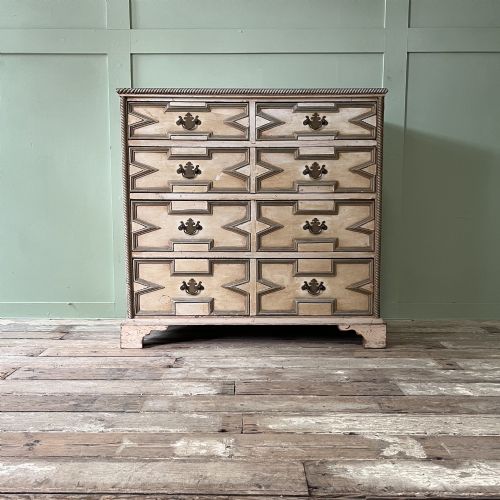
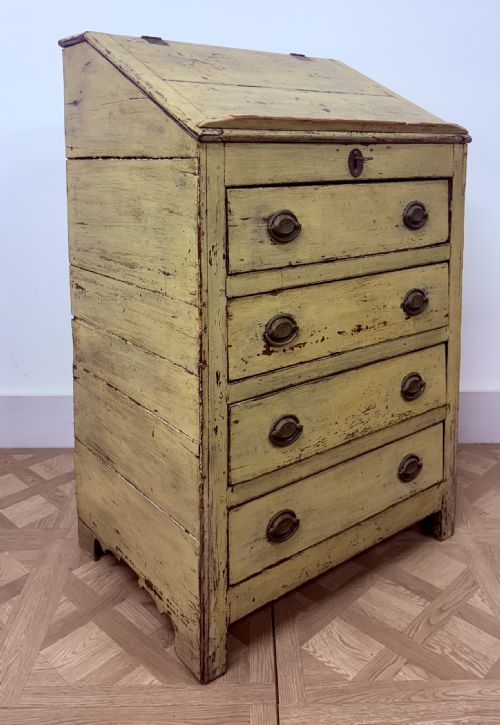
Surviving examples frequently display vernacular adaptations, such as two-over-two drawer layouts, integrated writing slopes, or dressing table attachments. Their character stems from decades of household service rather than courtly design.
How they were made
Joiners relied primarily on solid pine, oak, and ash, constructing carcases with dovetailed joints to withstand heavy domestic demands. Regional makers sourced local timbers, adding iron or brass hardware for drawer pulls and escutcheons.
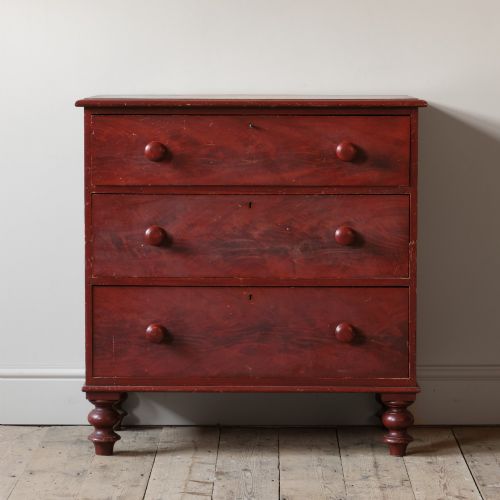
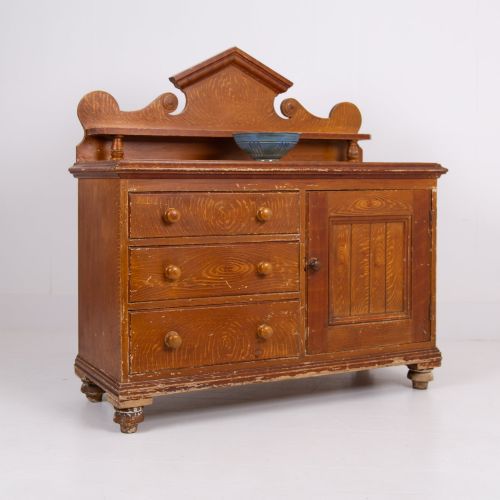
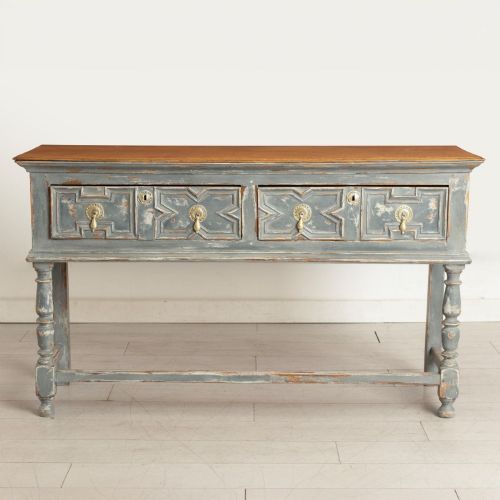
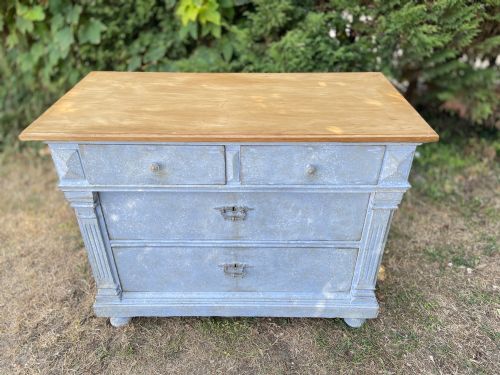
Surfaces received decorative treatments using oil-based paints, blue washes, or scumbling techniques designed to simulate finer woods like maple. Artisans applied these coatings by hand, leaving brush marks and tonal variations that record the painting process.
Painted Country Chest Drawers Retail Price Guide 2026
Typical asking prices for painted country chest drawers among the pieces listed under this phrase on Sellingantiques today, from the lower quarter to the upper quarter. They describe what is for sale here now, not the wider market.
Several miniature apprentice chests appear here, built by trainees to prove their mastery before joining the guild.
What varies in quality
The distinction between ordinary utility storage and superior examples rests on the integrity of the surface finish and the preservation of original paint. Pieces retaining their first decorative scheme or early simulated graining command greater interest than those stripped or repeatedly painted.
Construction details also separate the range, visible in the tightness of hand-cut dovetails, the thickness of drawer linings, and the survival of original brass or wooden turning knobs. Proportion and regional idiosyncrasies add further distinction to individual cabinets.
Edwards and Roberts·Sir Clough Williams-Ellis
The Painted Country Chest Drawers Glossary
- Scumble
- A translucent glaze brushed over a pale base coat and manipulated with combs or rags to imitate the grain of maple or oak. This decorative technique was popular on nineteenth-century country furniture.
- Commode
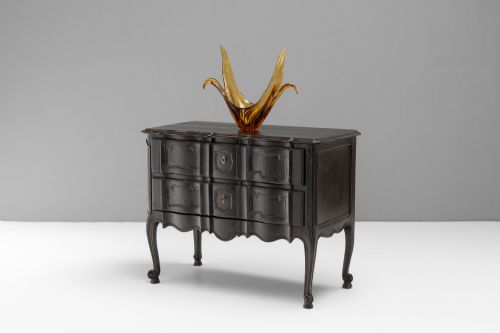
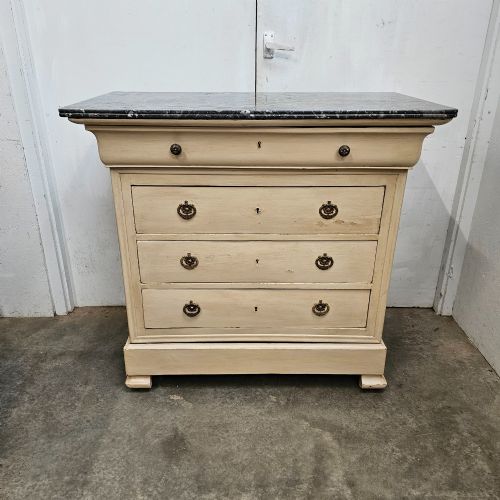
- A European term for a low chest of drawers or cabinet, often associated with French provincial or Gustavian pieces. These usually feature more decorative hardware and shaped aprons than standard English chests.
- Dovetail
- A joint formed by interlocking wedge-shaped fingers, used to secure the corners of drawer boxes. Hand-cut dovetails indicate traditional cabinet-making methods before mass production.
- Linen press
- A tall cupboard featuring upper sliding trays or shelves for textiles, positioned above a base of lower drawers. Country versions in ash or pine provided essential storage in large rural households.
- Washstand
- A specialised table or small chest fitted with a surface for washbasins and pitchers, occasionally combined with drawer storage. They reflect nineteenth-century bedroom routines before plumbed bathrooms.
Painted Country Chest Drawers: Frequently Asked Questions
How do I spot original paint?
Original paint shows natural wear, subtle crazing, and consistent adhesion to the underlying timber across all surfaces. Look for layers that have aged uniformly without modern synthetic touch-ups.
Examine corners and recesses where cleaning cloths missed, as these areas preserve the true early colour and texture of the finish.
Were these chests made in parts?
Larger country chests and linen presses were frequently constructed in two separate sections to ease transport through narrow rural stairways. This modular building approach is common in nineteenth-century vernacular pieces.
The dividing seam usually sits horizontally between the lower and upper drawer tiers, secured with internal brackets or simple gravity.
What is scumbled pine?
Scumbled pine is ordinary softwood treated with a semi-opaque glaze manipulated to imitate expensive hardwoods like maple or burl. Nineteenth-century country decorators used this method to elevate plain furniture.
The technique creates textured, mottled patterns that react differently to light than flat, solid colour.
How do regional styles differ?
Regional pieces often display distinct proportions and timber choices dictated by local availability, such as West Country pine or ash used in northern workshops. Drawer arrangements like two short over three long were typical in specific counties.
Hardware choices and decorative paint colours also varied by region, reflecting local preferences rather than centralized factory standards.