




Painted Counter
A painted counter brings genuine commercial character and practical surface space into a modern kitchen or retail interior.
Painted Counter
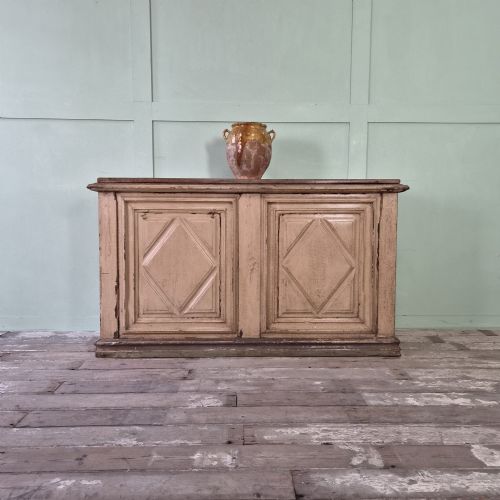
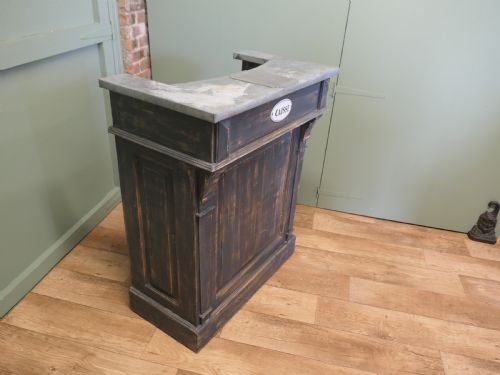
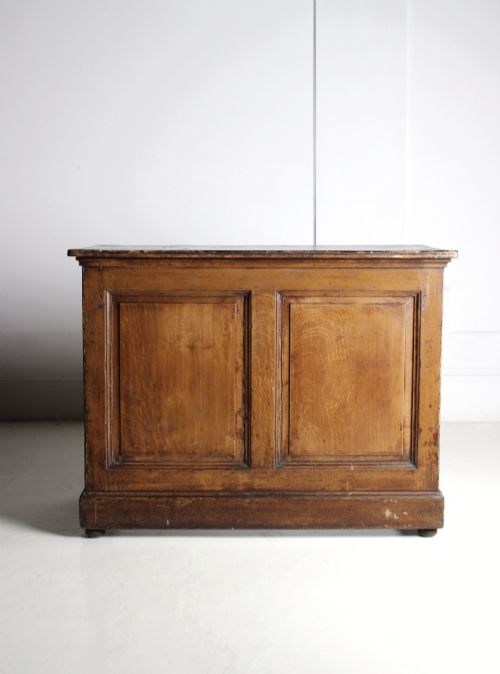
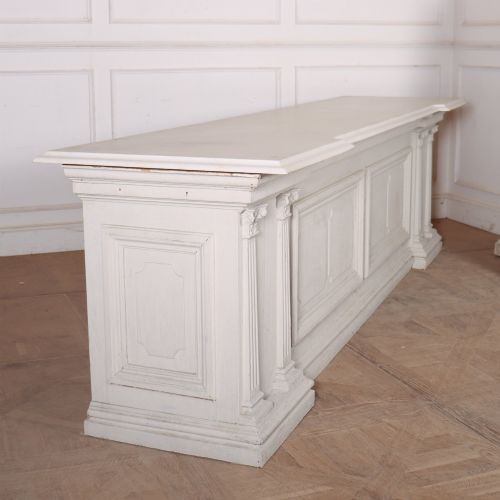
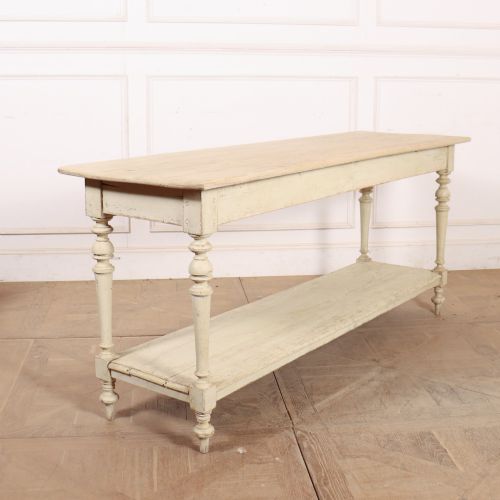
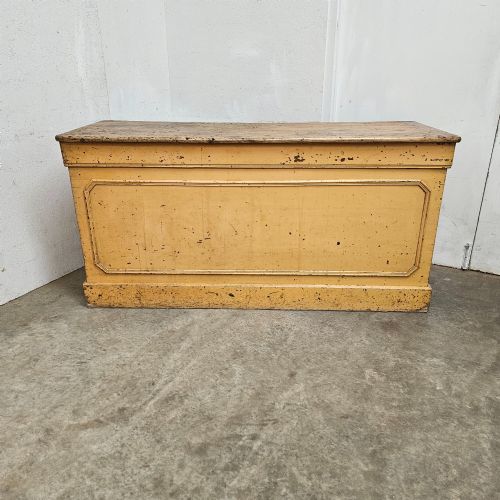
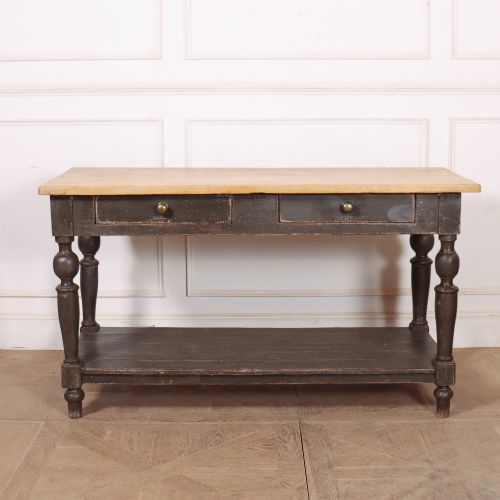
When searching for a painted counter, a buyer encounters substantial commercial furniture designed for display and storage in nineteenth and early twentieth-century shops. The most frequent versions on this page are sturdy shop counters, drapers tables, and banks of drawers constructed from pine with layered painted finishes. Origins span domestic workshops and continental European commercial spaces, reflecting French, Italian, and Hungarian provincial styles.
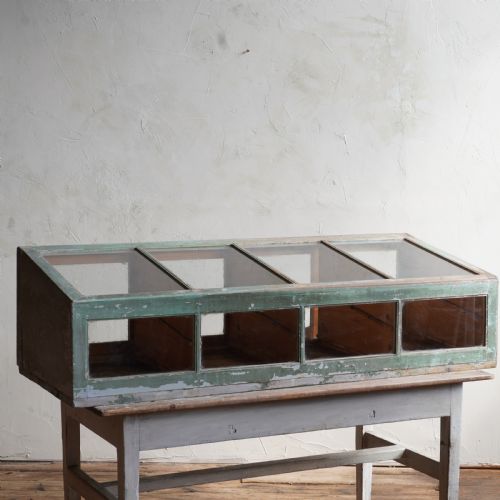
Forms vary from long service counters with panelled fronts to multi-drawer drapers units and tall shop fittings. Many pieces show the marks of heavy commercial use, retaining original or subsequent layers of paint in white, cream, green, or faux wood grain effects. These items serve equally as kitchen islands, sideboards, or workspace surfaces in contemporary settings.
Materials and Construction
Construction relies heavily on solid pine and oak timbers, joined with traditional methods to withstand the daily demands of nineteenth-century retail environments. Cabinetmakers utilised sturdy framework, panelled sides, and deep banks of drawers fitted with brass or iron hardware. Surfaces were treated with protective coats of paint, sometimes finished to imitate more expensive woods like oak.
The paint layers themselves form a crucial part of the physical makeup, applied over decades of use and maintenance. Surviving pieces often display original white, cream, or green pigments that have worn down through friction at touchpoints, revealing the bare timber or undercoats beneath.
Painted Counter Retail Price Guide 2026
Typical asking prices for painted counter among the pieces listed under this phrase on Sellingantiques today, from the lower quarter to the upper quarter. They describe what is for sale here now, not the wider market.
Listings feature nineteenth-century and Victorian pine furniture, including multi-drawer shop fittings, drapers tables, and toleware canisters.
Distinctions in Quality
Quality rests in the integrity of the original commercial structure and the authenticity of the surface finish. Finer examples maintain their original cabinetry proportions, complete drawer configurations, and untouched historic paint rather than recent decorative treatments. The balance between utilitarian strength and refined proportion separates standard utility pieces from exceptional regional shop fittings.
Hardware and secondary materials also dictate distinction. Counters incorporating original brass rims, robust panel work, or intact maker alterations demonstrate higher grade craftsmanship. The depth and patina of the accumulated paint layers provide visual evidence of age and sustained commercial service.
The Painted Counter Glossary
- Drapers Table
- A long, narrow table traditionally utilised in textile shops for measuring and displaying cloth. These pieces frequently feature lower shelves or multiple shallow drawers.
- Shop Fitting
- Custom-built commercial cabinetry designed to fit specific retail premises, including multi-drawer units and display counters.
- Toleware
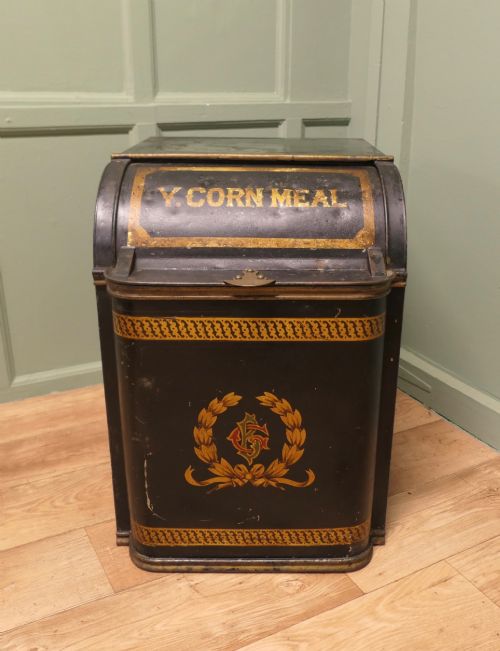
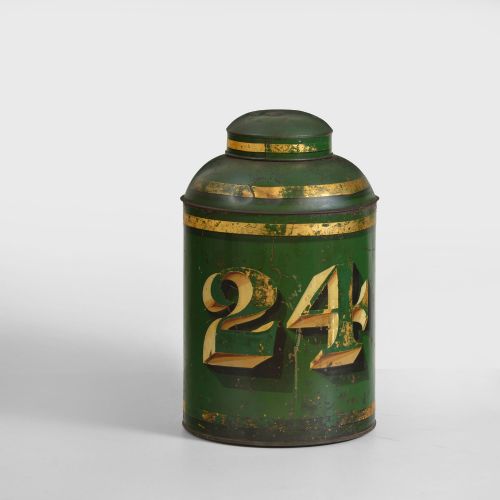
- Lacquered or painted metalware, commonly tin, used for storage containers such as tea canisters and grocery hoppers found on commercial counters.
- Faux Finish
- A decorative paint technique applied to mimic the appearance of more costly materials, such as oak graining painted over a pine base.
Painted Counter: Frequently Asked Questions
How do I use a painted counter at home?
These pieces function effectively as kitchen islands, providing a durable surface for food preparation alongside generous drawer storage below. Their commercial proportions also suit use as hallway sideboards or workspace tables in living areas.
Placing them in a domestic setting introduces historic character while offering practical organisation through deep drawers and lower shelving originally intended for stock.
Are painted counters sturdy enough for daily kitchen use?
Built originally for heavy commercial retail environments, these counters rely on solid pine and oak construction designed to bear substantial weight. Their robust frames and thick timber tops easily handle modern domestic demands.
Routine maintenance involves treating wooden surfaces with appropriate oils or waxes to protect the historic timber and underlying paint from moisture and heat.
How can I tell original paint from later decoration?
Original commercial paint exhibits natural wear patterns, accumulated crackleur, and subtle variations in tone concentrated around handles and high-contact edges. Examining the layers under natural light reveals the relationship between the wood substrate and the earliest pigment applications.
Later decorative applications often appear uniform across the entire surface without the specific friction marks associated with decades of retail service.
What is the difference between a shop counter and a drapers table?
A shop counter is generally enclosed with panelled sides and doors, designed to face customers and secure goods behind a high service barrier. A drapers table is typically open-framed with long, shallow drawers meant for storing and measuring textiles.
Both forms share utilitarian roots but serve distinct functions within nineteenth-century retail spaces, influencing their layout and drawer configuration.