

Painted Commode Cabinet
A painted commode cabinet brings surface colour and storage together, offering a decorative surface that anchors a room while keeping belongings out of sight.
Painted Commode Cabinet
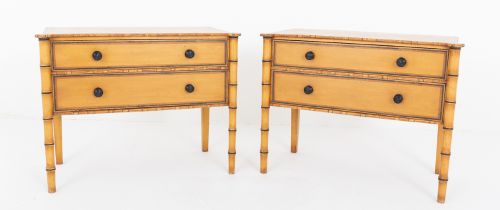
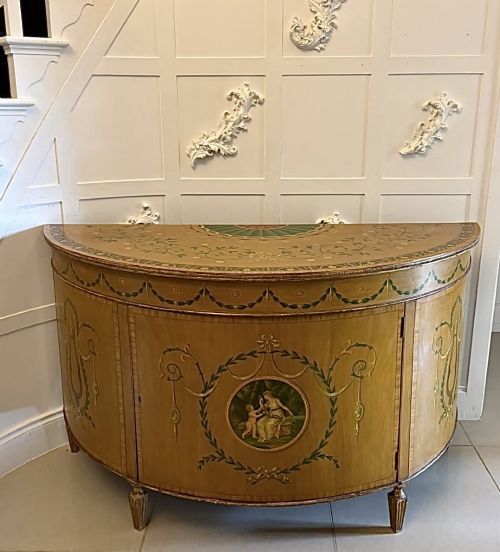
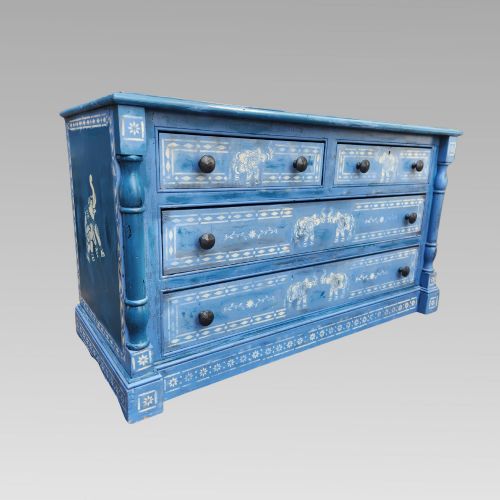
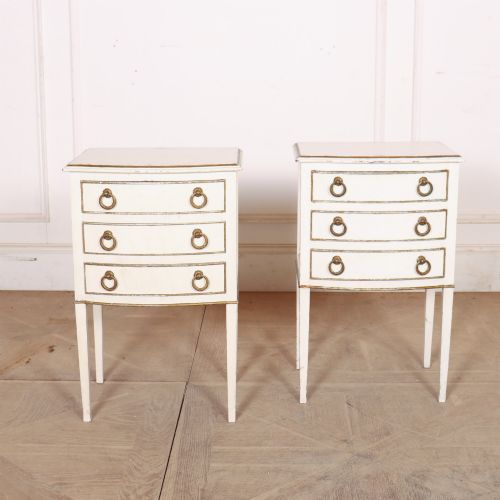
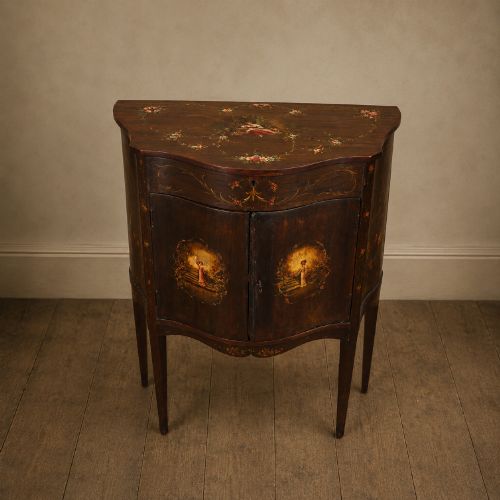
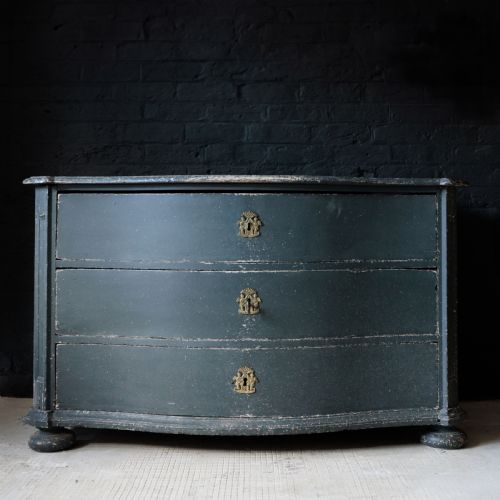
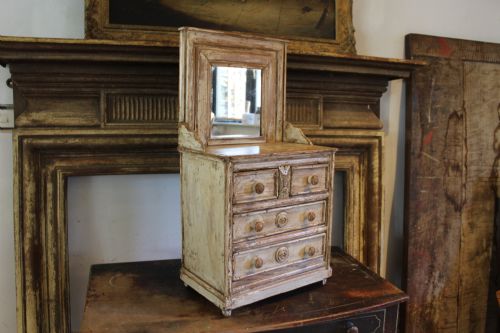
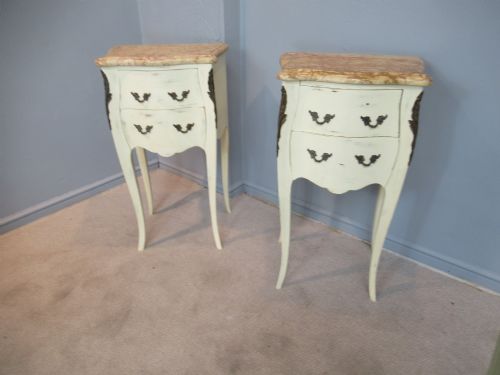
A painted commode cabinet combines drawer or cupboard storage with a decorative surface finish, originating across diverse European and English traditions. These pieces range from substantial bedroom chests to slender side cabinets and bedside tables.
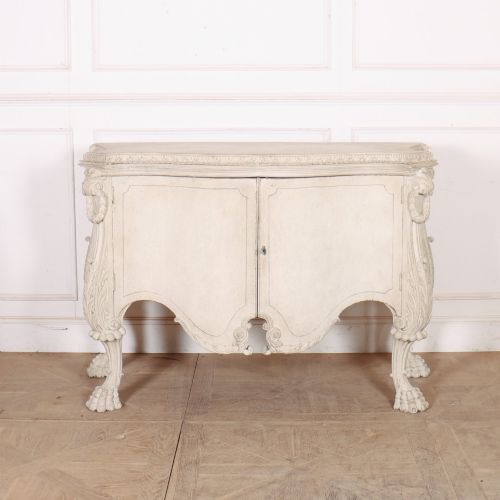
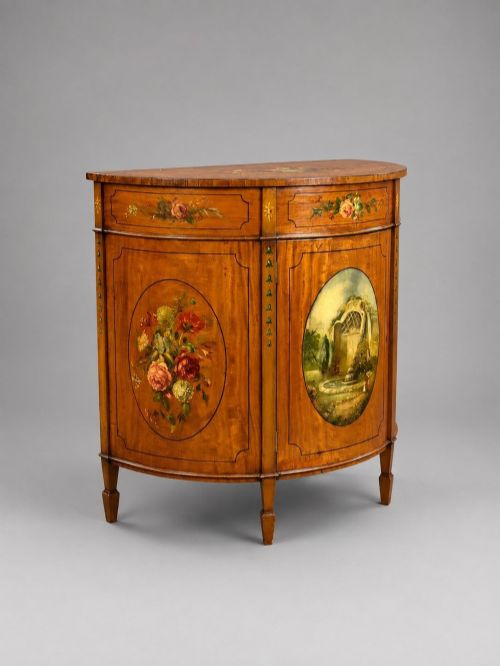
The most common examples encountered here span the nineteenth and early twentieth centuries, drawing on French, Scandinavian and Sheraton Revival influences. Pieces appear in formats such as demi-lune commodes, serpentine chests and upright cupboards.
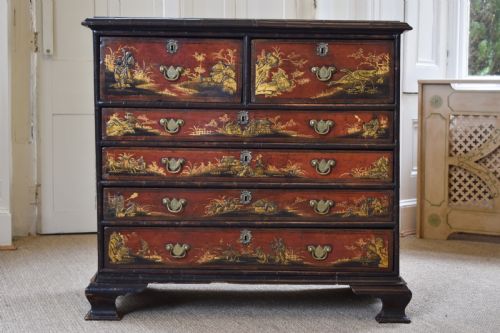
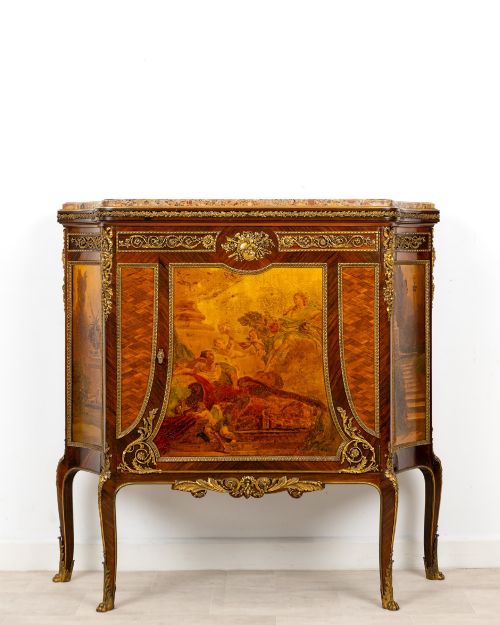
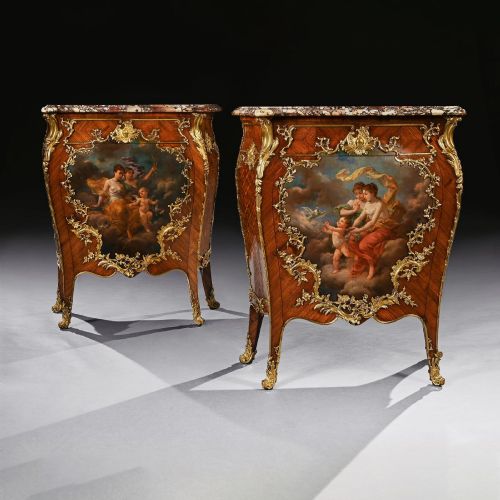
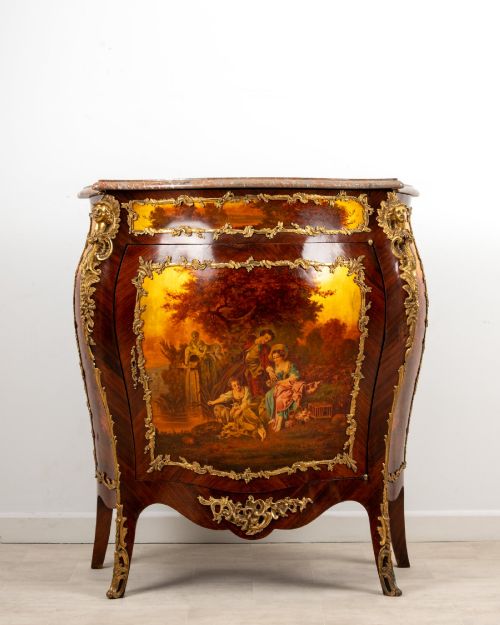
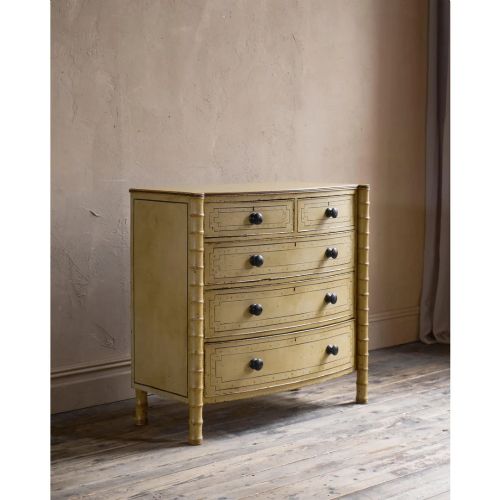
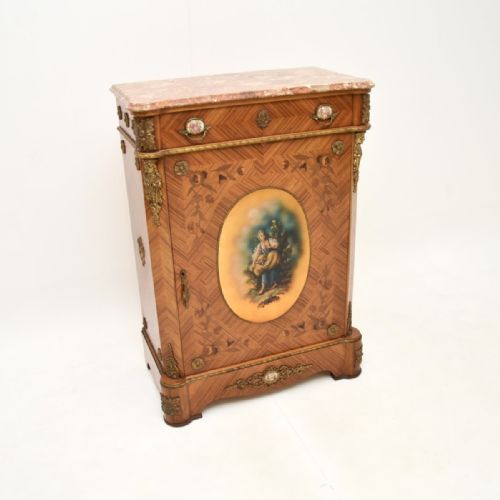
Forms vary from rustic pine items in original scraped paint to refined satinwood cabinets decorated with classical panels or Chinoiserie lacquer. Many retain original marble tops or incorporate gilt-bronze mounts.
Materials and construction methods
Construction relies on timber substrates such as pine, satinwood, ash and kingwood, selected for stability and cabinetwork quality. Carcasses are joined using traditional methods appropriate to the period, supporting decorative painted or lacquered surfaces.
Surface decoration involves hand-painted motifs, varnished scenes in the Vernis Martin tradition, or faux finishes simulating more costly woods. Brass, ormolu and gilt bronze mounts frequently frame drawers, corners and key escutcheons.
Heavier storage pieces often incorporate fitted marble slabs to the upper surface, providing a durable and cool counter top. Paint layers range from single-colour schemes to intricate polychrome decoration and japanning.
Painted Commode Cabinet Retail Price Guide 2026
Typical asking prices for painted commode cabinet among the pieces listed under this phrase on Sellingantiques today, from the lower quarter to the upper quarter. They describe what is for sale here now, not the wider market.
Listings feature painted commode cabinets from the 18th, 19th and early 20th centuries, alongside Edwardian and Victorian examples.
Assessing quality and craftsmanship
Quality rests in the execution of the painted surface and the crispness of any applied mounts or carved detail. Hand-rendered classical panels and detailed Chinoiserie work indicate a higher grade of workshop production than simple monochrome coats.
The integrity of the timber carcass and the smooth operation of drawers or cupboard doors determine everyday utility. Superior examples maintain original painted surfaces without excessive overpainting, preserving the authentic patina of the period.
Proportion and cabinet form distinguish standard utility items from decorative salon pieces. Well-balanced serpentine fronts, demi-lune shapes and matching pairs demonstrate deliberate design intent.
François Linke
The Painted Commode Cabinet Glossary
- Vernis Martin
- A type of decorative varnish finish developed in eighteenth-century France to imitate Asian lacquer. It uses multiple translucent layers over painted scenes.
- Demi-lune
- Half-moon shape in furniture design, commonly applied to the top and front of small side cabinets and commodes.
- Ormolu
- Gilded bronze mounts applied to furniture edges and corners. It provides metallic contrast against wood or painted finishes.
- Japanning
- European imitation of Japanese and Chinese lacquerwork. It involves building up layers of varnish decorated with raised metallic designs.
Painted Commode Cabinet: Frequently Asked Questions
Where should I place a painted commode cabinet?
These cabinets suit entrance halls, bedrooms and living spaces where surface display and concealed storage are both required.
Their decorative fronts and compact footprints allow them to function as focal points against plain walls or between windows.
How do I clean a painted cabinet surface?
Dust gently with a soft, dry cloth to prevent surface scratching over time. Avoid harsh chemical cleaners or excessive moisture that might damage aged paint or varnish layers.
Are marble tops original to these cabinets?
Marble slabs are standard on many nineteenth-century French commodes and side cabinets. They provide a durable surface and add weight to stabilise the cabinet carcass.
Original marble usually shows minor signs of age and weathering consistent with the period of the piece.
How can I tell a revival piece from an earlier one?
Revival pieces from the late nineteenth and early twentieth centuries often use machine-cut internal timbers alongside hand-finished decorative surfaces. Construction methods, hardware types and secondary woods offer clues to the true age of the carcass.