
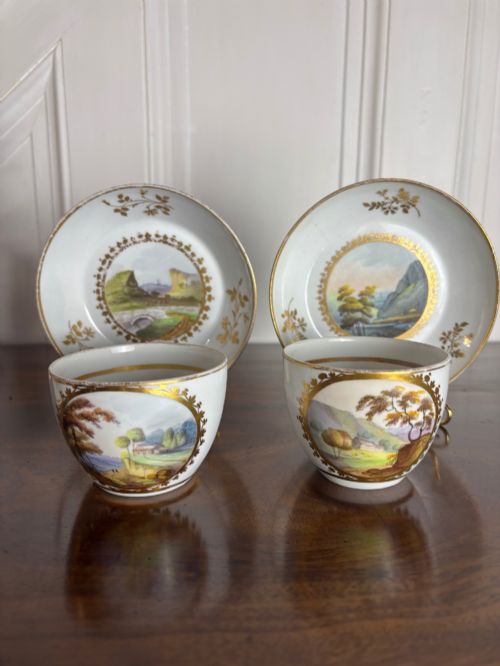


Painted China Tea Cups
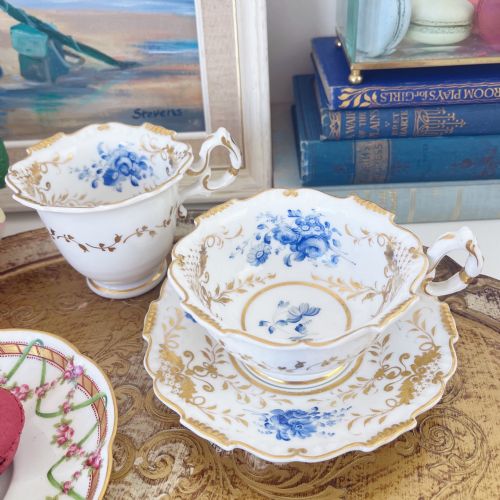
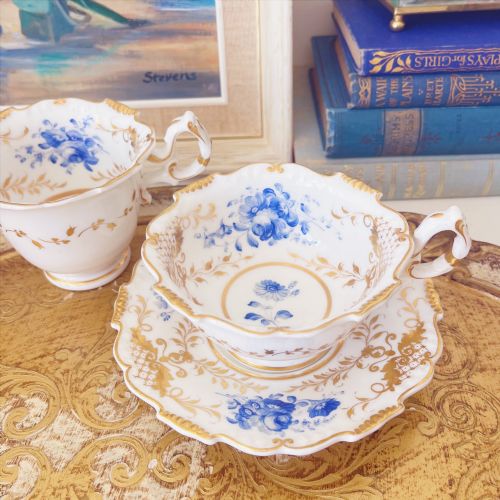
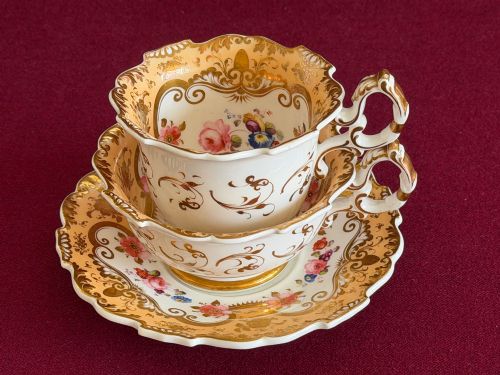
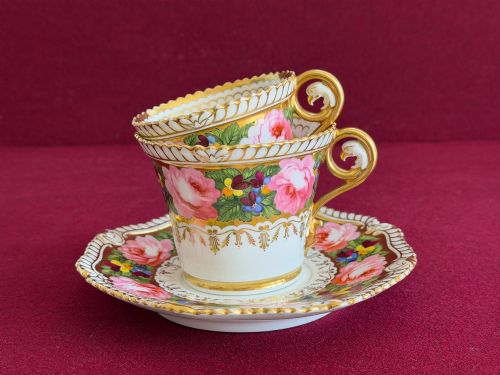
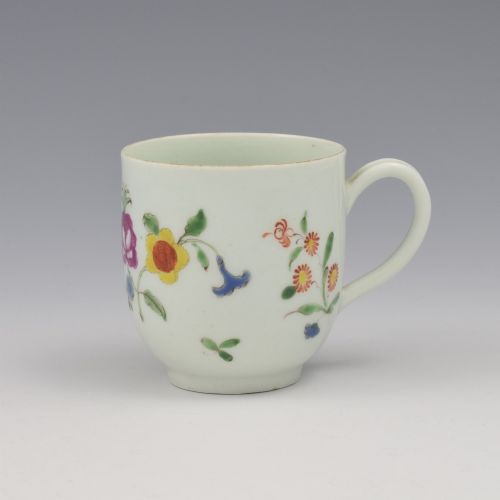
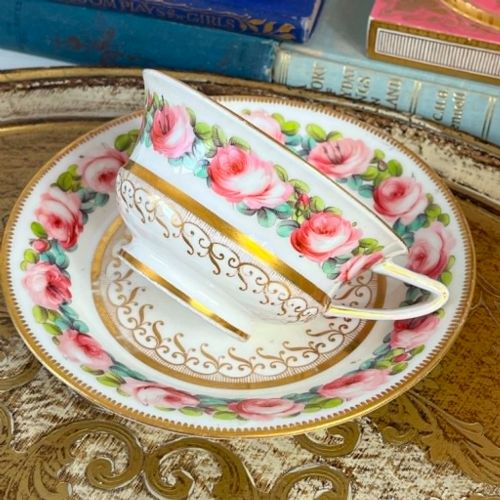
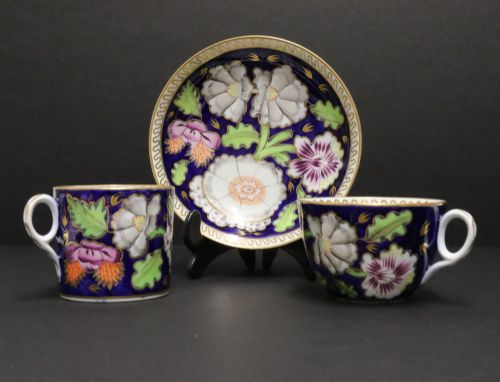
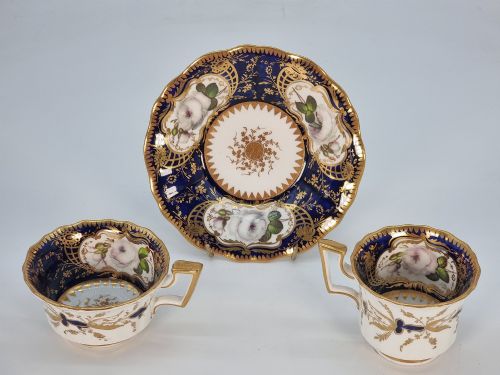
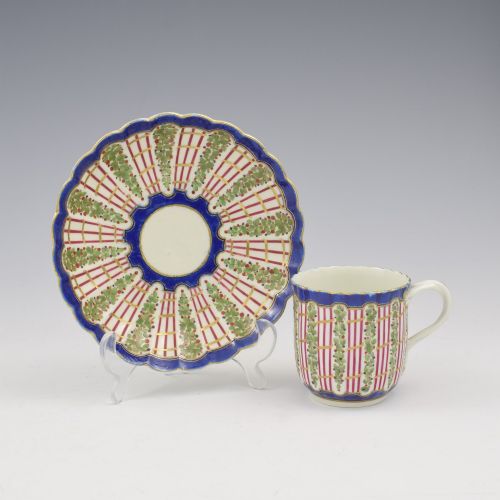
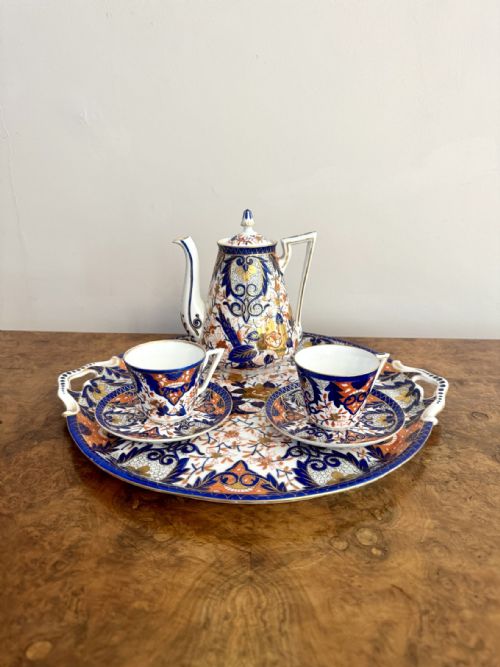
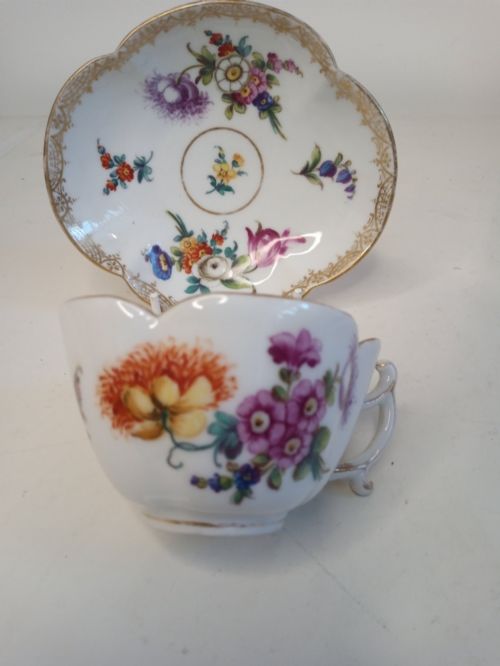
These painted china tea cups bring hand-painted floral motifs and botanical scenes directly to the tabletop from Georgian and Victorian parlours.
Painted China Tea Cups
Painted china tea cups span the eighteenth and nineteenth centuries, taking the form of individual teacups, duos, trios, and larger sets. The selection here leans heavily towards English porcelain from the Georgian and Regency periods, alongside Chinese export wares from the Qing Dynasty.
Makers ranged from early Worcester factories to Davenport and Spode, producing shapes that shift from simple tea bowls to elaborate cabinet trios. Collectors encounter everything from soft-paste porcelain of the seventeen-seventies to bone china of the later nineteenth century.
How They Were Made
Potters shaped these pieces using hard-paste porcelain, soft-paste porcelain, or bone china, often applying glazes by hand before initial firing. Artisans then painted intricate botanical or landscape scenes using enamel pigments directly onto the ceramic surface.
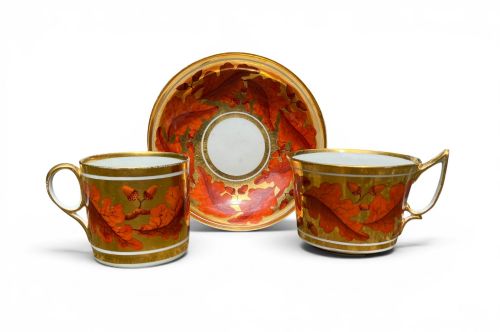
Gilding and gold leaf additions required a secondary firing process to fix the metal to the glaze, creating contrasting borders and handle details. Painters utilised cobalt underglaze for blue scale grounds and landscape panels before adding overglaze enamels.
Listings feature eighteenth-century soft-paste porcelain alongside nineteenth-century bone china, decorated with hand-painted botanicals, landscapes, and orientalist patterns.
What Varies in Quality
The precision of the hand-painted brushwork dictates much of the distinction between standard production wares and fine cabinet pieces. Artisans who executed detailed bird plumage, insect studies or intricate botanical subjects achieved a higher standard of artistry than those producing repetitive factory patterns.
The crispness of the porcelain body and the richness of the gilding also define the tier of a piece. Well-preserved gold leaf and clear, unclouded enamel colours indicate superior initial manufacture and careful handling over the centuries.
H & R Daniel·Chamberlain Worcester·Davenport·Coalport John Rose·Flight Barr & Barr·Minton·Spode·Royal Worcester
The Painted China Tea Cups Glossary
- Trio
- A matching set comprising a tea cup, a coffee cup, and a saucer. These three-piece groups were popular in the Regency period for serving different hot beverages.
- Cabinet piece
- An ornamental item made for display rather than daily use. These pieces often feature elaborate hand-painted scenes and heavy gilding.
- Soft-paste porcelain
- An artificial ceramic body fired at lower temperatures than hard-paste porcelain. It produces a warm, slightly creamy ground often seen in eighteenth-century English wares.
- Enamel
- A vitreous composition fused to the ceramic surface during firing. It provides the vibrant colours found in floral and landscape painted motifs.
- Underglaze
- Pigment applied to the ceramic body before the application of the glaze and the primary firing. This technique protects the painted design beneath a glassy layer.
Painted China Tea Cups: Frequently Asked Questions
How should I care for antique painted china tea cups?
Hand washing in lukewarm water with a mild detergent is essential for preserving delicate enamel paints and gold leaf. Dishwashers and harsh scrubbers will rapidly wear away hand-painted details.
Storing pieces away from direct sunlight prevents the enamel colours from fading over time. Using padded dividers between stacked saucers protects the glazed surfaces from scratching.
Can I still use these antique cups for drinking tea?
Most collectors reserve these pieces for display or occasional gentle use rather than daily dining. The age of the ceramic body and the fragility of the overglaze enamels make them susceptible to thermal shock and staining.
If you do use them, avoid boiling water poured directly onto cold porcelain. Hand washing immediately afterwards prevents tea tannins from settling into older hairline cracks.
How do I identify the period of a painted china tea cup?
Makers' marks on the underside of the base provide the most reliable clue to dating a piece. Many factories changed their printed or painted ciphers with each decade or change in partnership.
Stylistic shifts also help narrow down the date, such as the neoclassical motifs of the Regency period versus the heavy florals of the Victorian era. The paste composition itself often distinguishes eighteenth-century soft-paste from later bone china.