


Painted Carved Centre Table
These painted carved centre table pieces bring sculptural presence and functional surface to a room, drawing the eye with decorated timber and marble.
Painted Carved Centre Table
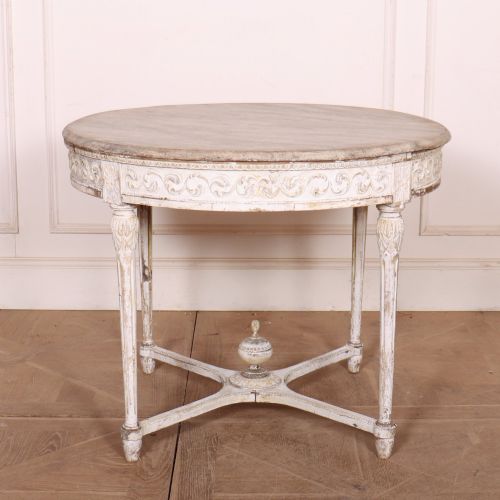
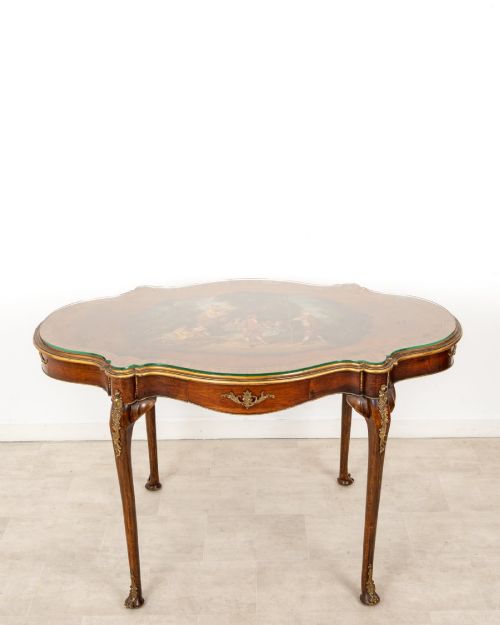
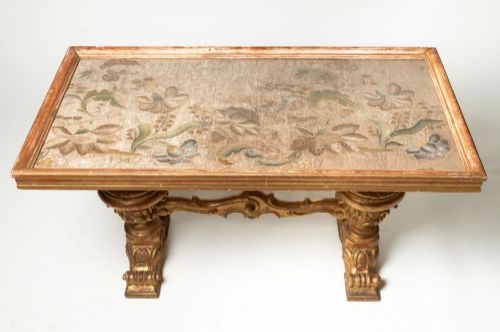
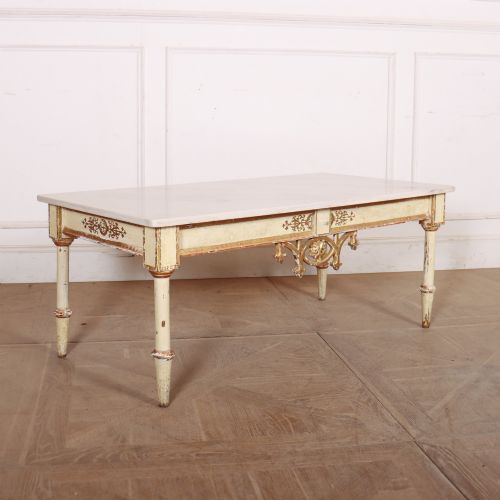
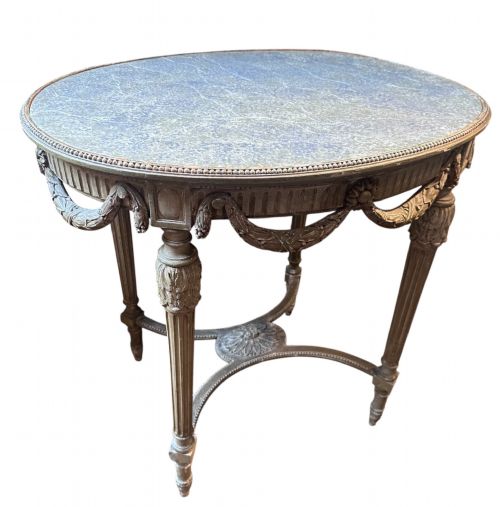
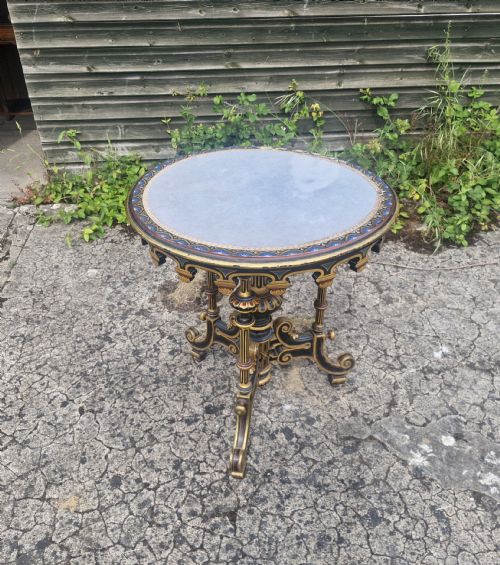
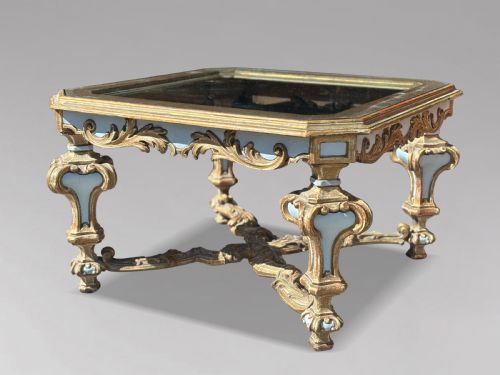
A painted carved centre table functions as a striking focal point in a principal room, designed to be viewed from all sides rather than pushed against a wall. The examples on this page span the nineteenth century through the early twentieth century, taking forms such as occasional tables, coffee tables, and gueridons.
Makers drew upon a broad vocabulary of historical design, producing pieces in Swedish, French, Italian, and English idioms. Buyers will encounter French Louis XV and Louis XVI styles alongside Italian Baroque and Gustavian pieces, offering varied expressions of painted and carved decoration.
Materials and Construction
Construction relies upon traditional timber framing, utilising pine, walnut, and various painted woods that provide a stable ground for applied decoration. Carving is executed directly into the wood before the application of paint, gesso, or gilding.
Surfaces frequently incorporate inset marble tops, adding weight and a cool stone contrast to the carved and painted bases. Giltwood, parcel-gilt, and silvered accents highlight the carved details, while glass elements appear on selected decorative surfaces.
Several tables here spent their formative decades inside grand English country houses before finding their way onto the open market.
Assessing Quality
Quality reveals itself in the crispness of the hand-carving and the depth of the painted finish rather than mere surface embellishment. Superior pieces exhibit confident execution in the decorative motifs, whether of French Rococo or Italian Baroque inspiration.
The integration of materials dictates distinction, particularly where heavy marble tops meet robustly carved timber bases. Finer examples maintain harmony between the structural woodwork and the decorative paint scheme over decades of use.
Harrods
The Painted Carved Centre Table Glossary
- Gueridon
- A small occasional table, typically round, originating in seventeenth-century France. These pieces often feature decorative painted surfaces and marble tops.
- Parcel-gilt
- Partially gilded woodwork where gold leaf highlights specific carved details against a painted ground. This technique creates contrast and depth.
- Gustavian
- The Swedish interpretation of French neoclassical style, characterised by lighter proportions and pale painted finishes. These tables display restrained carving.
- Veris Martin
- A simulated Japanese lacquer technique developed in eighteenth-century France. The finish involves multiple translucent varnish layers over painted decoration.
Painted Carved Centre Table: Frequently Asked Questions
What is a centre table used for?
A centre table stands freely in the middle of a room to hold decorative objects, lamps, or books. Its finished appearance on all sides distinguishes it from furniture meant to line a wall.
Historically, these tables served as functional display surfaces in principal reception rooms and grand hallways. Today, they anchor a furniture arrangement and provide generous surface utility.
How do I identify a French style?
French styles like Louis XV and Louis XVI show distinct decorative vocabularies through their carved woodwork and painted finishes. Louis XV pieces feature curved lines and asymmetrical floral carving.
Louis XVI furniture adopts neoclassical symmetry, straight tapered legs, and crisp architectural detailing. French pieces on this page frequently combine these carved forms with marble tops.
Are these tables suitable for daily use?
These antique tables accommodate everyday placement when treated with appropriate care for their painted and carved surfaces. Marble tops offer durable, wipeable service for daily living.
Delicate parcel-gilt and painted wooden surfaces benefit from coasters and careful placement away from direct heat. Regular dusting preserves the historic finish of the timber.
What defines Gustavian furniture?
Gustavian pieces originate from Sweden and reflect a lighter, brighter aesthetic derived from French neoclassical design. They typically feature pale painted finishes and restrained carving.
This regional style emerged during the late eighteenth century and continued into the nineteenth century. The aesthetic suits contemporary interiors seeking calm, neutral painted woodwork.