
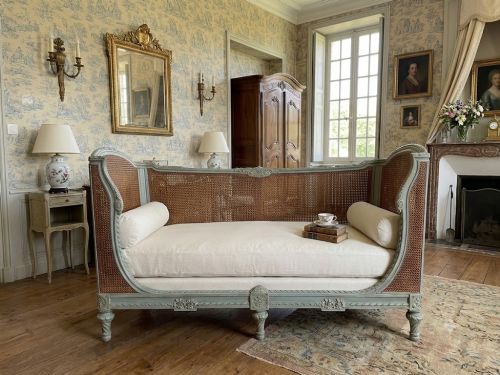


Painted Cane Settee
A painted cane settee brings lightness to a room, combining solid timber frames with woven seating.
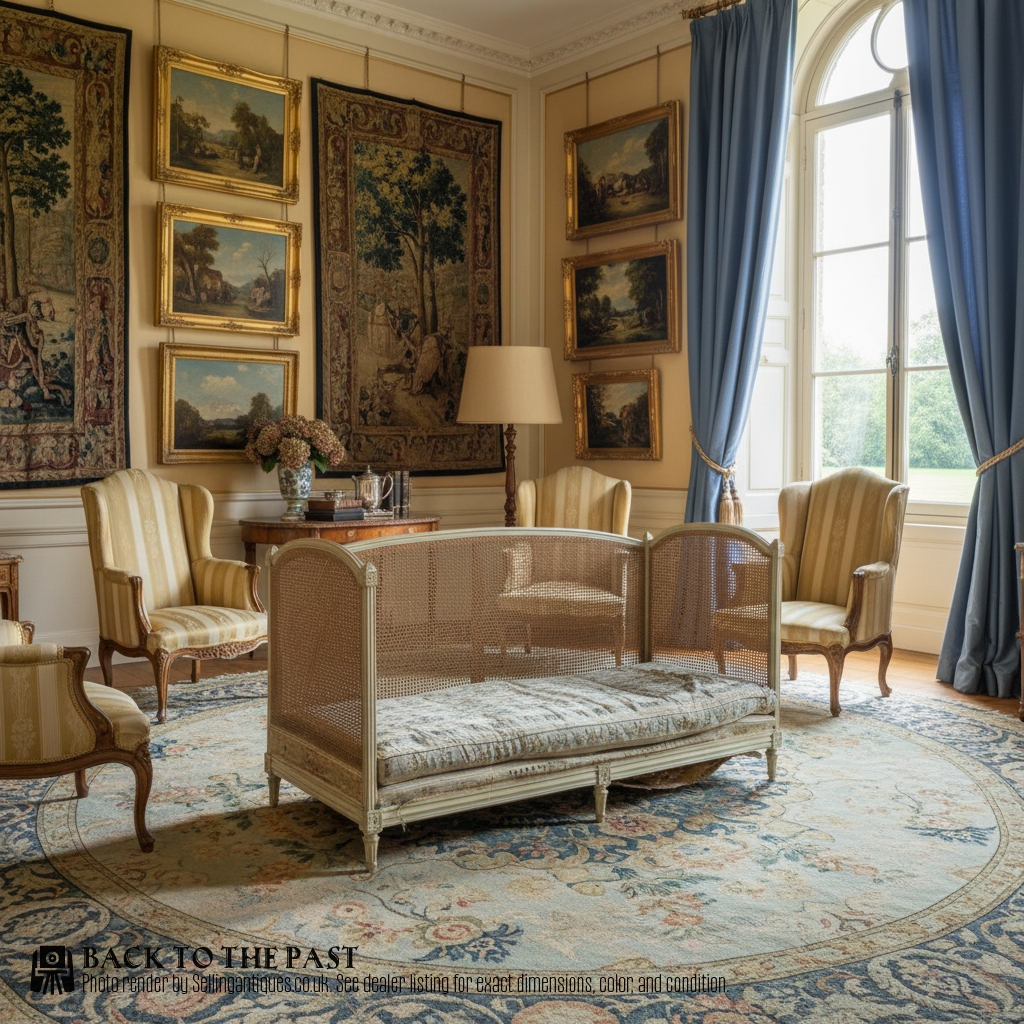
Painted Cane Settee
The painted cane settee is a seating form that combines timber frames with woven cane panels for lightness and strength. When searching for a painted cane settee, buyers encounter pieces spanning the eighteenth century through to the early twentieth century, with French Louis XVI styles and Edwardian examples appearing frequently.
Forms range from daybeds and love seats to window seats and traditional settees. Many examples showcase continental origins, including French chateau designs and Swedish Gustavian pieces, alongside Viennese bentwood seating.
The construction typically integrates painted wood or satinwood frames with rattan cane work, occasionally accented by fabric upholstery, linen, or gold leaf details.
How they were made
Craftsmen utilised beech and satinwood to build sturdy structural frames, shaping them into classic neoclassical and chateau silhouettes. Artisans then applied layers of paint, sometimes incorporating parcel gilt or gold leaf highlights to enrich the decorative surfaces.
Rattan cane was hand-woven into tight patterns across the backrests and seats, providing a resilient yet flexible surface. Certain variations integrated fabric or linen elements alongside the woven cane panels.
Listings feature periods spanning from the 18th century through the 19th century up to 1920, utilising beech, satinwood, and rattan cane.
What varies in quality
Quality rests in the precision of the timber carving and the tightness of the cane weave. Finer examples display crisp detail in neoclassical motifs and smooth application of paint over the wood.
The structural integrity of the frame and the condition of the woven cane distinguish simpler utilitarian benches from sophisticated salon seating.
Thonet
The Painted Cane Settee Glossary
- Cane
- Woven material made from the peeled bark of rattan palm, utilised for flexible and breathable chair seats and backrests. This technique creates a lightweight panel that supports body weight efficiently.
- Bergère
- An enclosed armchair or settee with upholstered or caned sides and a padded seat cushion. It originated in France during the eighteenth century and offers a comfortable, deep seat.
- Gustavian
- The Swedish interpretation of French neoclassical design, characterised by restrained carving and pale painted finishes. This style favours understated elegance over heavy ornamentation.
- Canapé
- The French term for a decorative sofa or settee, often featuring exposed wooden framing and caned panels. These pieces served as formal seating in period salons.
Painted Cane Settee: Frequently Asked Questions
What is a painted cane settee?
A painted cane settee is a wooden seat featuring woven rattan panels and a painted finish. These pieces date from the eighteenth to the twentieth century.
They encompass styles such as French Louis XVI and Swedish Gustavian, functioning as decorative seating for parlours and bedrooms.
How do I identify a period piece?
Period identification relies on examining the timber construction methods, paint layering, and style characteristics. Eighteenth and nineteenth-century examples often display hand-carved details and traditional joinery.
Comparing the silhouette to known neoclassical or Edwardian designs helps determine the precise era of manufacture.
Where were these settees used?
These settees were placed in formal reception rooms, salons, and bedchambers of grand residences. Their lighter frames allowed for easier movement around domestic interiors compared to heavy upholstered furniture.
Today, they function effectively in sunrooms, hallways, and living spaces where a touch of period elegance is desired.
How do I care for cane seating?
Cane requires moderate humidity to prevent the rattan fibres from becoming brittle and snapping. Regular dusting with a soft brush keeps the woven panels clear of debris.
Avoiding direct sunlight and excessive heat preserves both the natural cane and the painted wooden frame over time.