




Grey Wooden Sofa
These grey wooden sofa examples offer painted surfaces and period frames, bringing muted continental elegance and versatile seating to a room.
Grey Wooden Sofa
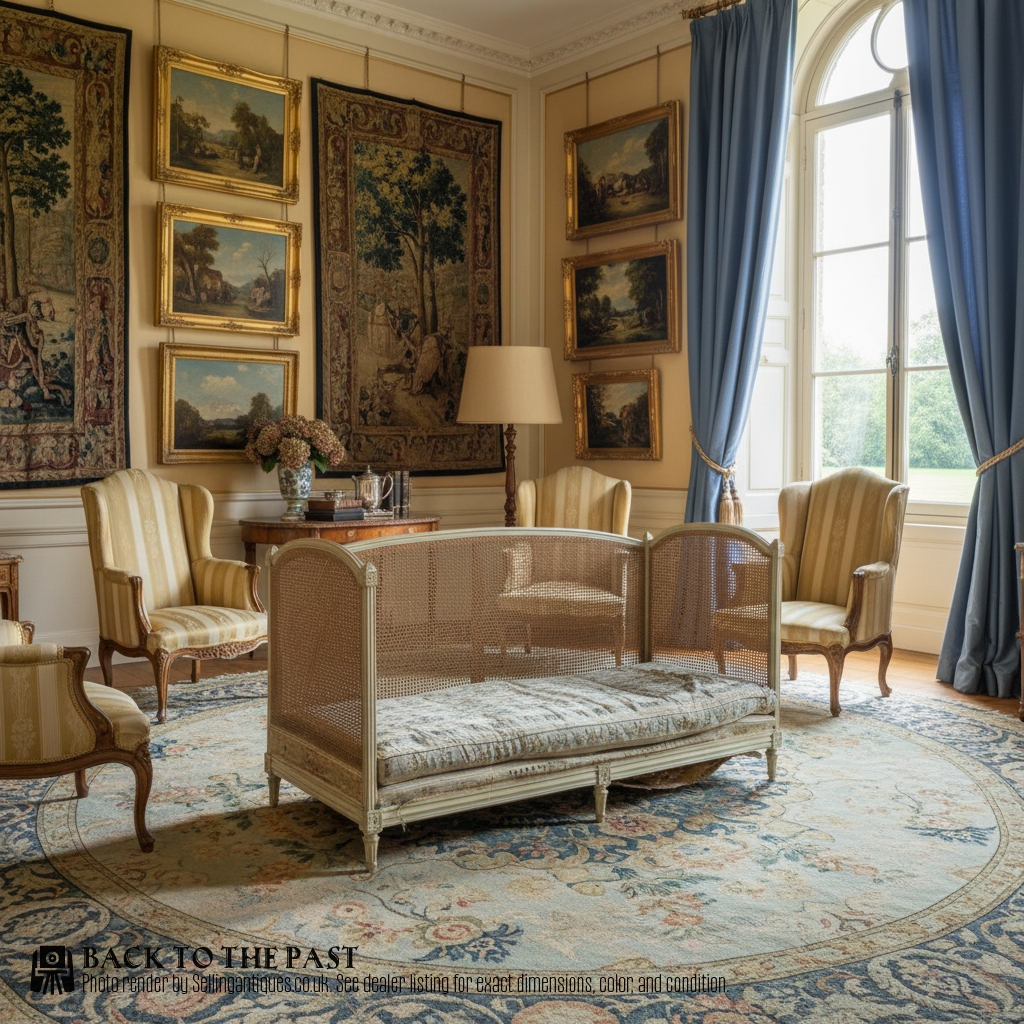
A grey wooden sofa encompasses painted seating pieces from various historical periods, including French Louis XV style, Louis XVI design, and Swedish Gustavian or Scandinavian country traditions. These forms range from two-seat settees and window seats to larger nineteenth-century couches featuring exposed wooden frames.
Buyers browsing for a grey wooden sofa will most frequently encounter painted wooden frames finished in muted tones, often upholstered in linen or general fabric. The selections extend across the eighteenth, nineteenth, and early twentieth centuries, reflecting diverse European craftsmanship from English, French, and Swedish workshops.
How they were made
Construction relies primarily on traditional timber framing using pine, beech, oak, and mahogany, shaped into carved profiles or fluted legs. Frames frequently receive a painted finish, sometimes layered over earlier applications, creating the characteristic weathered grey appearance found on continental seating.
Upholstery methods span from traditional webbing and stuffing beneath linen or fabric coverings to caned panels seen on specific Anglo-Indian pieces. Joinery techniques vary from pegged wooden joints in earlier regional pieces to more refined nineteenth-century cabinetmaking.
Listings feature periods spanning from the eighteenth century to the 1920s, utilising paint, pine, beech, oak, mahogany, and brass.
What varies in quality
Quality separates through the crispness of timber carving, the integrity of the underlying wooden frame, and the authenticity of the painted surface. Pieces displaying hand-carved details on beech or mahogany demonstrate higher craftsmanship than simpler pine or regional variants.
The distinction also lies in the proportion and restraint of the design, such as balanced fluted legs on Louis XVI examples versus heavier Victorian mass. Original surface patination holds greater appeal than unsympathetic modern repainting.
The Grey Wooden Sofa Glossary
- Gustavian
- The Swedish interpretation of neoclassical French style, characterised by restrained carving, light painted finishes, and tapered fluted legs. This aesthetic dominates much of the Scandinavian seating found in this category.
- Bergere
- An enclosed upholstered armchair or sofa with wooden frames and exposed armrests. These pieces typically feature upholstered backrests and seat cushions.
- Settee
- A medium-length upholstered wooden bench with a back and armrests, designed for multiple occupants. It bridges the form between a chair and a full sofa.
- Settle
- A traditional wooden wooden bench featuring a high solid back and enclosed sides to block drafts. Regional examples often incorporate simple painted finishes.
- Fluted
- Decorated with shallow, parallel concave grooves carved vertically into a column or furniture leg. This detail appears frequently on neoclassical and Louis XVI design frames.
Grey Wooden Sofa: Frequently Asked Questions
What periods do these grey wooden sofas come from?
The pieces span from the eighteenth century through the nineteenth century and into the Edwardian era and the 1920s. They encompass various European regional movements.
Most examples lean towards nineteenth-century French and Swedish designs, alongside English and Anglo-Indian variants.
How do I identify a Gustavian sofa?
Gustavian pieces display pale painted surfaces, often grey or off-white, combined with neoclassical motifs like fluted legs and carved rosettes. The lines remain straight and restrained compared to ornate French equivalents.
Swedish makers adapted French Louis XVI styles to create a lighter, more functional aesthetic.
Are these sofas suitable for daily sitting?
These historical seating pieces require consideration of their age and internal construction when used daily. Many retain traditional upholstery that suits careful domestic use.
Linen and fabric coverings vary from modern replacements to older textiles depending on the individual piece.
What wood types are used in these frames?
Framing timbers include pine, beech, oak, and mahogany, chosen for structural stability and carving suitability. Beech and mahogany support finer decorative details on French and Victorian pieces.
Many surfaces are concealed beneath historic paint layers rather than showing natural grain.