
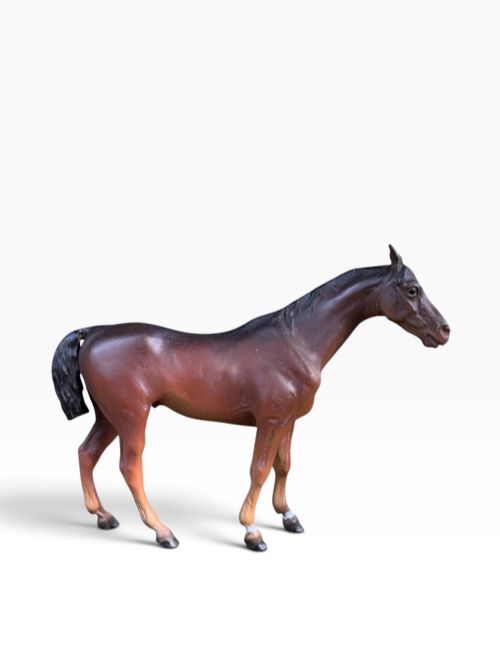
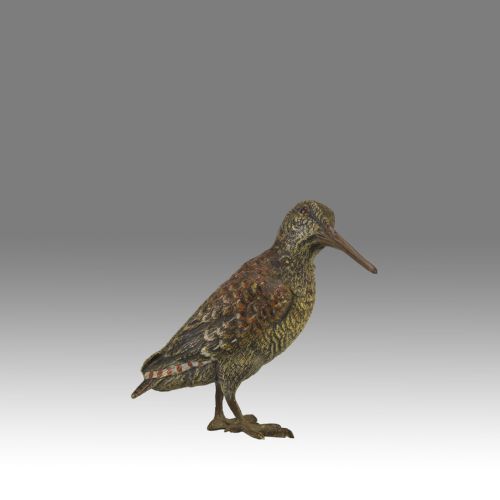
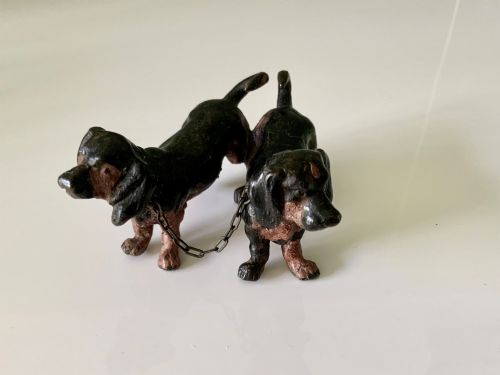
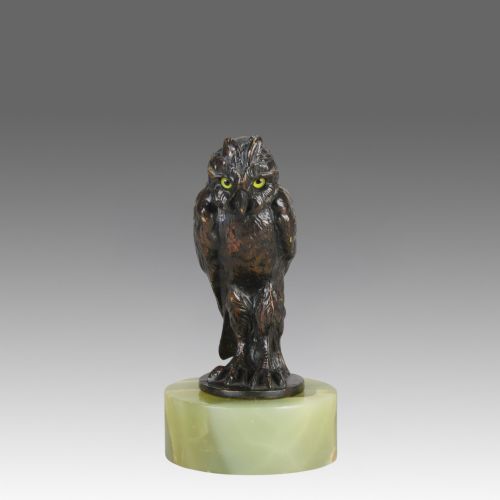
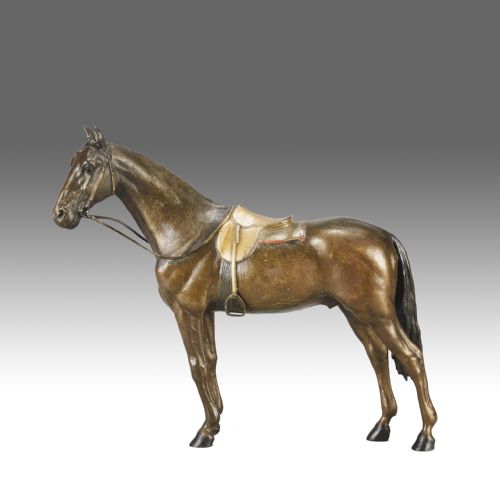
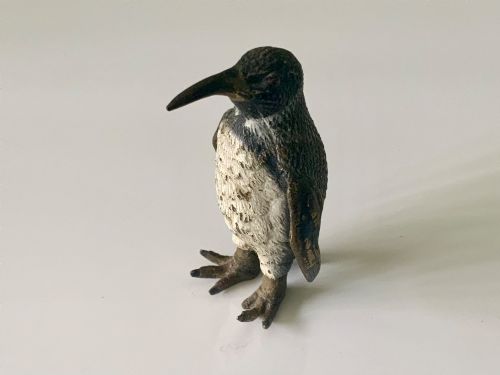
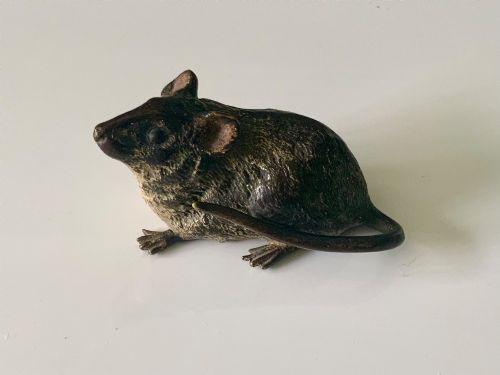
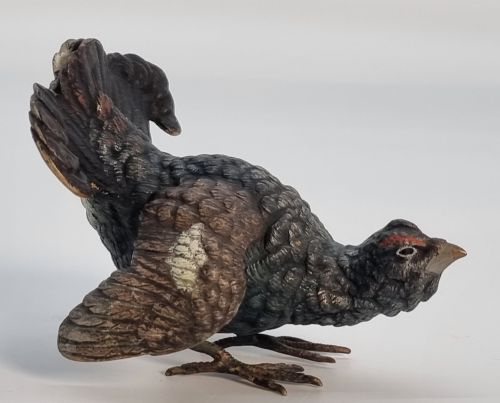


Painted Bronze Animal
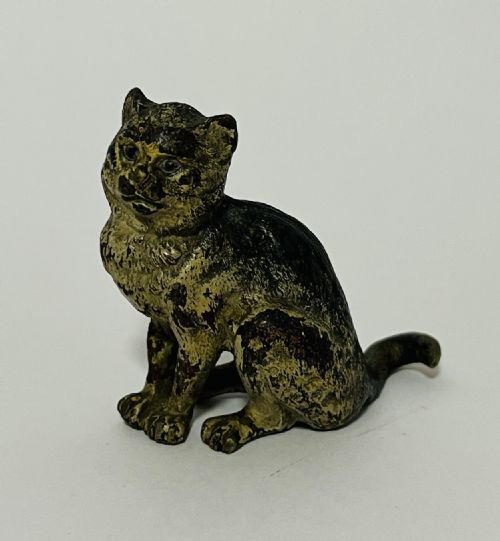
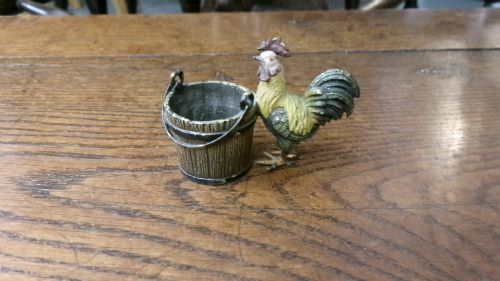
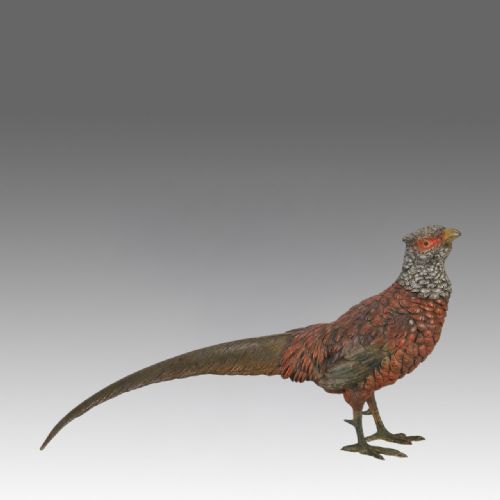
These painted bronze animal figures bring character and colour to a desk or shelf through intricate metalwork.
Painted Bronze Animal
When you search for a painted bronze animal, you are looking at small-scale metal sculptures that capture creatures in realistic or whimsical poses. The versions you are most likely to meet on this page hail predominantly from the late nineteenth and early twentieth centuries, originating from workshops in Austria and particularly Vienna.
These pieces take many forms, ranging from miniature birds and dogs to functional items like inkwells, pin cushions, and car mascots. Many are modelled as specific breeds of dogs, native European wildlife, or exotic animals, often grouped under the broader umbrella of Viennese animalier bronzes.
The selection reflects both standalone cabinet bronzes and desk accessories designed to be handled and admired up close. Their charm lies in the combination of sculptural realism and the lively pigments applied to their surfaces.
Materials and Construction Techniques
The foundation of each piece is cast bronze, shaped through traditional foundry methods to render fine anatomical details such as feathers, fur, and musculature. Artisans then applied cold-painting techniques, meaning the polychrome pigments were laid onto the metal without high-temperature firing, often building up layers of colour by hand.
Certain examples incorporate natural stones such as green onyx or marble, serving as integral bases for mounted studies or desk pieces. The combination of heavy metal casting and delicate surface painting required distinct skill sets, uniting the work of the metal founder and the miniature painter.
Even a prickly hedgehog or a coiled snake received the same meticulous brushwork as the finest songbirds.
Markers of Quality and Craftsmanship
Quality in a painted bronze animal rests primarily upon the crispness of the initial casting and the sensitivity of the hand-painting. Finer examples display sharp feather and fur texture beneath the pigment, whereas lesser pieces can exhibit softened details where the metal mould has worn.
The retention and execution of the polychrome surface separate standard production from superior output. Master workshops achieved subtle shading and naturalistic colour palettes that adhered closely to the anatomy of the subject, while Bergman and comparable makers often incorporated foundry marks or cachets to denote their origin.
Franz Bergman·Jules Moigniez·M.S
The Painted Bronze Animal Glossary
- Cold-Painted Bronze
- A method of decorating bronze sculptures using oil-based or enamel paints applied to an unheated metal surface. This technique allows for detailed polychrome decoration that can capture subtle natural markings.
- Vienna Bronze
- Small bronze sculptures produced in Austrian foundries, particularly during the nineteenth and early twentieth centuries. They are widely recognised for naturalistic animal subjects and vibrant cold-painted finishes.
- Animalier
- A nineteenth-century artistic movement and style focused on the realistic depiction of animals. Sculptors working in this tradition studied anatomy closely to render creatures in dynamic or resting postures.
- Pin Cushion
- A small domestic accessory often combined with a cast bronze animal figure. These functional items placed the sculptural subject atop a padded textile element used for sewing.
Painted Bronze Animal: Frequently Asked Questions
What is a cold-painted bronze animal?
A cold-painted bronze animal is a metal sculpture decorated with hand-applied pigments on an unheated surface. This technique produces detailed polychrome finishes characteristic of nineteenth and early twentieth-century Austrian workshops.
These pieces were typically cast in bronze before receiving layers of oil paint to render realistic fur, plumage, or decorative patterns.
How do I identify a Vienna bronze?
Vienna bronzes are identified by their small scale, detailed casting, and characteristic cold-painted surfaces. Many depict animals, sometimes with humorous or human-like characteristics.
Examining the underside or base can occasionally reveal foundry marks, Bergman urn stamps, or artist ciphers that confirm their origin.
Were these figures used for anything practical?
Many painted bronze animal figures served practical functions beyond mere display. Artisans integrated them into desk accessories such as inkwells, stamp moisteners, and pin cushions.
Others were mounted as car mascots for early automobiles or utilised as architectural ornaments and miniature dolls' house furnishings.
How should I clean a painted bronze?
Cleaning requires gentle dusting with a soft, dry brush to protect the delicate cold-painted surface. Moisture and chemical solvents must be avoided to prevent the original pigments from lifting or flaking off the metal.
Displaying the pieces away from direct sunlight helps preserve the vibrancy of the historical paints over time.