

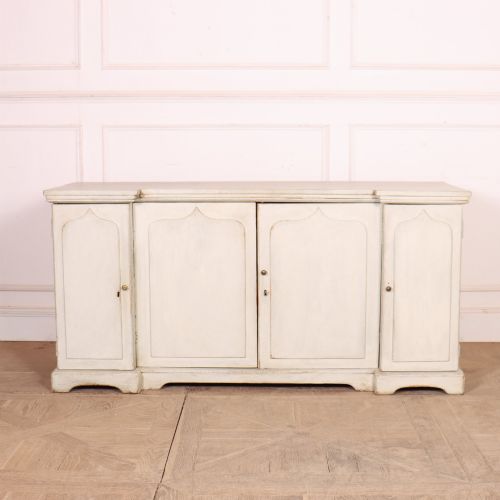
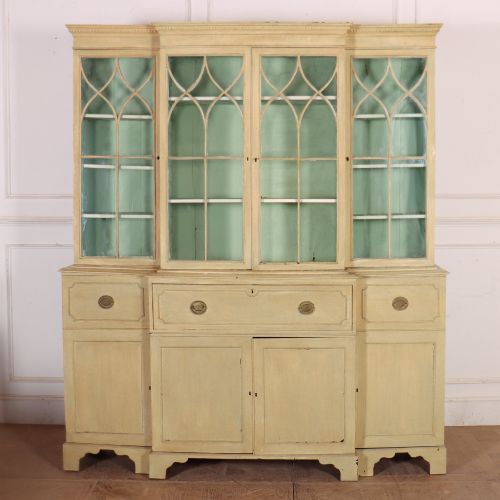


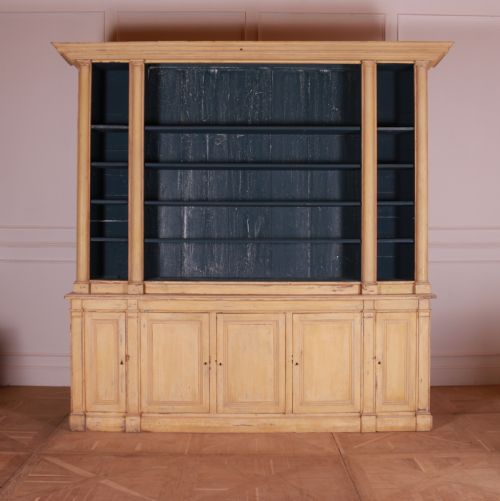


Painted Breakfront Cabinet
A painted breakfront cabinet delivers architectural presence and ample storage, bringing disciplined proportion and decorative surface to a serious interior.
Painted Breakfront Cabinet
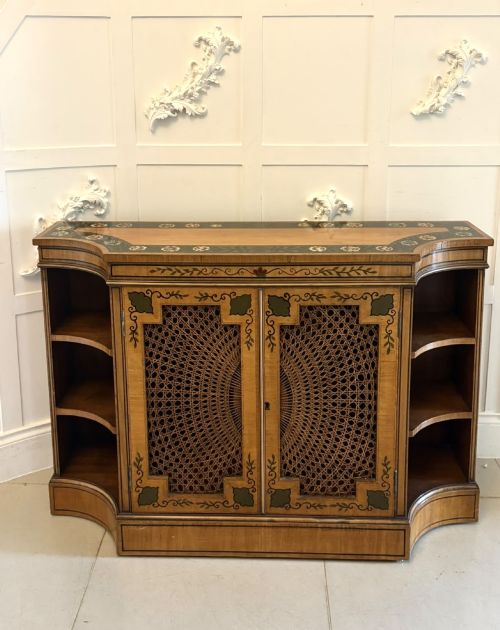
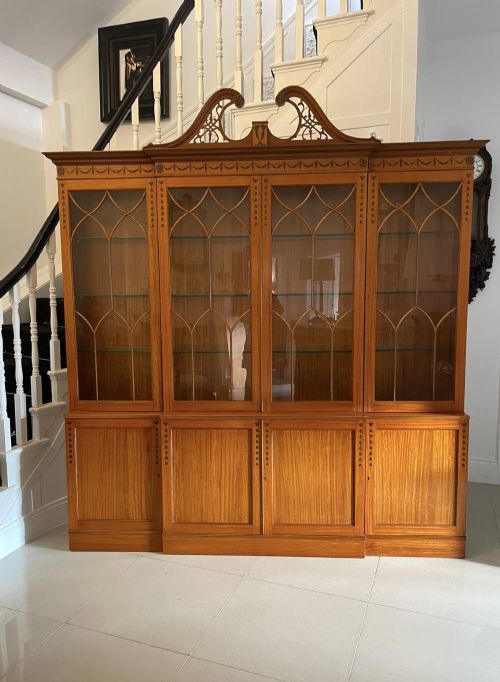
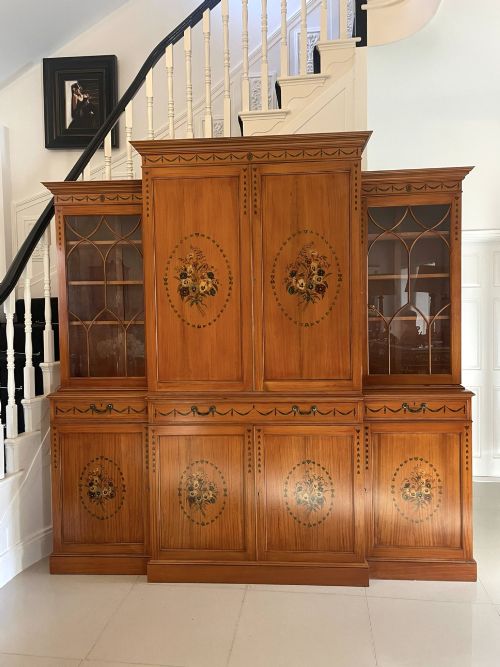
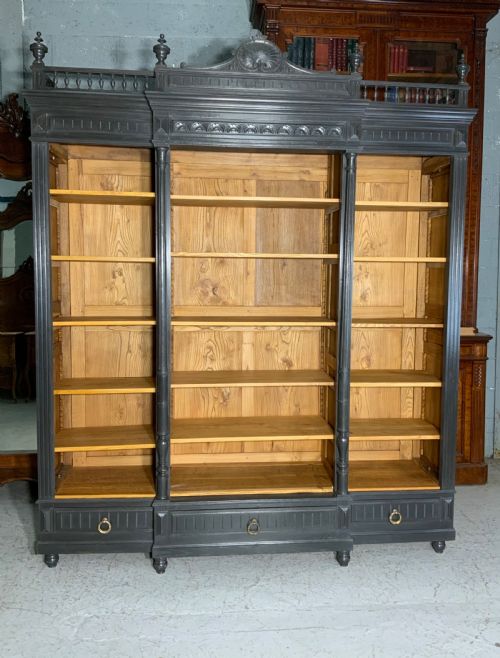
A painted breakfront cabinet presents a distinctive projecting central section flanked by recessed wings, creating a layered facade that catches the light across a room. These substantial storage pieces appear in forms ranging from grand library bookcases and display cabinets to kitchen dressers, housekeepers cupboards, and sideboards.
The selections span centuries of cabinetmaking, featuring Georgian and Victorian pieces alongside later Sheraton Revival interpretations and vernacular Irish, Scottish, and English country pieces. Makers utilised structural timber frames configured to house books, china, or household stores behind glazed or solid doors.
Buyers encounter French provincial models and grand English library cupboards bearing original painted decoration, gilt accents, or satinwood surfaces. The breakfront outline breaks the monotony of a flat wall, lending gravitas and utility to principal reception rooms and studies alike.
Materials and construction methods
Cabinetmakers constructed the primary carcasses and deep dresser bases using solid timbers such as pine and rich satinwood, often applying painted finishes directly to the wood. Glazed doors incorporate glass panels held by timber bars or wire mesh, whilst brass hardware secures the opening sections.
Surface decoration frequently involves original painted motifs applied over satinwood or plain wood grounds, sometimes paired with delicate inlay work. The architectural proportions rely on precise joinery to support the stepped forward-projecting centre without sagging across the span.
Painted Breakfront Cabinet Retail Price Guide 2026
Typical asking prices for painted breakfront cabinet among the pieces listed under this phrase on Sellingantiques today, from the lower quarter to the upper quarter. They describe what is for sale here now, not the wider market.
Object forms grouped under this phrase range from grand library bookcases and display cabinets to country house scullery cupboards and kitchen dressers.
Evaluating cabinet quality
The distinction between standard examples and superior pieces rests on the crispness of the architectural proportions and the integrity of the original painted decoration. Finer cabinets display balanced joinery in the projecting breakfront section and harmonious integration of glazed or solid doors.
Surface preservation dictates much of the standing of an individual piece, with untouched original paint finishes holding distinct visual weight compared to later or overpainted surfaces. The selection of primary timbers, such as figured satinwood paired with refined brass mounts, separates utilitarian workshop output from ambitious cabinetwork.
Edwards & Roberts
The Painted Breakfront Cabinet Glossary
- Breakfront
- A piece of furniture whose front facade projects forward in the centre section while the outer wings recede. This architectural device creates depth and shadow across the elevation of large bookcases and sideboards.
- Satinwood
- A lustrous hardwood native to the tropics, prized by cabinetmakers for its fine grain and golden yellow colour. It provided an ideal smooth ground for painted decoration and delicate inlay during the eighteenth and nineteenth centuries.
- Housekeepers Cupboard
- A large, utilitarian storage cabinet traditionally used for linens, dry goods, and domestic provisions. These pieces typically combine lower drawer or cupboard banks with upper shelving enclosed by doors.
- Astral Glazing
- Window framing within cabinet doors divided into slender wooden bars that hold individual panes of glass. This technique lightened the visual weight of large bookcases while protecting the volumes inside.
- Sheraton Revival
- A late nineteenth-century design movement inspired by the neoclassical furniture of George Sheraton. Pieces from this revival often feature satinwood veneers, painted floral garlands, and restrained classical proportions.
Painted Breakfront Cabinet: Frequently Asked Questions
What is a breakfront cabinet?
A breakfront cabinet is a large storage piece characterised by a central section that steps forward from the flanking side cupboards or bookcases. This stepped design creates a distinct shadow line and architectural rhythm.
Cabinetmakers utilised this configuration for grand libraries and dining rooms to display books or china whilst offering deep storage in the projecting base.
How were housekeepers cupboards used?
Housekeepers cupboards served as the central storage hubs for large country houses, holding household linens, dry goods, and domestic stores. Their sturdy construction in pine or hardwood allowed them to withstand heavy daily use in service quarters.
Over time, these practical cupboards migrated from back-of-house sculleries and pantries into principal living spaces as prized decorative items.
How do I spot original paint?
Original painted decoration shows natural wear, subtle crazing, and integration with the underlying timber grain built up over decades of gentle cleaning. The pigment sits harmoniously within the surface texture rather than masking it completely.
Closer inspection often reveals consistent ageing across the mouldings and panels, distinguishing authentic period decoration from later decorative updates.
Where does the Sheraton Revival style fit?
The Sheraton Revival style emerged in the late nineteenth century as cabinetmakers looked back to the elegant neoclassical proportions of the Georgian era. These pieces frequently combined satinwood surfaces with hand-painted floral details and fine inlay work.
They bring a lighter, more decorative sensibility to the classic breakfront bookcase form compared to heavier Victorian Gothic designs.