



Painted Arm Chair
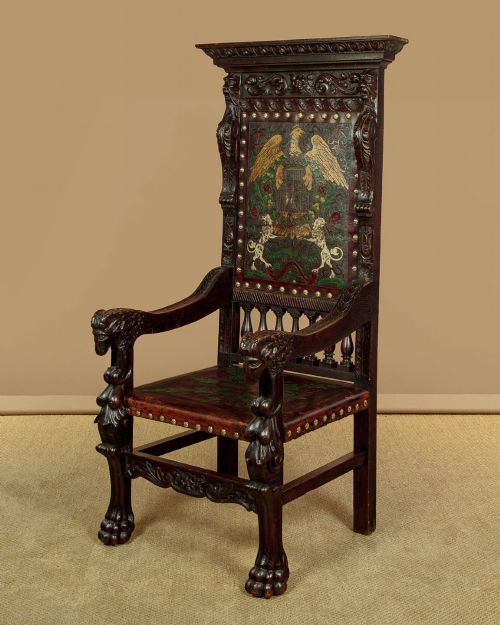
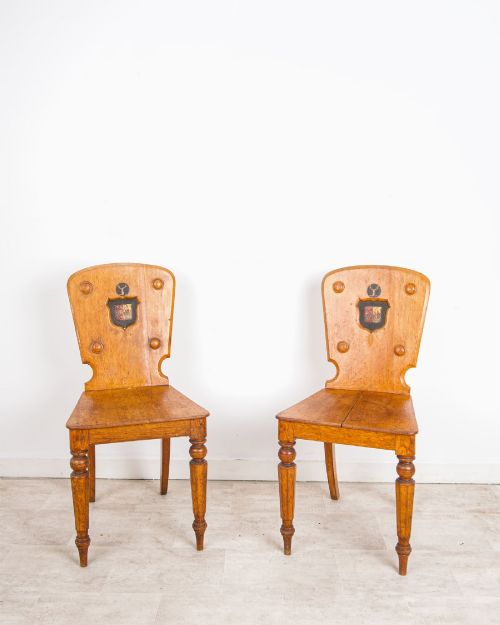
A painted arm chair brings colour and historic form to a room, offering seating with decorative finish.
Painted Arm Chair
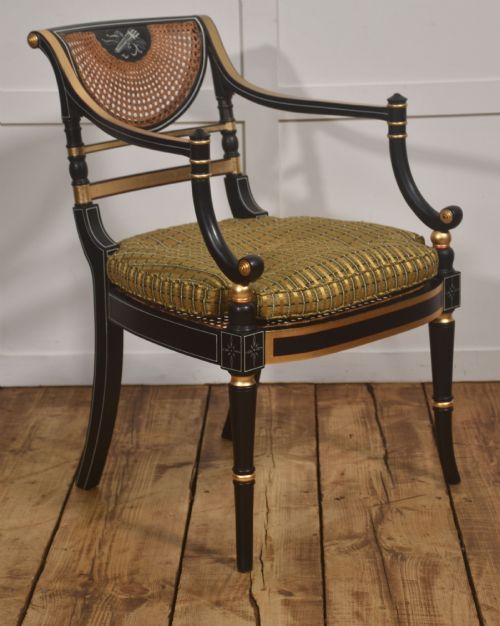
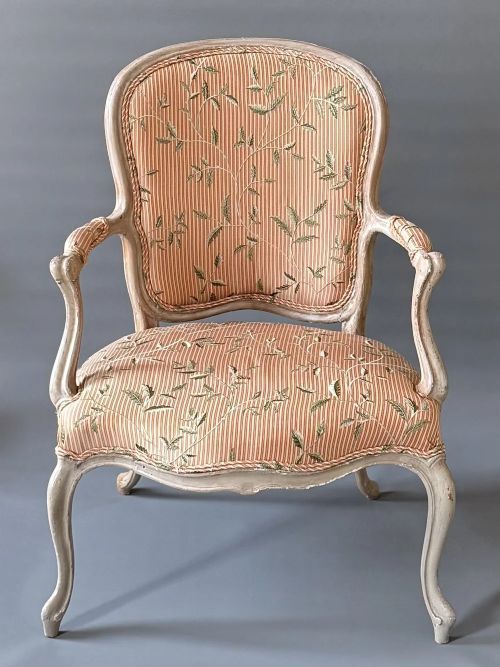
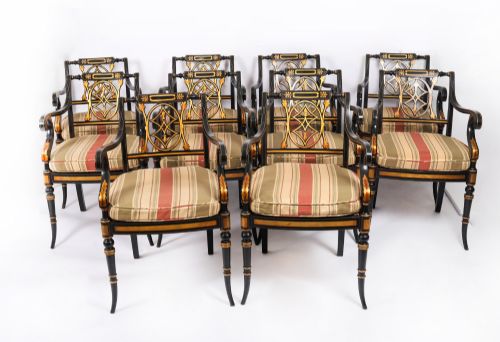
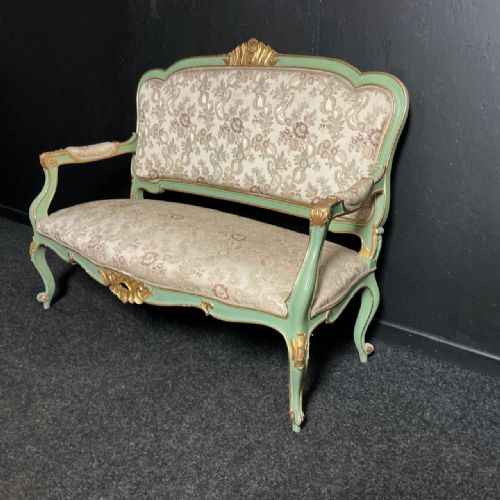
When searching for a painted arm chair, a buyer encounters pieces originating from the eighteenth century through to the early twentieth century. These seat forms include French styles such as Louis XVI and Rococo Revival, alongside English Georgian, Regency, and Arts and Crafts examples.
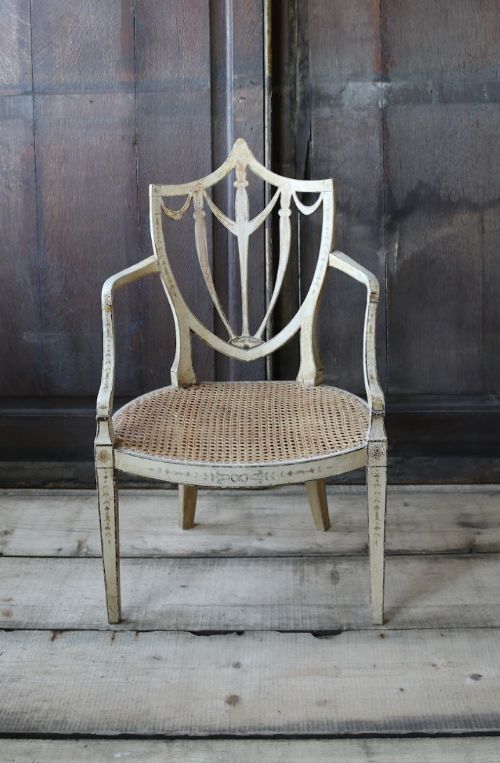
The most common versions met here range from eighteenth-century shield-back and ladder-back chairs to nineteenth-century bergere armchairs and later revival pieces. Many items feature decorative surface treatments applied to wood frames, sometimes paired with upholstered pads or rush seats.
Materials and construction
Makers shaped these frames from timbers such as beech, ash, oak, satinwood, and walnut, often employing traditional joinery before applying surface decoration. Paint finishes, gold leaf, and silver gilt provided the primary visual character, occasionally complemented by hand-woven rush or needlepoint panels.
Upholstered elements utilised fabric or leather secured to the frame, while decorative details such as carving or turned members supported the structural integrity of the seating.
Painted Arm Chair Retail Price Guide 2026
Typical asking prices for painted arm chair among the pieces listed under this phrase on Sellingantiques today, from the lower quarter to the upper quarter. They describe what is for sale here now, not the wider market.
Listings include eighteenth-century pieces alongside Edwardian revival designs, utilising painted wood, beech, ash, and fabric upholstery.
Distinctions in quality
The standard of a piece rests upon the crispness of the original timber carving and the integrity of the surviving surface decoration. Pieces retaining untouched historic paint or parcel-gilt details demonstrate greater authenticity than later repainted examples.
Structural joinery and the retention of original elements, such as rush seats or needlepoint panels, separate standard commercial seating from finer examples produced by established workshops.
Morris and Co·Liberty of London·Anton Rosen·Gillows
The Painted Arm Chair Glossary
- Bergere
- An enclosed upholstered armchair with wooden framing, typically featuring cane or upholstered sides.
- Fauteuil
- An open-arm armchair with an exposed wooden frame originating in France, often carved and painted.
- Japanned
- A European imitation of East Asian lacquerwork, applied as a decorative finish to furniture.
- Shield-back
- A chair back designed in the shape of a heraldic shield, popular in the eighteenth century.
- Rush seat
- A seating surface woven from dried marsh rushes, found on traditional ladder-back chairs.
Painted Arm Chair: Frequently Asked Questions
What periods do these chairs cover?
The listings span from the eighteenth century, through the Georgian and Regency eras, into the nineteenth century and the Edwardian period.
Revival styles from the late nineteenth and early twentieth centuries also appear frequently alongside earlier originals.
How do I identify a French style?
French armchairs often display Louis XV or Louis XVI characteristics, such as curvilinear frames, open arms, and carved floral motifs.
Terms like bergere and fauteuil designate specific French seating forms with exposed wooden structures.
Are the paint finishes original?
Some pieces retain original paint or gilding from their period of manufacture, while others received later decorative coatings.
Listings specify whether a finish is original or applied at a subsequent date.
What seating materials were used?
Frames support a variety of seating surfaces, including traditional woven rush, needlepoint panels, and fabric upholstery.
Wood types like beech, ash, and satinwood form the underlying frames beneath these coverings.