






Painted Glassware
These painted antique glassware pieces bring rich Victorian colour and meticulous enamelling to a room.
Painted Glassware
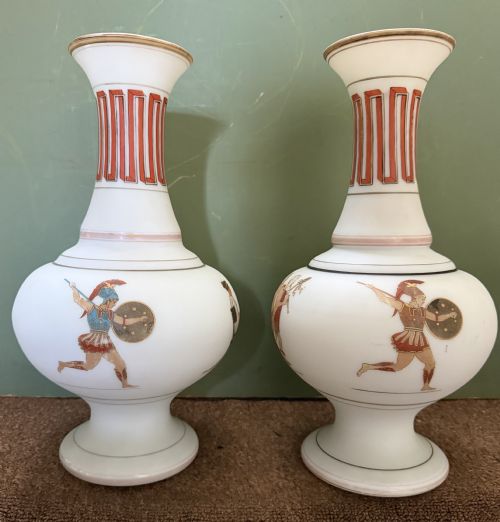
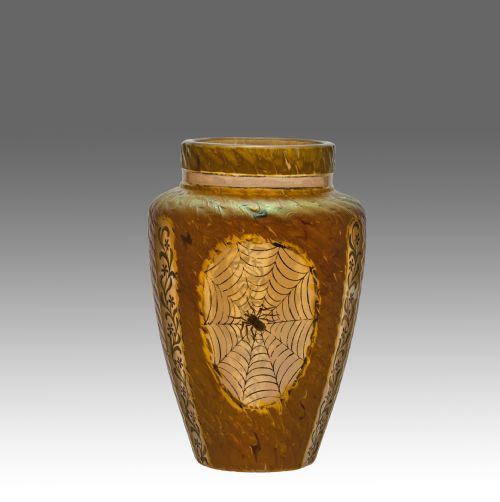
When you search for painted antique glassware, you encounter items shaped into vases, decanters, and garniture sets from the nineteenth and early twentieth centuries. These objects display hand-painted decoration applied over cranberry, blue, green, and opaline glass surfaces.
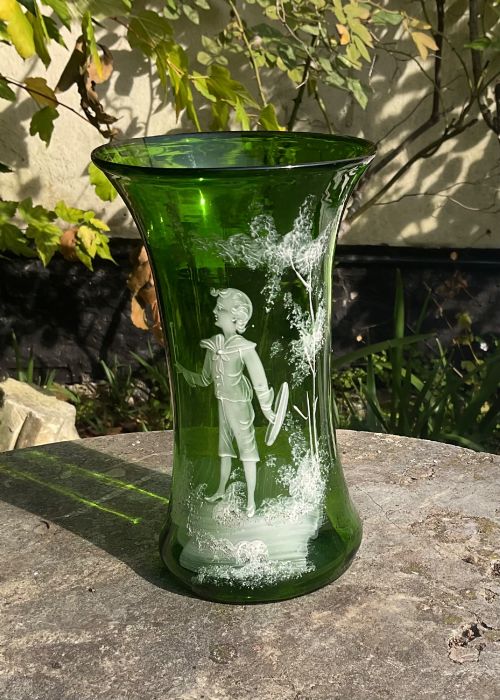
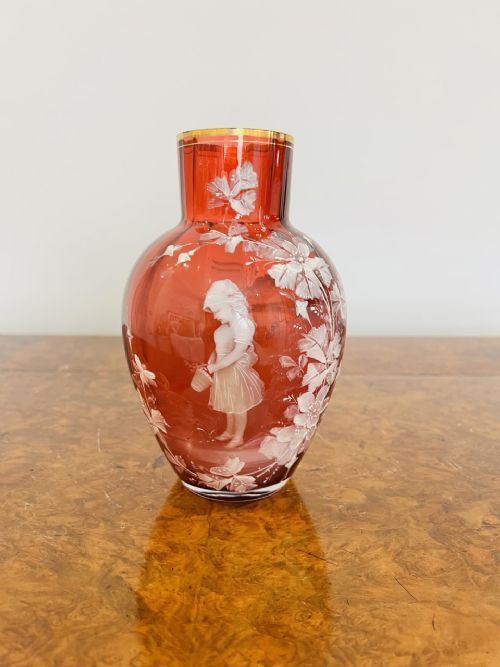
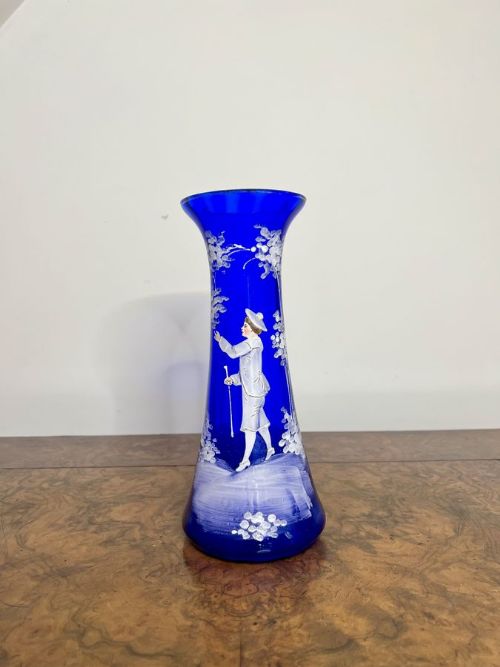
The version you are most likely to meet on this page belongs to the Victorian period, often featuring the distinct white silhouettes of the Mary Gregory style. Alongside these English pieces, Bohemian and German workshops contribute heavily to the selection with robust enamelling.
Vessels span practical serving items like wine glasses, hock glasses, and biscuit barrels to purely decorative jars and ewers. Each form showcases the intersection of glassblowing and detailed brushwork characteristic of the era.
How they were made
Maker operations relied on blown glass foundations, utilising clear or coloured metal such as cranberry and Bristol blue as the base canvas. Artisans then applied vitreous enamel paints by hand, often incorporating gold leaf gilding to highlight rims, handles, and pictorial scenes.
Firing techniques fused the enamel pigments permanently to the glass body at high temperatures. Workshops across Bohemia, Germany, and England employed specific colour palettes and opaque white enamels to create contrast against the translucent vessel walls.
Painted Glassware Retail Price Guide 2026
Typical asking prices for painted glassware among the pieces listed under this phrase on Sellingantiques today, from the lower quarter to the upper quarter. They describe what is for sale here now, not the wider market.
Listings feature items from the Victorian and Edwardian periods, utilising materials such as cranberry glass, gold leaf, and vitreous enamel.
What varies in quality
Execution of the painted detail separates standard domestic wares from exceptional studio output. Fine pieces display precise brushwork in heraldic motifs, figurative portraits, and natural scenes rather than thick, heavy applications of pigment.
The weight and clarity of the underlying glass matrix also determine the tier of the piece. Superior items utilise heavy-gauge crystal or finely cast opaline and cranberry glass that balances the substantial layers of enamel and gold leaf without distortion.
Kralik Glass·Theresienthal·Fritz Heckert·Moser·Lobmeyer·Salviati·Harrach
The Painted Glassware Glossary
- Mary Gregory glass
- A style of glassware decorated with opaque white enamel silhouettes depicting Victorian children in outdoor settings. The technique later expanded to include blue and green glass grounds.
- Roemer
- A traditional Germanic drinking vessel featuring a wide bowl atop a cylindrical stem studded with prunts. These often carry polychrome enamel heraldic motifs.
- Opaline glass
- An opaque or semi-translucent glass developed in pastel shades during the nineteenth century. It frequently serves as a ground for delicate pastoral painting and silver mounts.
- Cranberry glass
- Transparent red glass produced by adding gold chloride to the molten batch. It forms the vibrant base for much of the nineteenth-century decorative tableware on display.
- Historismus
- An artistic style prevalent in Central Europe during the late nineteenth century that revived historical forms and decorative techniques. It heavily influenced enamelled glassware production in Germany and Bohemia.
Painted Glassware: Frequently Asked Questions
How do I identify Bohemian glass?
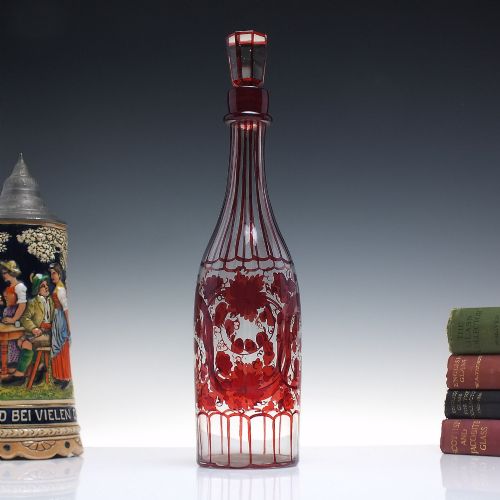
Bohemian pieces often utilise deep coloured glass bases like ruby, green, or blue, combined with heavy gilding and polychrome enamelling. Look for robust forms such as roemers, goblets, and decanters.
Many of these items date from the nineteenth century and reflect regional historicist design movements. The painting frequently includes floral, hunting, or armorial subjects.
Were these items used daily?
Many painted glass pieces served functional roles in the dining room, including wine glasses, hock glasses, cream jugs, and serving decanters. Their robust enamel decoration was fired to withstand careful handling during meals.
Other forms like garniture sets and decorative bells remained strictly ornamental. Today, collectors balance display with gentle use depending on the fragility of the gilding.
How do I date Victorian glassware?
Dating relies on observing form, colour technology, and the style of the painted ornamentation. Mid-nineteenth-century items often favour rich cranberry tones and simple white enamel figures.
Later Victorian and Edwardian examples incorporate more complex iridescent finishes or classical revival motifs. Maker marks, where present, help narrow the production window.