





Padouk Carved Side Table
A padouk carved side table brings dense tropical timber and intricate regional carving straight into a room from the nineteenth century.
Padouk Carved Side Table
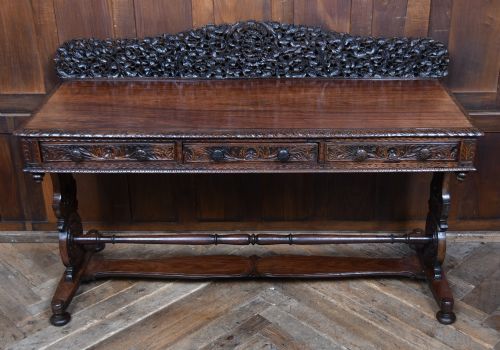
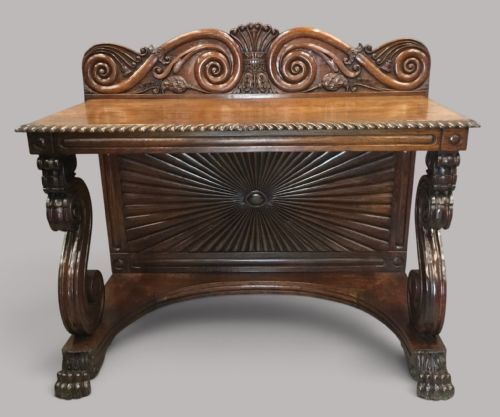
When you search for a padouk carved side table, you are looking at nineteenth-century furniture shaped by Anglo-Indian, Victorian, and Chinese Qing Dynasty workshops. These pieces span side tables, plant stands, occasional tables, and console tables designed for colonial and domestic interiors.
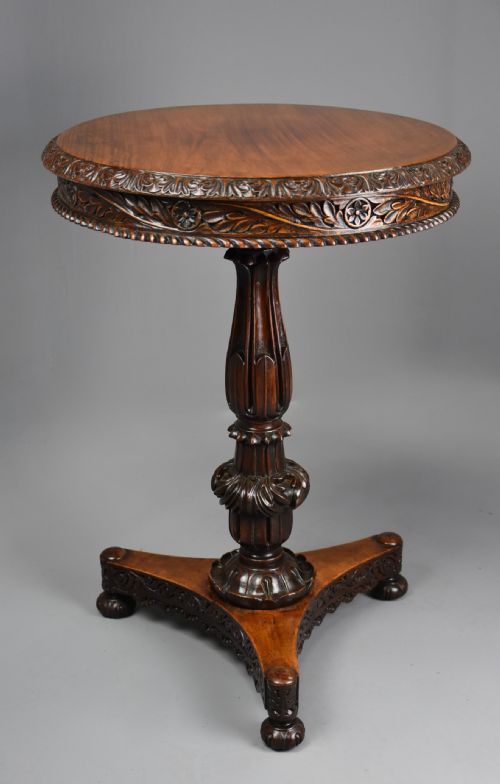
The version you are most likely to meet on this page is an Anglo-Indian or Burmese circular tilt-top occasional table or plant stand from the Victorian era. They combine dense exotic hardwoods with deep relief carving across tops, friezes, and supports.
How they were made
Cabinetmakers utilised heavy padouk wood and Chinese hardwood, known for their deep reddish-brown colour and exceptional density. These timbers took intricate hand-carved detail exceptionally well without splintering.
Joinery incorporated tilting mechanisms with brass fittings, rigid console structures, and occasional marble or porcelain insets. Surfaces were hand-carved with floral, foliate, and figurative motifs reflecting their Anglo-Indian and Chinoiserie origins.
Padouk Carved Side Table Retail Price Guide 2026
Typical asking prices for padouk carved side table among the pieces listed under this phrase on Sellingantiques today, from the lower quarter to the upper quarter. They describe what is for sale here now, not the wider market.
What varies in quality
The distinction between standard examples and superior work lies in the depth and sharpness of the hand-carving. Top-tier pieces display crisply undercut foliage and figures that retain their definition, whereas lesser items show shallow, rounded relief.
Proportion and stability also separate the range, particularly on tilt-top tables and slender stands. Well-balanced pieces maintain solid joints and retain their original hardware without excessive wobble in the column.
The Padouk Carved Side Table Glossary
- Padouk
- A dense tropical hardwood prized for its dark red hue and durability. Cabinetmakers selected it for pieces requiring deep and intricate carving.
- Anglo-Indian
- A style of furniture produced in India during the British colonial period, often combining British furniture forms with traditional Indian carving techniques.
- Tilt-top
- A table construction featuring a mechanism that allows the circular top to pivot vertically when not in use. This design saved space in nineteenth-century rooms.
- Teapoy
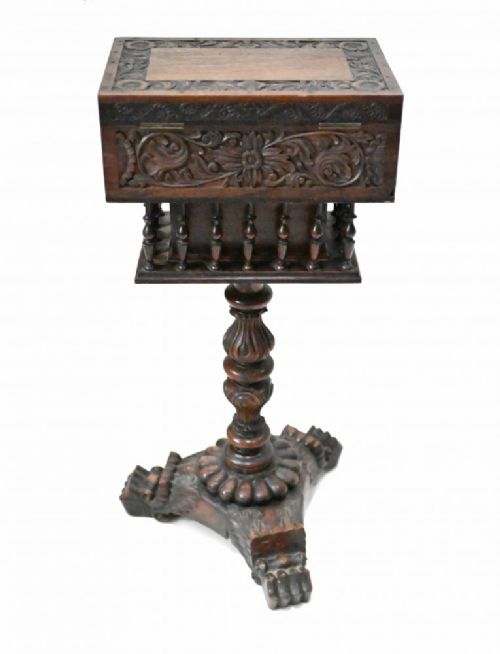
- A small occasional table or stand, originally used for serving tea. In nineteenth-century contexts, the term often applies to small carved occasional tables.
- Chinoiserie
- European decorative styles influenced by Chinese art and design. These pieces often feature motifs associated with Qing Dynasty aesthetics.
Padouk Carved Side Table: Frequently Asked Questions
Where were padouk carved side tables made?
These tables were produced across regions influenced by trade and colonisation during the nineteenth century. Workshops in India, particularly around Bombay, and in China created them for both local and export markets.
Craftsmen adapted traditional forms to suit British and European domestic tastes while employing native timbers and indigenous carving methods.
How do I use a tilt-top table?
The tilting mechanism allows the circular top to be released and pivoted upright against the pedestal base. This made the furniture easier to store against a wall when floor space was required.
When living with these pieces today, check the brass catch or wooden peg mechanism carefully before operating the pivot to ensure smooth movement.
What is the difference between Anglo-Indian and Chinese padouk stands?
Anglo-Indian tables typically feature dense, rolling floral and foliate carving covering the entire surface, often in circular occasional or console formats. Chinese stands from the Qing Dynasty tend to display more architectural framing, occasional marble inserts, and restrained carving.
Both utilise padouk wood, but the decorative vocabulary reflects the distinct regional traditions of the makers.
How do I care for padouk wood furniture?
Padouk is an exceptionally hard and stable timber that requires minimal intervention to maintain its condition. Keep the wood away from direct heat sources and sudden humidity changes to protect the joinery and finish.
Dust regularly with a dry cloth and occasionally apply a neutral furniture wax if the surface appears dry, avoiding heavy silicones.