


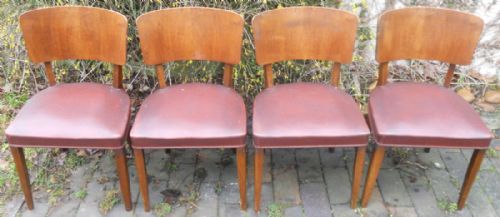
Padded Walnut Dining Chairs
These padded walnut dining chairs combine rich timber frames with tactile upholstery, offering both substance and comfort around the table.
Padded Walnut Dining Chairs
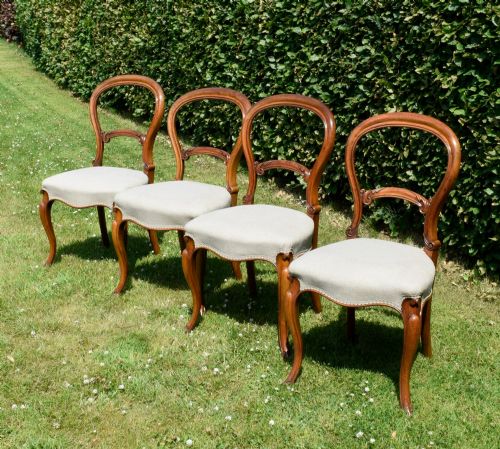
The most common examples you will meet on this page belong to the Victorian period, alongside matched sets from the Edwardian era and the Georgian centuries. Formats range from intimate pairs to larger sets of six or eight chairs suitable for traditional dining spaces.
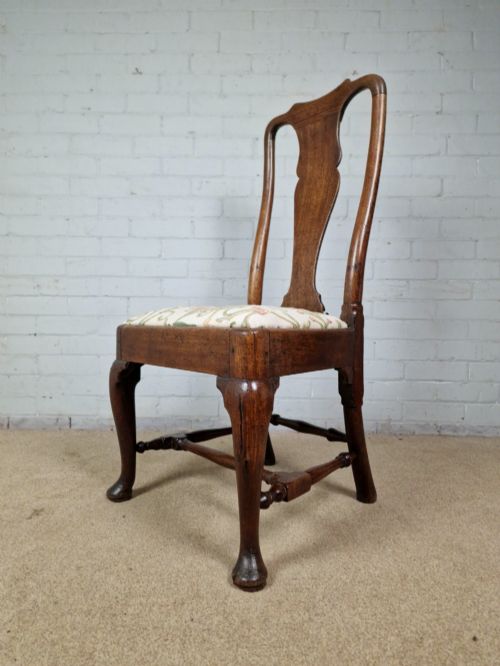
Makers such as Blyth & Sons appear in the record, alongside revival designs inspired by Queen Anne, George II, and Louis XVI styles. Such variety ensures that whether you seek balloon backs or carved splats, the walnut frame provides a consistent visual anchor.
How they were made
Construction relies heavily on solid walnut, sometimes paired with mahogany, shaped through traditional woodworking joints and carving techniques. Frames are often embellished with carved details, reflecting the stylistic preferences of the Georgian, Victorian, or Edwardian makers.
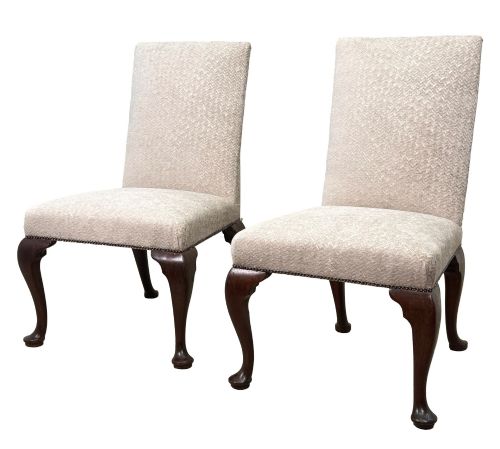
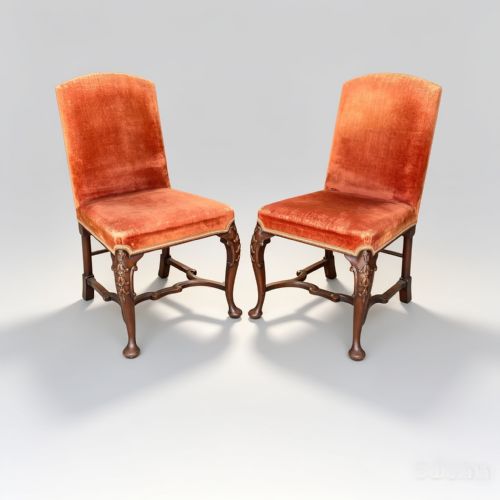
Upholstery methods incorporate textiles such as velvet, tapestry fabric, and general upholstery materials fixed to the padded seats and backs. Brass elements occasionally appear as part of the structural or decorative assembly on these chairs.
One lonely bedroom side chair from 1920 patiently awaits a partner, proving that even dining chairs occasionally need a quiet room of their own.
What varies in quality
The refinement of the walnut carving and the integrity of the timber frame establish the baseline for each chair's standard. Pieces that retain crisp carving details and stable joints demonstrate superior craftsmanship compared to simpler or heavily restored alternatives.
The choice and execution of the upholstery, whether velvet or tapestry fabric, influence the overall character and tactile presence of the seating. Matching sets maintain a higher degree of desirability than assembled groups where individual chairs display subtle variances over time.
Blyth & Sons
The Padded Walnut Dining Chairs Glossary
- Walnut
- A dense, dark hardwood prized for its rich grain patterns and durability in furniture construction. It forms the primary structural material for the frames listed here.
- Side chair
- An upright chair without arms, traditionally designed for use at a dining table or alongside a wall. These form the majority of the seating options available in this category.
- Upholstery
- The padded and fabric-covered components attached to the seat and sometimes the back of a chair. Materials range from velvet to traditional tapestry fabric.
- Balloon back
- A rounded, oval-shaped chair back popular during the Victorian era. This curved profile provides ergonomic support while presenting an elegant silhouette.
- Queen Anne style
- A design movement characterised by cabriole legs, curved lines, and restrained ornamentation. Pieces in this style often feature prominent walnut surfaces.
Padded Walnut Dining Chairs: Frequently Asked Questions
What periods do these chairs cover?
The selection spans from early eighteenth-century Georgian examples through Victorian and Edwardian iterations up to Art Deco designs from the 1930s.
This broad chronological range allows collectors to match specific architectural interiors with period-appropriate seating.
How large are the sets usually?
Listings frequently feature pairs, sets of four, sets of six, or larger groupings of eight chairs.
Smaller pairs suit bedroom or occasional use, while larger sets accommodate formal dining arrangements.
What fabrics cover the seats?
Upholstery options recorded include standard textile, velvet, velvet fabric, and tapestry fabric.
These materials provide the necessary cushioning and texture to complement the dark walnut timber frames.
Are these chairs strictly for dining?
While primarily categorised as dining chairs and side chairs, individual pieces also function effectively as bedroom side chairs.
Their compact proportions without armrests allow them to fit easily into smaller spaces or hallways.