



Padded Mahogany Library Chair
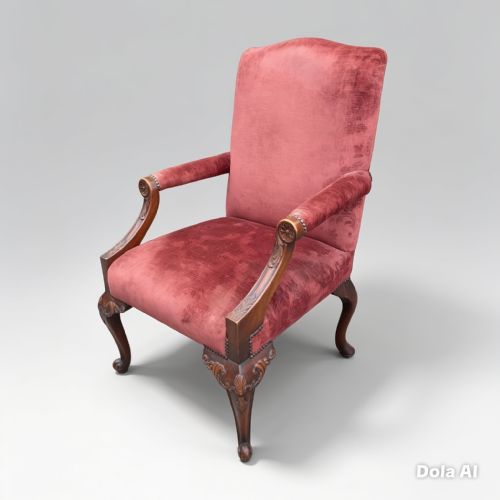
A padded mahogany library chair offers substantial seating built from dense timber, providing comfortable support for study or reading.
Padded Mahogany Library Chair
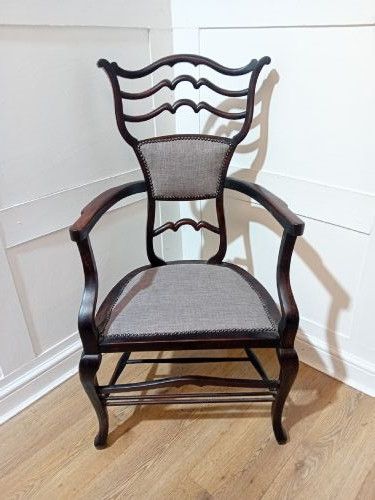
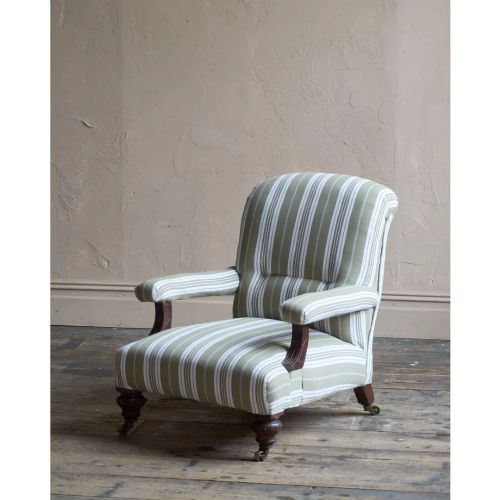
These chairs combine timber frames with upholstered elements, creating a functional piece meant for studies, libraries, and country houses. The selection includes examples with cane seating, leather pads, and fabric covers such as velvet, damask, and calico.
Makers recorded in the evidence range from cabinet makers like Howard & Sons and Holland & Son to individual craftsmen such as J. Mills and Daws. These pieces reflect the prevailing tastes of their respective centuries, including Regency and George III styles.
How they were made
The primary structural material is mahogany, selected for its strength and rich grain, often shaped into open armframes or enclosed wing chair designs. Brass hardware and castors frequently complement the timber frames on desk and library seating.
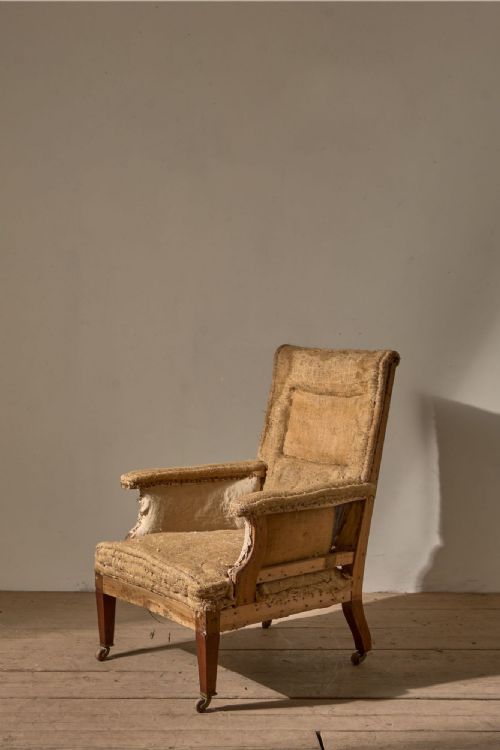
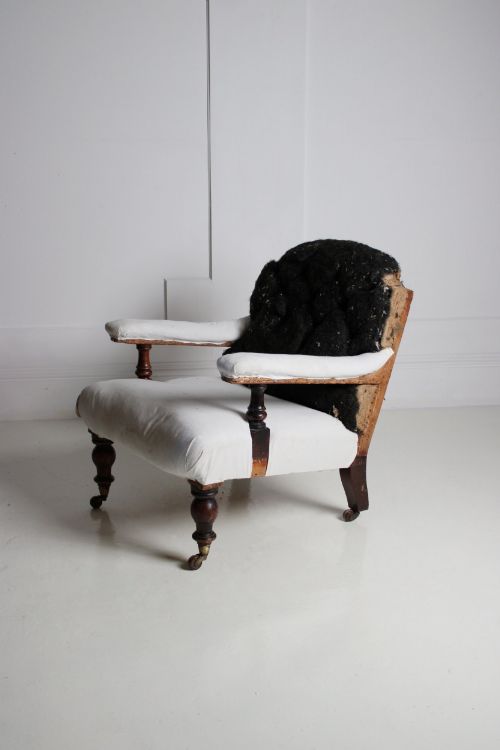
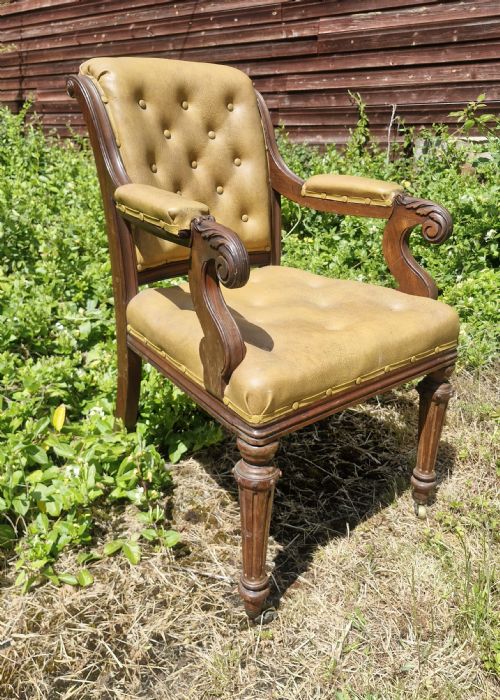
Upholstery methods involve stuffing padding materials beneath outer coverings of leather, velvet, calico, or damask, sometimes secured with buttoning. Caning techniques are also utilised on the seats and backs of bergère armchairs.
Listings span from the 18th century through the Edwardian period, utilising mahogany, leather, brass, and velvet.
What varies in quality
Quality in a padded mahogany library chair rests on the crispness of the timber carving and the structural integrity of the mahogany frame. Pieces bearing the stamps of established makers demonstrate higher craftsmanship than anonymous workshop output.
The choice of secondary materials, such as fine supple leather versus standard fabric, and the sophistication of the upholstery work distinguish simpler domestic seating from grand country house examples.
Howard & Sons·Holland & Son·J.Mills·Daws
The Padded Mahogany Library Chair Glossary
- Gainsborough armchair
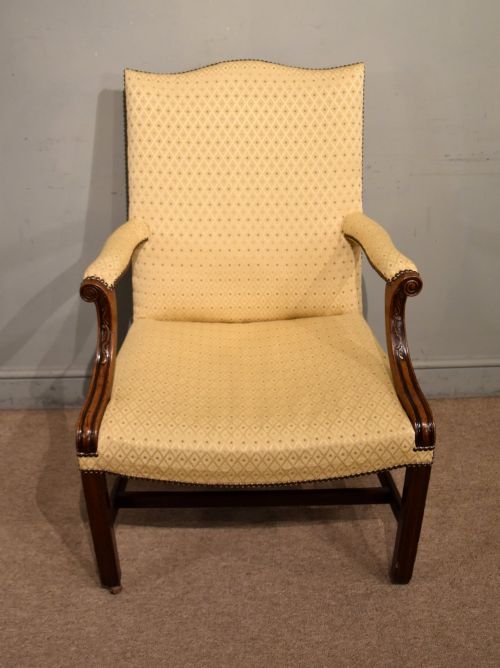
- A wide, open-armed armchair with a padded back and seat, typically standing on four legs and dating from the eighteenth century. This form provided comfortable seating for writing desks.
- Bergère
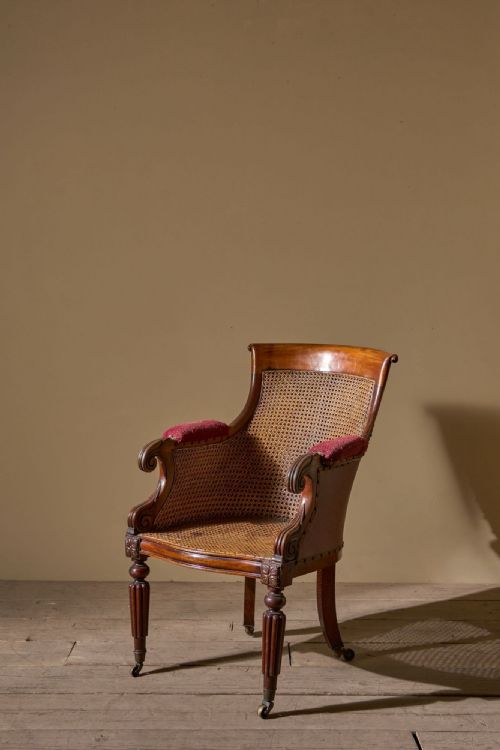
- An enclosed armchair with stuffed upholstery and wooden or cane sides. The wooden frame is usually exposed and polished mahogany.
- Calico
- A plain-woven cotton fabric used historically as an initial upholstery layer or base cover beneath decorative textiles. It provides a neutral foundation for top upholstery.
- Damask
- A reversible figured fabric woven on a jacquard loom, frequently utilised for luxurious chair upholstery. Its patterns catch the light against the dark mahogany frame.
- Show frame
- A polished wooden structural framework left exposed around the upholstered padding of an armchair. It highlights the quality of the mahogany timber.
Padded Mahogany Library Chair: Frequently Asked Questions
What is a Gainsborough chair?
A Gainsborough chair is a wide, open-armed seat with a padded back designed during the eighteenth century for reading and writing at a desk.
These pieces feature exposed mahogany frames and upholstered seats, offering both stability and comfort for library use.
How do I identify a bergere?
A bergere is distinguished by its enclosed upholstered sides and back, frequently incorporating woven cane panels into the wooden frame.
Such chairs date across various periods including the Regency and nineteenth century, combining timber structure with soft squab cushions.
Where were these chairs used?
These chairs were traditionally placed in private libraries, studies, and grand country house drawing rooms for reading and desk work.
They provided durable yet comfortable seating tailored to the domestic routines of Georgian and Victorian households.
What distinguishes Victorian examples?
Victorian library chairs often feature heavier mahogany frames, buttoned upholstery, and cabriole legs tailored to nineteenth-century domestic interiors.
They range from gentleman's fireside armchairs to cane-seated country house designs and desk chairs.