


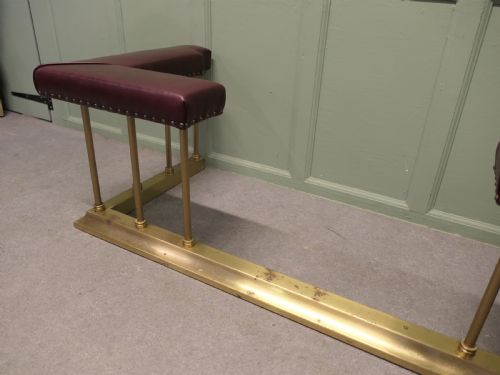


Padded Fireplace Fender Seat
A padded fireplace fender seat offers low fireside perching, combining a sturdy metal base with a cushioned top.
Padded Fireplace Fender Seat
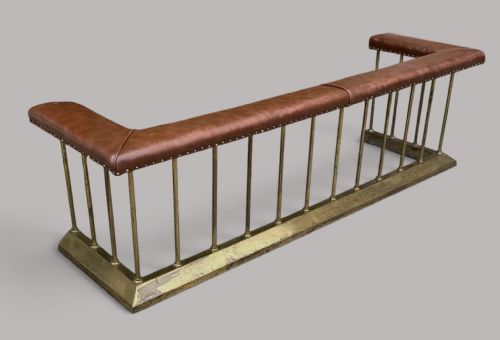
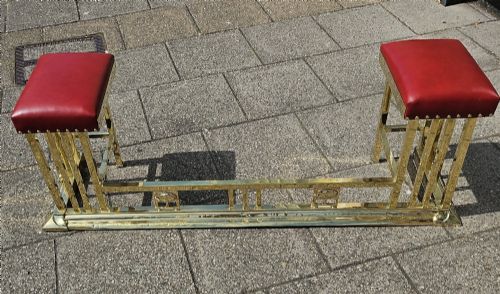
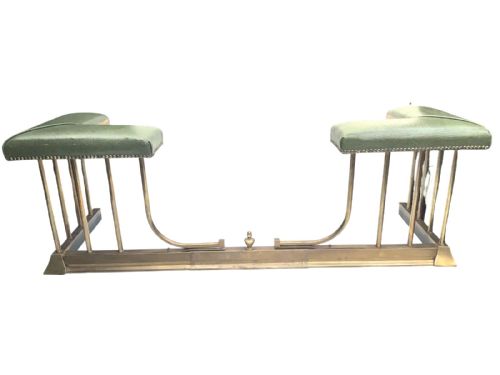
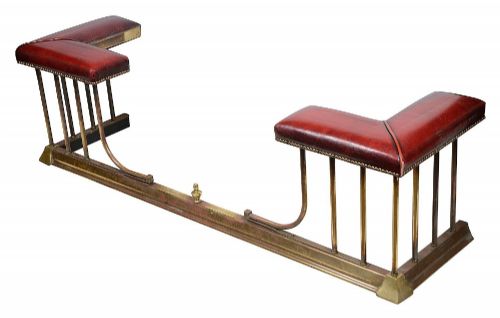
A padded fireplace fender seat is a substantial fireside accessory that bridges the gap between hearth protection and extra seating. These pieces combine a rigid metal frame with a low upholstered top designed for sitting close to the hearth.
The versions met on this page span the nineteenth century into the twentieth, taking forms such as club fenders and fireside benches. Materials range from brass and steel to wrought iron, paired with leather and fabric upholstery.
Origins stretch across the Victorian and Edwardian eras into the Art Deco period, showing how domestic fireside furniture evolved. Buyers encounter everything from substantial brass structures to dainty iron designs.
Construction and materials
Frames rely on metals like brass, steel, wrought iron, and copper, shaped into sturdy architectural barriers for the hearth. These metal components provide the structural weight necessary to anchor the piece firmly against the hearthstone.
Upholstery involves leather, velvet, and various fabrics stretched over padding to form the seat. Skilled hands fastened these materials to the metal bases, creating low benches that withstand regular fireside use.
Listings feature pieces spanning the nineteenth century, the Victorian and Edwardian eras, through to the Art Deco period of the 1920s and 1930s.
Judging the work
Quality rests in the substance of the metal frame and the integrity of its construction. Heavier brass and cast steel indicate robust manufacture, whereas lighter sections serve more decorative or modest roles.
The finish of the metal and the treatment of the upholstery distinguish the standard of the piece. Mature leather and secure fixings demonstrate attention to detail that elevates the furnishing.
The Padded Fireplace Fender Seat Glossary
- Club fender
- A low fireside seat built around a metal fender frame. It originated in gentlemen's clubs and country houses to provide close seating to the hearth.
- Brass
- A yellow alloy of copper and zinc used extensively for the rigid frames of these hearth seats. It offers a bright metallic appearance that polishes to a shine.
- Wrought iron
- An iron alloy beaten or bent into shape by hand, frequently utilised for heavier or more decorative hearth furniture. Its fibrous structure provides notable durability.
- Upholstery
- The materials comprising the padding, springs, and covering of a seat. In these pieces, it usually takes the form of tan leather or fabric cushions.
Padded Fireplace Fender Seat: Frequently Asked Questions
What is a padded fireplace fender seat?
A padded fireplace fender seat is a fireside furnishing that combines a metal hearth guard with a cushioned bench top. It allows people to sit right by the fire while keeping stray embers contained.
These pieces typically feature metal frames made of brass or steel paired with leather or fabric upholstery. They serve as both practical hearth accessories and extra seating in reception rooms.
How were club fenders used?
Club fenders were positioned directly around the hearth to keep logs and ashes from rolling onto the carpet. The padded top provided a warm, low seat close to the fire.
They allowed guests to gather around the warmth of an open fire without blocking the entire hearth. This dual purpose made them popular in large country houses and clubs.
How do I date a brass fender?
Dating a brass fender involves examining the weight of the metal, the style of the frame, and the method of construction. Victorian examples often show heavier brass casting and mature leather work.
Edwardian and later pieces might display sleeker lines or incorporate Art Deco stylistic touches. Comparing the materials and overall form helps place the piece within its historical period.
Are these seats comfortable?
These seats are built low to the ground with firm padding designed for short periods of fireside perching. The cushions use leather or fabric stretched over supportive internal structures.
While they provide a convenient spot near the hearth, they are intended as auxiliary seating rather than lounge chairs. Their primary design priority remains the structural protection of the fireplace area.