





Padded Bedroom Stool
A padded bedroom stool provides low, upholstered seating before a dressing table, combining practical utility with period timber frames.
Padded Bedroom Stool
A padded bedroom stool is a low seat designed primarily for use at a dressing table or in a private chamber. These pieces appear across the nineteenth century and into the early twentieth century, spanning Victorian, Edwardian, and Regency periods alongside revival styles.
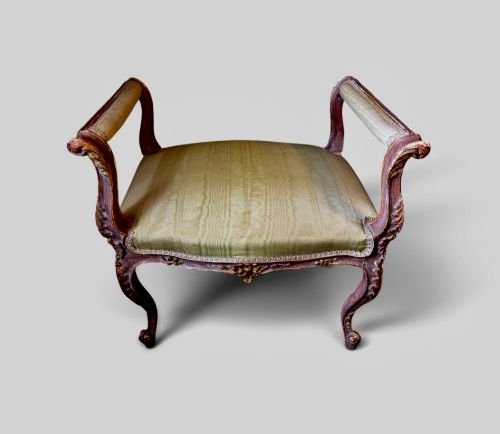
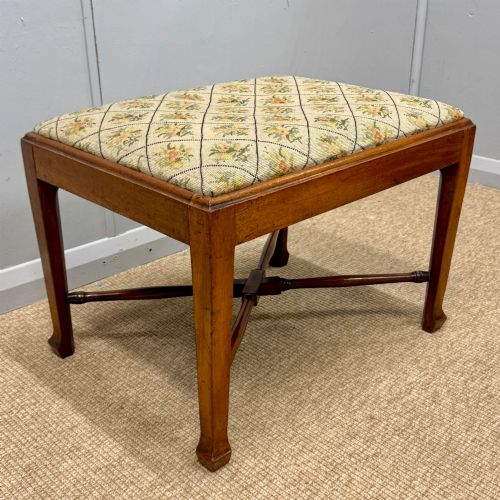
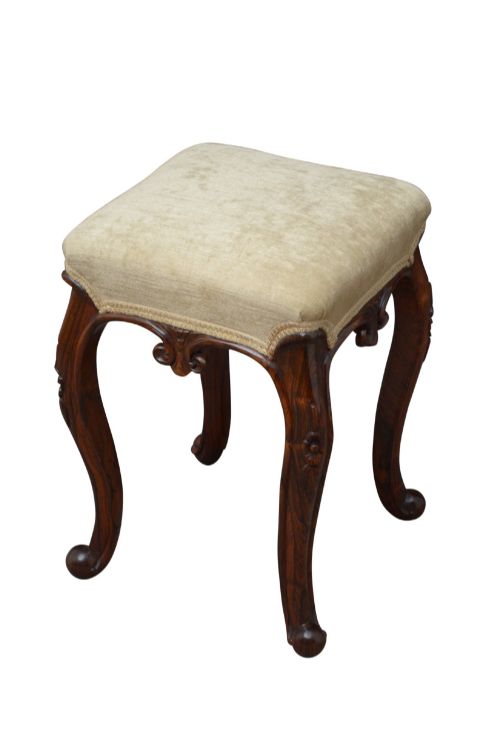
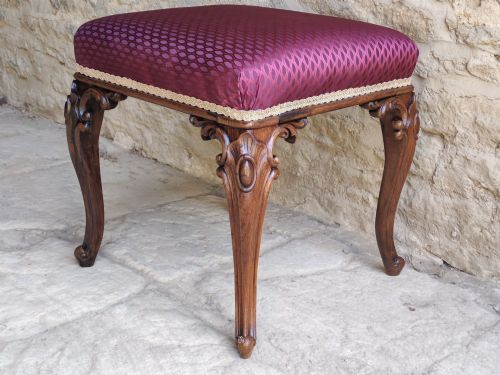
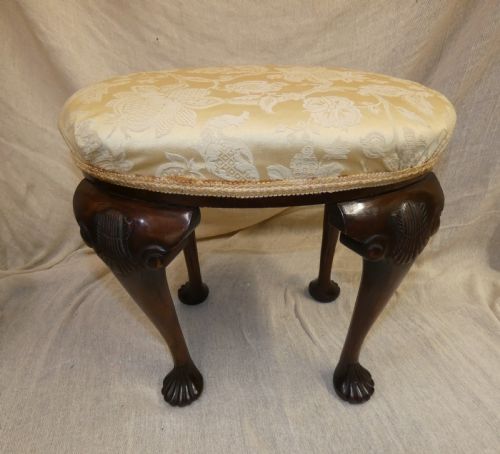
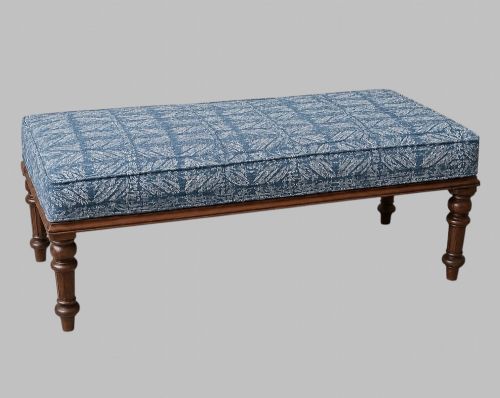
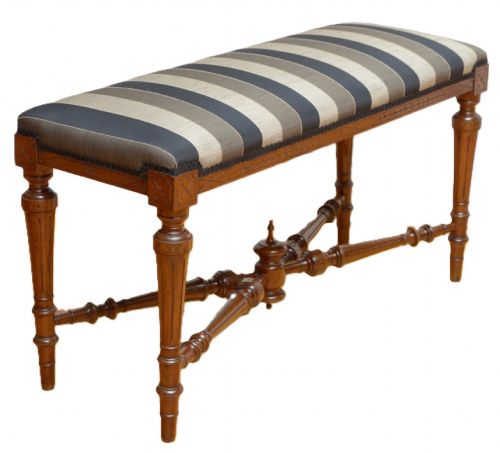
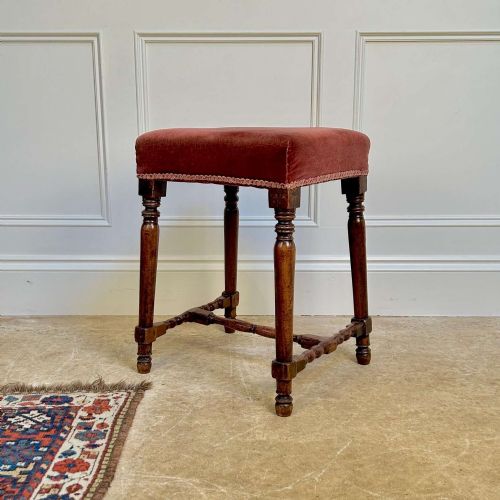
The most common form on this page is the dressing table stool, often constructed in walnut or mahogany with upholstered tops in fabrics such as velvet, linen, and tapestry. Alongside these sit window seats, long ottomans, and duet stools designed for two sitters.
Makers utilised timber frames ranging from simple cabriole legs to elaborate giltwood and inlaid decoration. Pieces frequently reflect stylistic revivals including Queen Anne, Georgian, and Victorian Rococo motifs.
Materials and construction
Makers built these frames predominantly from dense hardwoods, with walnut, mahogany, and rosewood appearing routinely alongside rarer timbers such as goncalo alves and giltwood. Solid timber provides the structural integrity necessary for low seating frames subjected to daily movement.
Upholstery relies on traditional textiles, utilising velvet, chenille, linen, needlepoint, and tapestry secured over padded foundations. Brass hardware and decorative details occasionally accent the wooden structures.
Listings feature walnut, mahogany, and rosewood frames alongside fabrics ranging from simple linen to intricate needlepoint.
Distinguishing quality in seating
Quality rests in the precision of the timber carving and the architectural proportion of the frame. Superior examples display crisp cabriole legs, finely turned supports, or intact period inlays rather than plain, unarticulated surfaces.
The standard of upholstery work dictates longevity and finish. Professional re-covering in period-appropriate textiles like Robert Kime fabrics or traditional needlepoint elevates the presentation of antique walnut and mahogany frames.
Whytock and Reid
The Padded Bedroom Stool Glossary
- Cabriole leg
- A furniture leg that curves outward at the knee and tapers inward to an ankle, common on walnut and mahogany stools from the eighteenth century onward.
- Window seat
- A long, narrow bench designed to fit within a window recess, frequently featuring upholstered pads and arms at either end.
- Duet stool
- An elongated seat built to accommodate two people simultaneously, often featuring turned or fluted legs.
- Ottoman
- A low, upholstered piece of furniture without a back, sometimes incorporating internal storage beneath a hinged lid.
- Goncalo Alves
- A dense, exotic hardwood with distinct dark brown figuring, utilised for select mid-nineteenth-century frames.
Padded Bedroom Stool: Frequently Asked Questions
Where should I place a padded bedroom stool?
These low seats fit naturally in front of a dressing table or vanity unit. They also function well at the foot of a bed or beneath a window recess as a slim bench.
Because of their compact footprint, they transfer easily between dressing areas and quiet corners where occasional seating is required.
How do I distinguish a Victorian stool from an Edwardian one?
Victorian examples tend to employ heavier timbers like rosewood and dark walnut, often featuring carved cabriole legs or ornate Rococo revival details. Upholstery on these pieces frequently involves rich velvet, heavy tapestry, or needlepoint.
Edwardian pieces generally lean towards lighter mahogany frames, sometimes incorporating inlaid stringing or simpler stylistic revivals reflecting eighteenth-century aesthetics.
Are modern fabrics acceptable on antique stools?
Many period frames receive professional re-covering in contemporary or traditional textiles to suit modern interiors while preserving the antique wooden base beneath. High-end restorations utilise high-quality linen or designer prints that complement the age of the timber.
Replacing worn covers is standard practice for functional seating and does not detract from the historical integrity of the frame.
What is the difference between a footstool and a dressing stool?
A dressing stool stands at a height suitable for sitting upright at a dressing table, generally supported by taller legs. Footstools sit much lower to the ground and are designed purely for resting feet while seated elsewhere.
Some larger ottoman-style stools combine seating height with internal storage compartments for bedroom linens.