

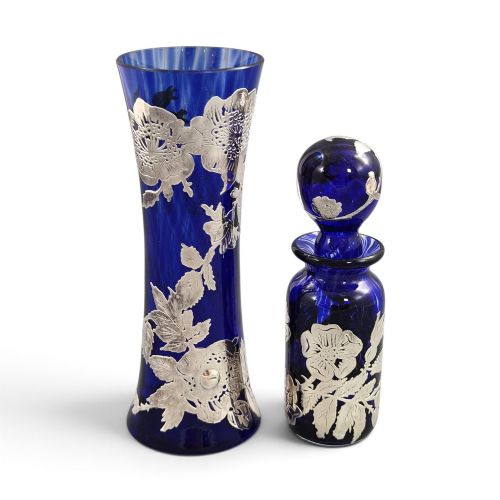
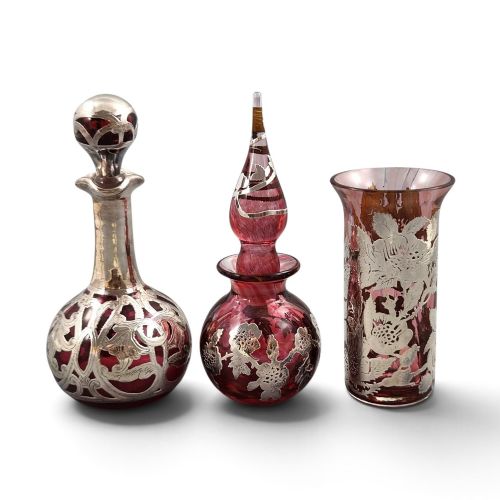
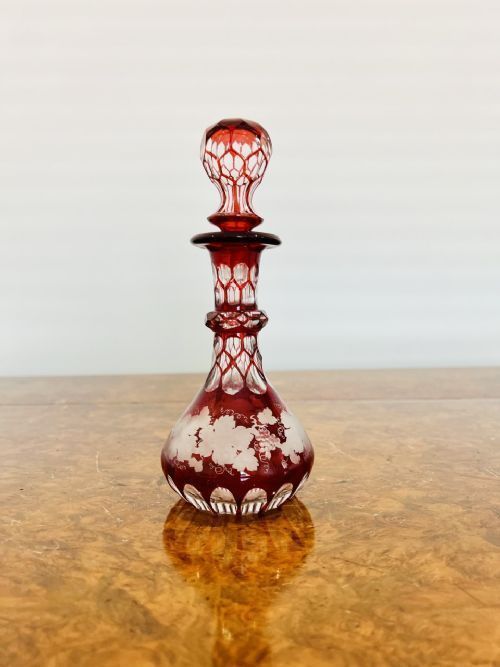


Overlay Glass Perfume
Overlay glass perfume bottles bring vibrant colour and intricate metalwork to dressing tables, spanning Victorian, Edwardian, and Art Deco periods.
Overlay Glass Perfume
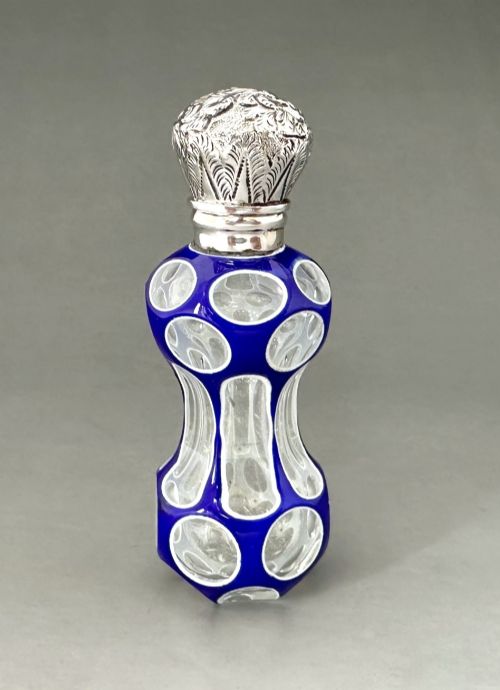
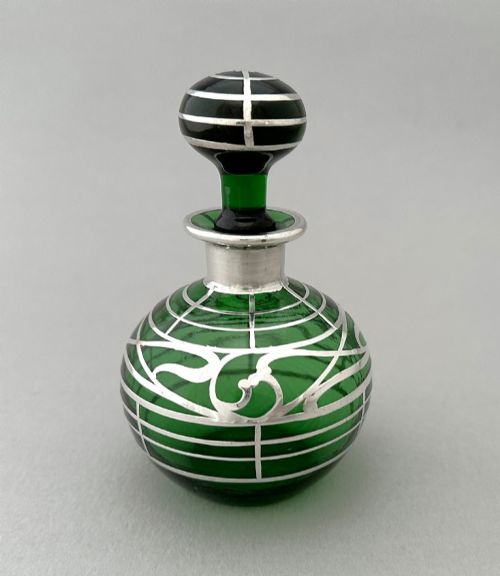
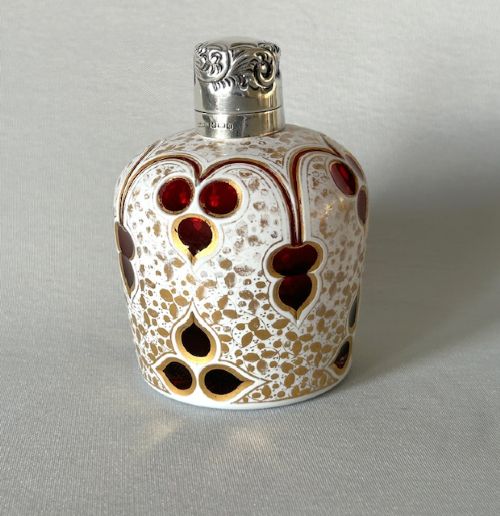
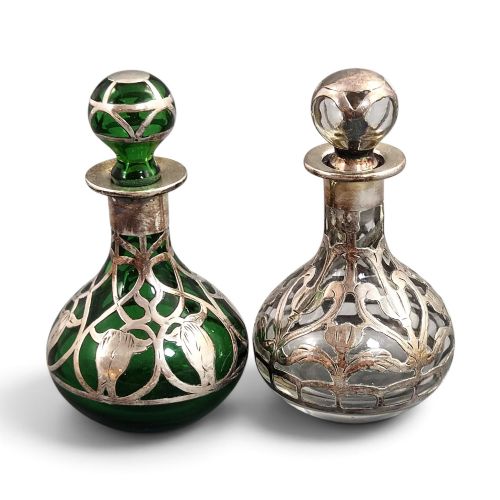
When you search for overlay glass perfume, you encounter scent bottles and vanity glassware featuring layered glass bodies decorated with metal mounts.
The pieces most frequently met on this page date from the Victorian and Edwardian eras, alongside later studio glass examples.
Objects range from miniature Victorian scent bottles to large French chatelaine pieces and Art Deco crystal atomizers.
Materials and construction
Makers combined cut glass, ruby glass, cranberry glass, green glass, and cobalt glass with sterling silver or silver mounts.
Techniques involved casing or layering different coloured glass bodies before cutting patterns and mounting them with silver overlay.
Overlay Glass Perfume Retail Price Guide 2026
Typical asking prices for overlay glass perfume among the pieces listed under this phrase on Sellingantiques today, from the lower quarter to the upper quarter. They describe what is for sale here now, not the wider market.
Listings feature periods spanning from early Victorian and 19th Century pieces through Edwardian, Art Deco, and 1960 studio glass.
Assessing quality and design
Distinction lies in the depth of the glass cutting and the complexity of the silver work, particularly in Art Nouveau designs.
The precision of the metal mount fitting the glass body separates standard production from finer examples.
Gorham·Laugharne Glass
The Overlay Glass Perfume Glossary
- Overlay glass
- Glass formed with multiple distinct layers of different colours, where the outer layer is partially cut away to reveal the colour beneath.
- Sterling silver
- A silver alloy containing 92.5 percent pure silver by mass, frequently utilised for mounts and decorative overlays.
- Chatelaine scent bottle
- A portable bottle designed to be suspended from a waist hook along with other useful household items.
- Cranberry glass
- A rich red glass produced by adding gold chloride to the molten mixture, popular during the nineteenth century.
- Mercury glass
- Silvered glass featuring a double-walled blown construction with a reflective silvery lining.
Overlay Glass Perfume: Frequently Asked Questions
How do I identify a Victorian overlay glass perfume bottle?
Victorian examples typically feature deep ruby, green, or cranberry glass paired with ornate silver mounts or cut designs. Look for period hallmarks on the silver components where present.
Construction methods and glass colours align with nineteenth-century manufacturing techniques found across English and Bohemian pieces.
What is the difference between a scent bottle and an atomizer?
Scent bottles utilise a fitted stopper to seal the fragrance inside the glass vessel. Atomizers incorporate a spray mechanism, often seen on later Art Deco crystal pieces.
Both serve vanity purposes but employ distinct delivery methods for the perfume.
How should I display overlay glass perfume bottles?
Display these bottles on mirrored vanity trays or glass shelves where light can pass through the coloured glass layers. Positioning them away from direct sunlight preserves the vibrancy of ruby and cranberry hues.
Ensure stability on flat surfaces, particularly for tall vases and chatelaine bottles.
Are these perfume bottles suitable for holding fragrance today?
Many vintage and antique bottles retain functional stoppers and sound glass interiors. Check the internal neck and stopper ground fit to confirm proper sealing before adding liquid.
Gentle cleaning with warm water suffices for maintenance without damaging the silver overlay.