





Overlaid Crystal Glasses
These overlaid crystal glasses bring rich colour and deep cut glasswork to the table, offering a striking display of nineteenth and twentieth century craftsmanship.
Overlaid Crystal Glasses
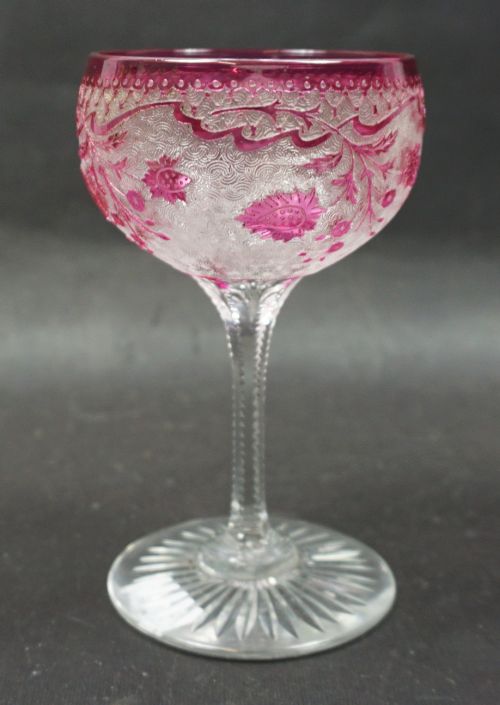
Overlaid crystal glasses encompass hock glasses, champagne coupes, and wine glasses featuring layers of coloured glass fused over clear crystal. These drinking vessels emerge from periods spanning the Victorian era through to the 1930s Art Deco movement.
English, French, and Bohemian makers dominate the forms found here, with notable output from Belgian workshops. Buyers encounter hock glasses and champagne coupes most frequently, alongside table settings of finger bowls and drinking vessels.
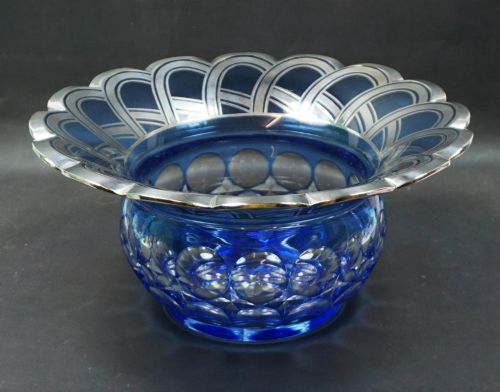
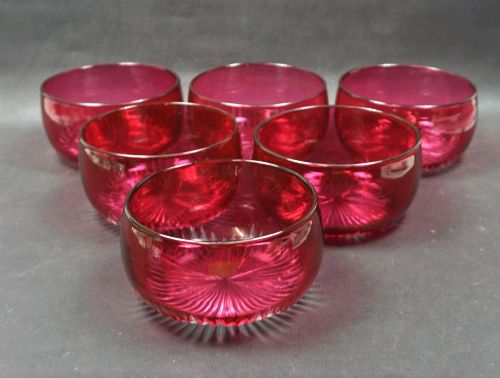
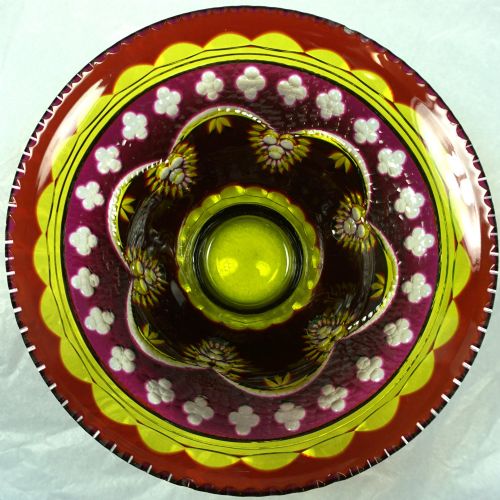
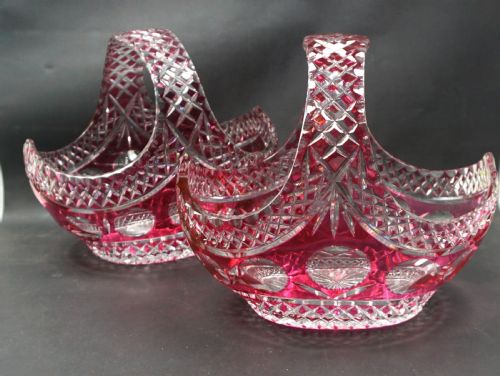
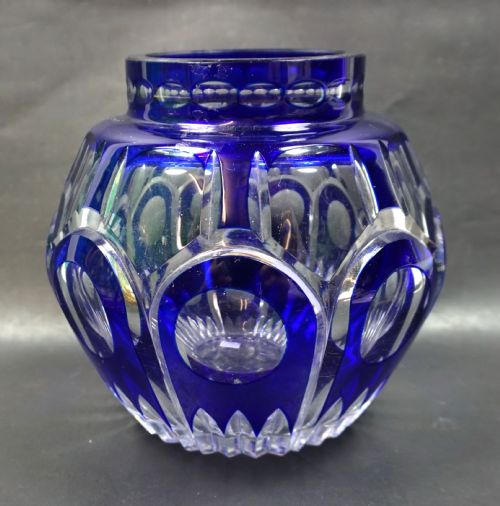
The selection demonstrates how artisans applied saturated hues such as cranberry, cobalt blue, and green over a clear crystal base. These pieces reflect stylistic shifts from ornate Victorian engraving to geometric Art Deco and Vienna Secession designs.
How they were made
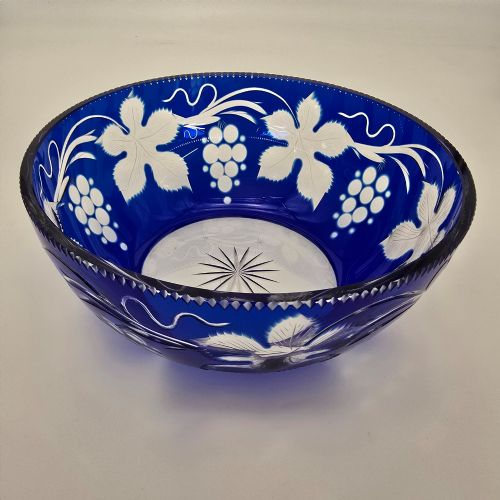
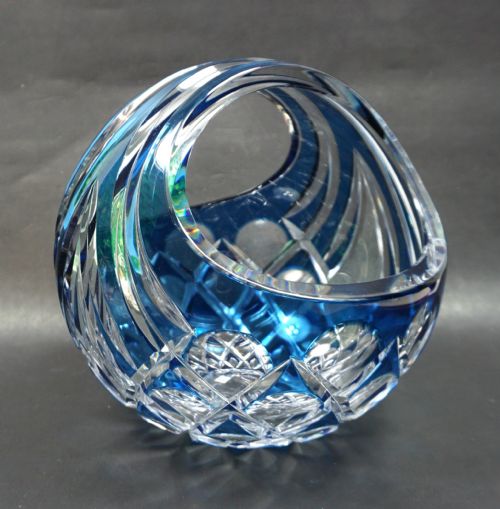
Cased glass techniques involve fusing a thin layer of coloured glass over a clear lead crystal core while the material remains molten. Artisans then use heavy cutting wheels to slice through the outer colour layer, exposing the clear crystal beneath in precise geometric or floral patterns.
Makers finished the pieces by polishing the cut facets to a bright shine and frequently added hand engraving or gilt detailing. Some examples incorporate silver mounts or sterling silver collars fitted directly to the glass bodies.
Overlaid Crystal Glasses Retail Price Guide 2026
Typical asking prices for overlaid crystal glasses among the pieces listed under this phrase on Sellingantiques today, from the lower quarter to the upper quarter. They describe what is for sale here now, not the wider market.
Several hock glasses arrive with personality intact, having survived over a century of toasts without losing their brilliant colour.
What varies in quality
Depth and clarity of the colour layer dictate the visual impact, alongside the crispness of the wheel cutting. Superior examples display sharp, clean margins where the outer colour meets the exposed crystal ground.
The weight of the lead crystal and the complexity of the engraved or cut motifs separate standard production from finer studio output. Pieces bearing specific designer attributions or factory marks command greater recognition among collectors.
Val St Lambert·Baccarat·St Louis Massenet·Moser·Meyr s Neffe
The Overlaid Crystal Glasses Glossary
- Cased glass
- A method where a layer of coloured glass is encased within or applied over another layer of glass. This technique forms the foundation for all overlaid crystal items.
- Hock glass
- A tall stemmed wine glass traditionally used for German white wines. These often feature coloured bowls cut back to clear crystal.
- Champagne coupe
- A shallow, broad-bowled stemmed glass designed for sparkling wine. Many antique examples showcase intricate cut patterns around the rim.
- Cut to clear
- A decorative process where thick coloured glass is carved away to reveal the clear crystal underneath. This creates sharp contrast and pattern definition.
Overlaid Crystal Glasses: Frequently Asked Questions
Can I use these glasses for daily dining?
These historical drinking vessels suit special occasions and careful use rather than routine daily dining. Hand washing and gentle handling preserve the delicate stems and cut crystal surfaces.
Store them securely in a cabinet with adequate space between stems to prevent chipping the overlaid rims.
How can I tell Victorian from Art Deco pieces?
Victorian examples generally feature naturalistic motifs such as engraved vines, flowers, or ornate thumbprints. The colours tend toward deep cranberry and cobalt blue.
Art Deco pieces, originating around the 1920s and 1930s, favour geometric lines, sharp angles, and stylized forms designed by artists like Charles Graffart or Otto Prutscher.
What is the difference between overlay and cased glass?
Overlay specifically refers to a coloured layer applied over a clear or contrasting base specifically designed to be cut through. Cased glass is a broader term for any vessel made with multiple distinct layers of glass.
In the context of these glasses, the terms overlap because the overlay method relies on cased glass techniques before the cutting stage takes place.