



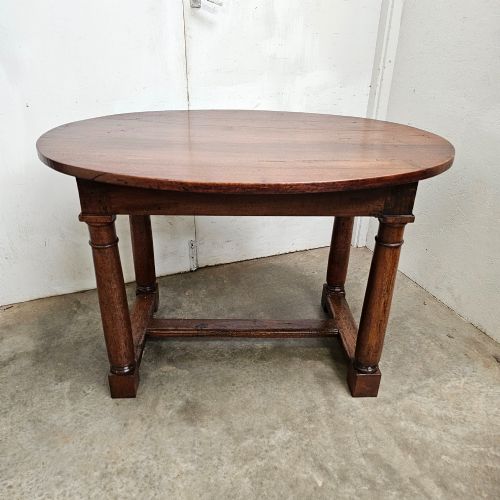
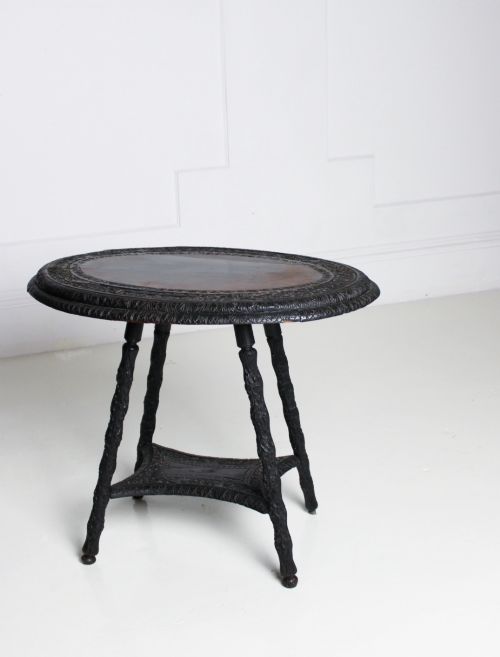
Oval Wooden Side Table
An oval wooden side table brings organic curve and compact utility to a room, drawing the eye away from rigid corners.
Oval Wooden Side Table
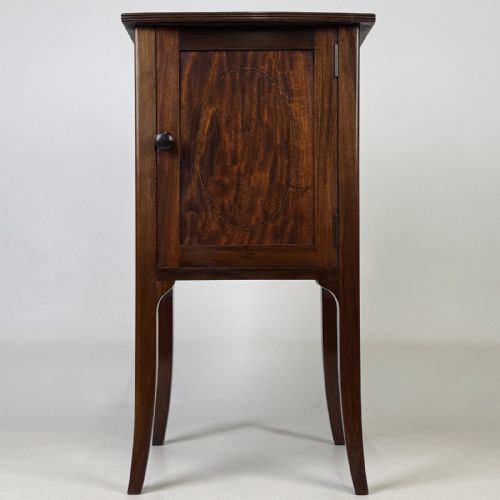
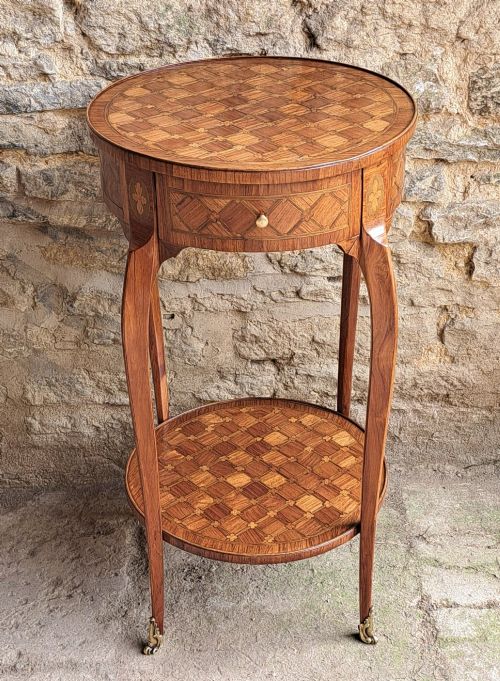
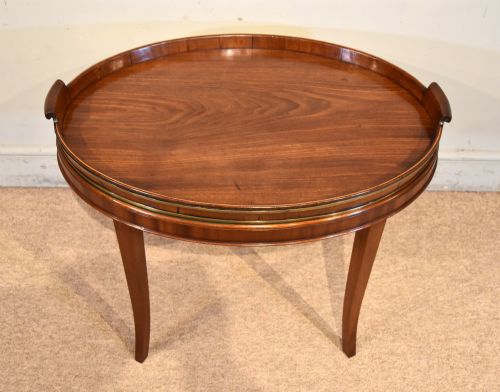
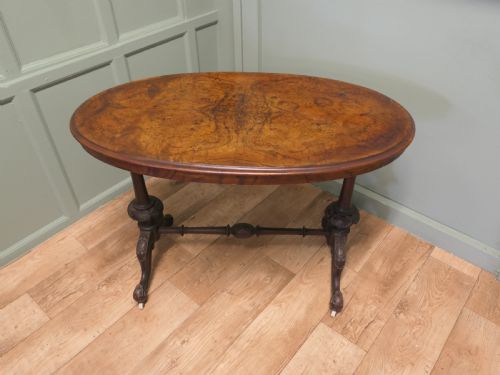
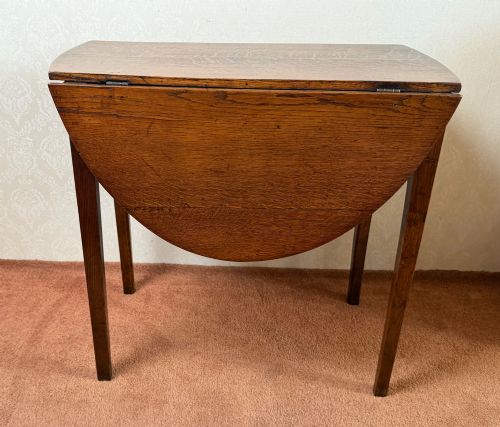
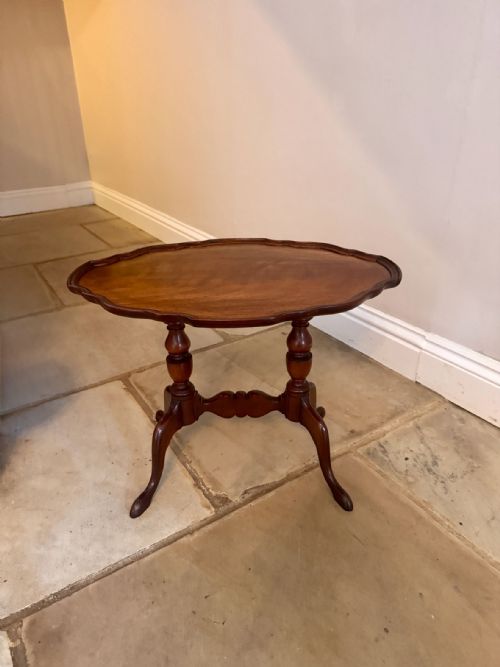
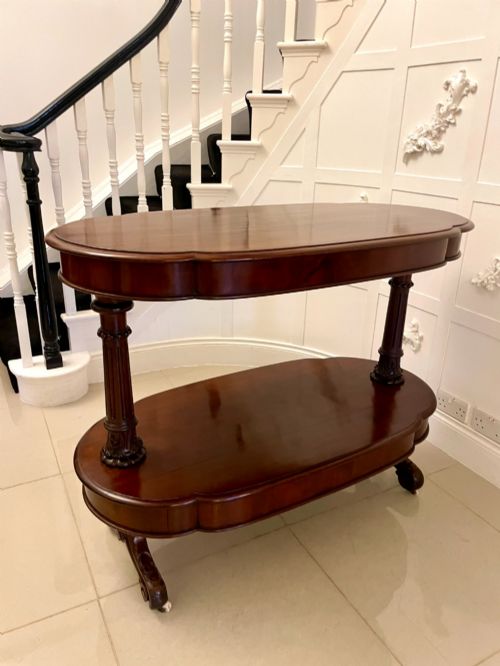
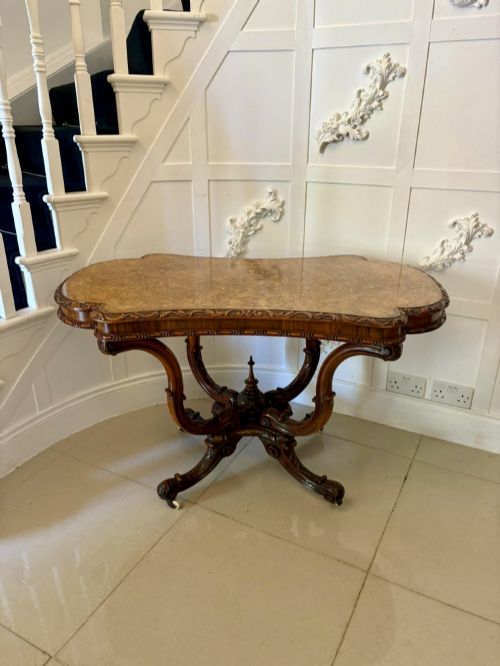
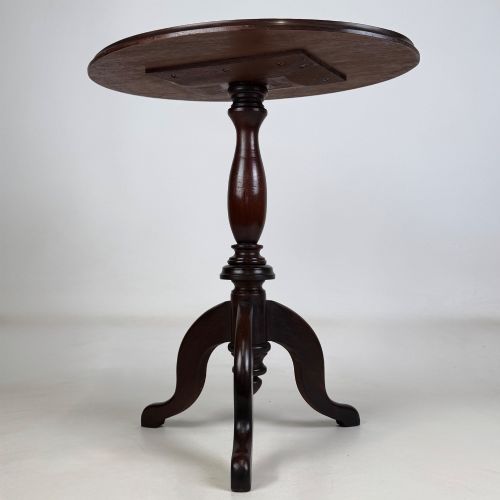
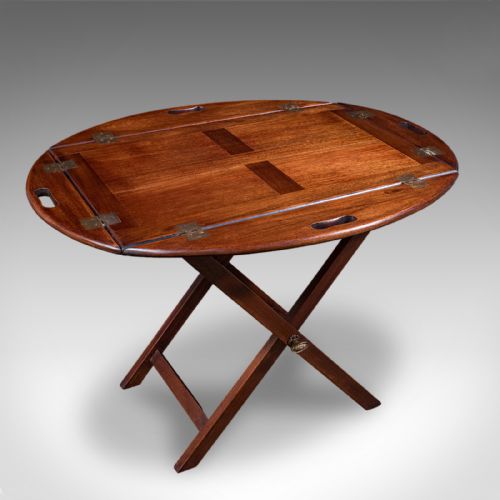
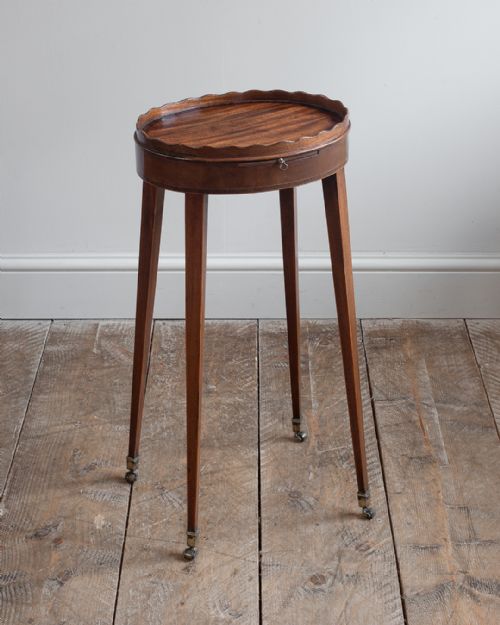
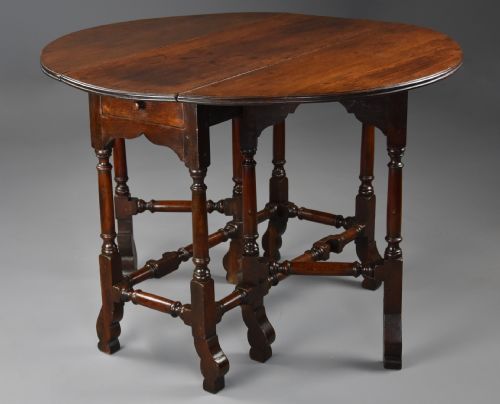
An oval wooden side table serves as a versatile piece of furniture designed for occasional placement beside seating or against walls. When you search for an oval wooden side table, you encounter forms ranging from compact Victorian occasional pieces and Edwardian lamp tables to Georgian butler's trays on stands.
The selections span periods from the eighteenth century through the Edwardian era and the nineteen-thirties, reflecting diverse regional origins including English, French, and Anglo-Indian workshops. Most examples you meet on this page lean towards mahogany, walnut, or oak construction, often featuring drop leaves, tripod legs, or inlaid decorative tops.
Materials and Construction
Cabinetmakers built these tables using dense hardwoods such as mahogany, walnut, oak, and satinwood, frequently selecting burr timbers or applying intricate string inlay to create visual depth on the top surface. Timber selection dictated both the structural integrity and the richness of the finished grain.
Joinery methods varied according to the period and form, utilising stable gateleg actions for drop-leaf tables, tripod bases with cabriole legs for occasional tables, and folding stands for removable butler's trays. These structural systems balanced portability with daily domestic use.
Oval Wooden Side Table Retail Price Guide 2026
Typical asking prices for oval wooden side table among the pieces listed under this phrase on Sellingantiques today, from the lower quarter to the upper quarter. They describe what is for sale here now, not the wider market.
Object types include occasional tables, Pembroke tables, butler's trays on stands, and gateleg dining tables.
Evaluating Quality
Quality rests upon the crispness of hand-carved details, the tightness of the joinery, and the depth of the timber's natural patina built through decades of polish and use. Superior examples display carefully matched grain veneers and securely fitted drop-leaf hinges that operate without wobble.
Lesser pieces often show flat, unfigured secondary timbers or crude repairs to legs and aprons that disrupt the original balance of the design. The distinction lies in whether the structure remains honest to its period of origin without masking heavy alterations.
The Oval Wooden Side Table Glossary
- Butler's tray
- A removable wooden tray with hinged or shaped sides, originally designed for carrying tableware and typically set upon a folding X-frame stand.
- Gateleg table
- A table featuring hinged drop leaves supported by swing-out legs that pivot outward from a central frame to bear the weight.
- Occasional table
- A small, movable table intended for intermittent use in a sitting room or hallway rather than for dining.
- Pembroke table
- A small rectangular or oval table with two hinged drop leaves on opposite sides and usually one or two small drawers.
- Tripod table
- A freestanding table supported by a central pillar resting on three spreading feet.
Oval Wooden Side Table: Frequently Asked Questions
What is an oval wooden side table used for?
These tables provide a convenient surface for lamps, books, and tea cups within a living space or hallway. Their curved profile softens the linear geometry of a room while occupying minimal floor space.
They also function effectively as display stands for decorative objects or as removable serving trays when structured with a folding base.
How do I identify a Victorian oval table?
Victorian examples frequently display darker mahogany or burr walnut timbers paired with heavier carved foliage or turned pedestals. They often prioritize substantial presence and rich polish.
Looking underneath reveals the mechanical fixings and timber shrinkage consistent with nineteenth-century workshop practices.
Are Edwardian tables different from Georgian ones?
Edwardian pieces tend to utilise lighter satinwood or inlaid mahogany veneers with delicate tapering legs reflecting revival styles. They often feel airier and more decorative.
Georgian tables rely on heavier architectural proportions, solid timber construction, and restrained carving that emphasises the natural grain.
How should I care for an antique wood table?
Keep wooden tables away from direct heat sources and strong sunlight to prevent the timber from splitting or the polish from fading. Use coasters and dry cloths for routine maintenance.
Apply a traditional beeswax polish occasionally to nourish the grain and preserve the historic patina without building up synthetic residues.