








Oval Wooden Display Table
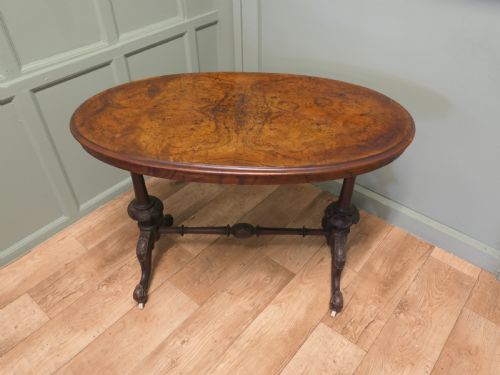
An oval wooden display table brings useful surface space and proportion to a room, drawing the eye with curved mahogany, satinwood, and walnut forms.
Oval Wooden Display Table
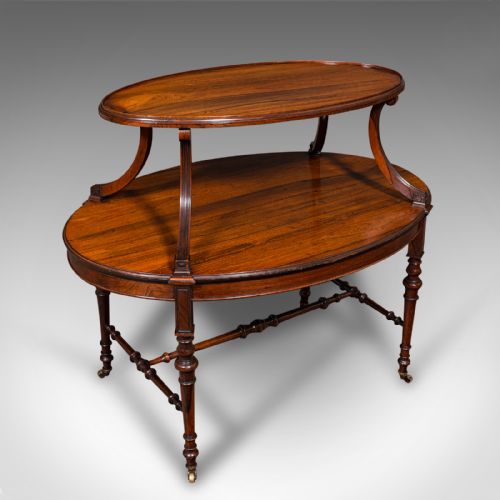
When you search for an oval wooden display table, you encounter occasional tables, side tables, and two-tier centre stands spanning the Georgian, Victorian, and Edwardian eras. These pieces combine practical surface utility with decorative display functions, often featuring raised edges or lower shelves.
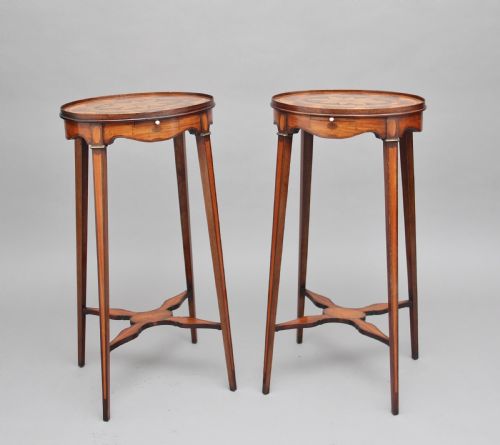
The Edwardian iterations in mahogany with wood inlay appear most frequently in this selection, accompanied by nineteenth-century satinwood étagères and occasional tables. Makers frequently employed Sheraton Revival styles during the Edwardian period, applying boxwood stringing and delicate satinwood banding to oval tops.
Forms extend beyond simple lamp and side tables to include tiered stands and serving tables, reflecting varied domestic uses from the eighteenth century onwards. The defining characteristic across these examples remains the curved oval perimeter paired with timber construction.
Assessing quality and finish
The refinement of the timber inlay and the crispness of the cabinetwork separate standard examples from finer productions. Finely executed stringing, well-matched veneer grains, and stable, well-proportioned framing indicate superior craftsmanship.
The integrity of the timber surface and the subtlety of decorative details reveal the maker's hand, particularly in Sheraton Revival pieces where precision defines the aesthetic success of the curved top.
Oval Wooden Display Table Retail Price Guide 2026
Typical asking prices for oval wooden display table among the pieces listed under this phrase on Sellingantiques today, from the lower quarter to the upper quarter. They describe what is for sale here now, not the wider market.
Even a butler's buffet stand needs to put its best foot forward when the soup course arrives.
The Oval Wooden Display Table Glossary
- Sheraton Revival
- A late nineteenth and early twentieth-century design movement inspired by the neoclassical furniture of Thomas Sheraton, characterised by satinwood and marquetry inlay.
- Étagère
- A set of open shelves or tiers used for displaying small objects, appearing in nineteenth-century formats.
- Stringing
- A thin inlay of contrasting wood used to outline the borders of furniture tops and drawer fronts.
- Satinwood
- A durable, lustrous timber from tropical trees yielding a yellowish, grain-figured surface favoured in fine cabinetmaking.
- Occasional table
- A small, movable table designed for specific, intermittent use within a room, such as holding a lamp or side items.
Oval Wooden Display Table: Frequently Asked Questions
What is an oval wooden display table used for?
These tables serve as functional surfaces for lamps, decorative items, or serving accessories while adding proportion to domestic spaces.
Their compact oval footprint allows them to fit neatly beside seating or within smaller reception areas without obstructing movement.
How do I identify an Edwardian table?
Edwardian examples often feature light mahogany construction decorated with delicate boxwood stringing and Sheraton Revival inlay motifs.
They frequently incorporate lower tiers or tray tops, reflecting the domestic habits of the early twentieth century.
Are these tables suitable for everyday use?
Most occasional and centre tables are built to handle regular domestic placement, though polished wooden surfaces benefit from sensible protection against moisture and heat.
Their sturdy timber frames provide reliable support for everyday items like lamps and books.
What is the difference between an occasional table and a centre table?
Centre tables traditionally stand freestanding in the middle of a room, possessing finished detailing on all sides and larger proportions.
Occasional tables are generally smaller, lighter, and designed to sit against walls or beside upholstery.