

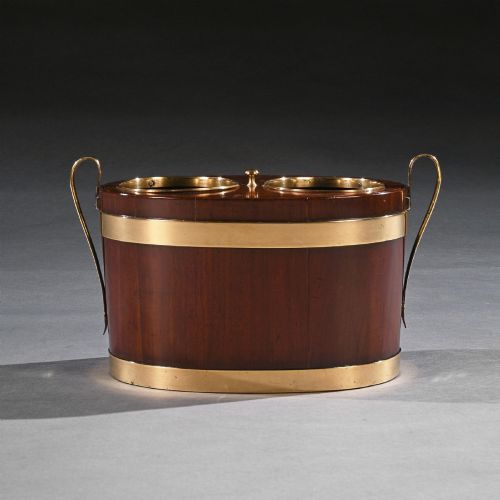
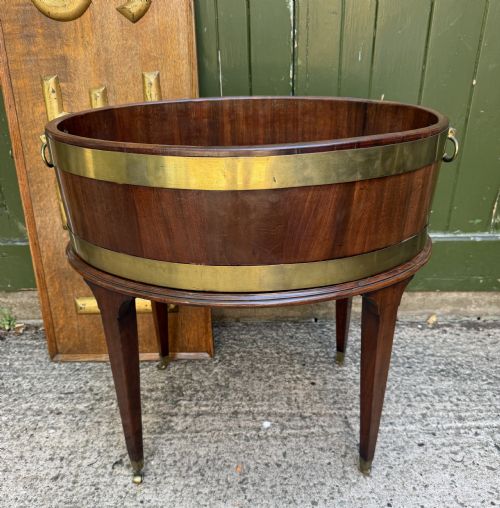

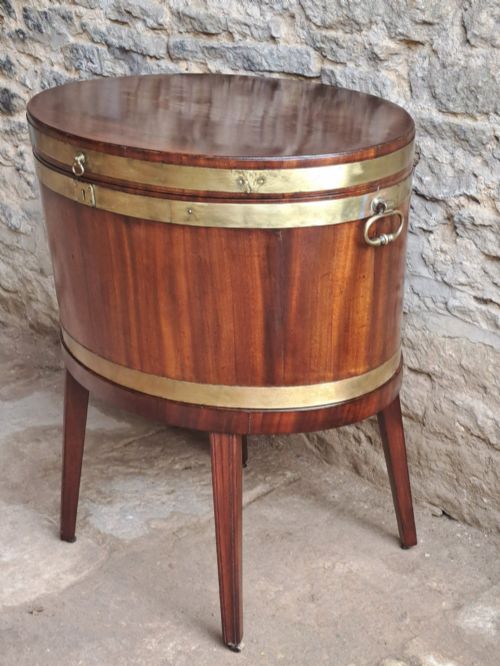

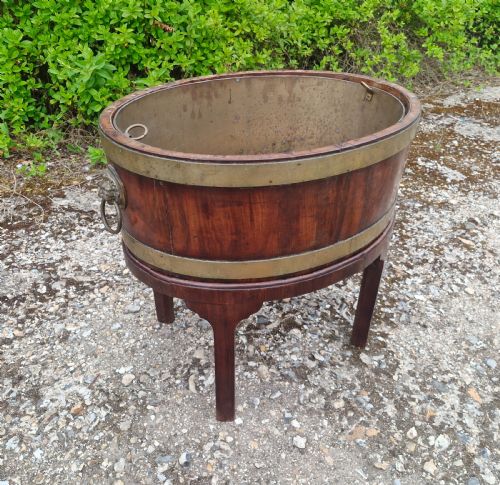


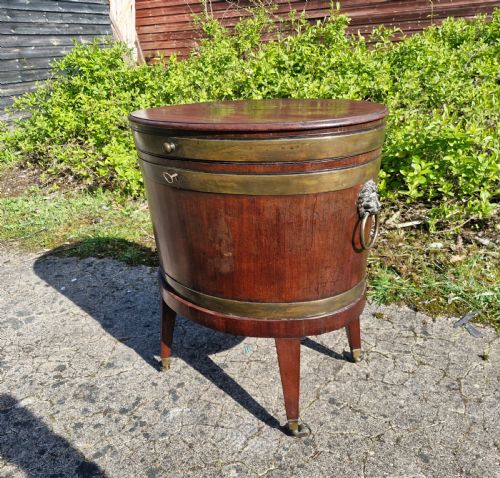
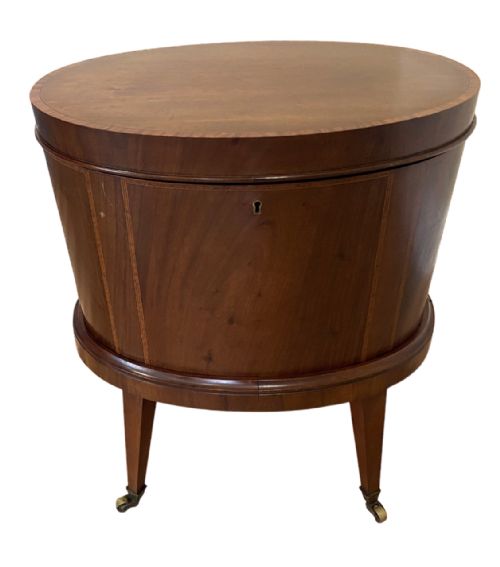


Oval Wine Cellarette
An oval wine cellarette is a capacious timber vessel designed to chill bottles at the dining table, combining rigorous utility with fine cabinet-making.
Oval Wine Cellarette
When you search for an oval wine cellarette, you encounter robust timber vessels primarily fashioned during the eighteenth and nineteenth centuries. The majority of pieces on this page stem from the Georgian and Regency eras, reflecting the period's focus on formal dining and hospitality.
These items typically present an oval plan, designed to stand beneath a sideboard or beside a dining table until required. Many examples retain their original stands or incorporate brass banding, while others function equally well today as jardinieres or plant holders.
Materials and construction
Makers constructed these vessels predominantly from solid mahogany or walnut, frequently selecting timber with a rich, figured grain. Boxwood and satinwood inlay often accentuates the primary wood, creating subtle geometric or linear contrasts.
To withstand the damp weight of ice and bottles, workshops lined the interior with metal, zinc, or lead, secured by soldered joints. Heavy brass bands and carrying handles were fitted tightly around the staves to maintain structural integrity under heavy loads.
Oval Wine Cellarette Retail Price Guide 2026
Typical asking prices for oval wine cellarette among the pieces listed under this phrase on Sellingantiques today, from the lower quarter to the upper quarter. They describe what is for sale here now, not the wider market.
Early makers occasionally incorporated lead linings so guests could hear the satisfying clink of chilled bottles against the metal walls.
Judging quality and character
Quality rests upon the crispness of the cabinet-making and the preservation of the original internal lining and stand. Pieces retaining their matching bases and authentic brass mounts command greater interest than those altered or separated over time.
The depth of the timber's patina and the precision of the cooperage or joinery distinguish finer workshop output from later revival pieces. Simple proportions and restrained inlay generally indicate a more considered design than excessive ornamentation.
Samual Norman
The Oval Wine Cellarette Glossary
- Cellarette
- A lockable container used for storing and cooling wine bottles in a dining room. They evolved from simple wooden boxes into elaborate freestanding pieces of furniture.
- Brass bound
- A descriptor for wooden vessels encircled by heavy brass bands or hoops. These bands provided structural strength to prevent the staves from splitting.
- Jardiniere
- An ornamental stand or container used to hold growing plants or flowers. Many surviving wine coolers were later adapted for this domestic purpose.
- Staves
- The narrow vertical strips of wood fitted together to form the curved body of a vessel. Cooperage techniques ensured these joints remained watertight.
- Patina
- The deep surface sheen and mellow colour developed by wood over decades of handling and polishing. It serves as a visual indicator of age.
Oval Wine Cellarette: Frequently Asked Questions
What is an oval wine cellarette?
An oval wine cellarette is a wooden container built to hold bottles and ice during formal meals. They sat on the floor or on dedicated stands near the dining table.
These pieces belong primarily to the Georgian and Regency periods, serving a distinct domestic function before modern refrigeration changed dining habits.
How were they used historically?
Servants filled the zinc or metal interior with ice and water to chill wine before serving it to guests. Bottles rested inside until brought to the table.
After dining, the contents were locked away to prevent domestic staff from accessing the expensive wine stores.
Can I use an old cellarette as a planter?
Many of these vessels function well as indoor plant holders or jardinieres today. Their metal or zinc linings make them naturally suited to holding damp soil and potted plants.
Using them in this way provides a practical purpose while showcasing the rich mahogany exterior in a modern room.
How do I spot a later revival piece?
Revival pieces from the Victorian era or later often display mechanical uniformity in the wood grain and brighter, less patinated brassware. Construction methods inside the body tend to use modern screws or machine-cut joints rather than hand-cut equivalents.
Examining the underside and the interior lining reveals the age of the materials and the methods used by the workshop.