



Oval Vitrine Table
An oval vitrine table brings glazed elegance to your drawing room, offering a charming stage for small treasures and precious curiosities.
Oval Vitrine Table
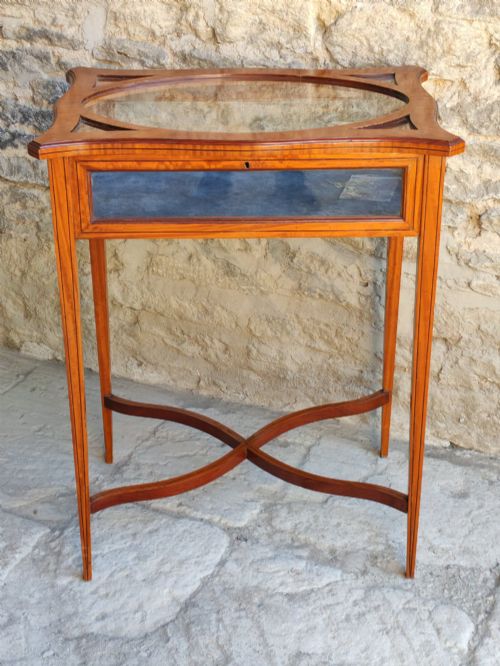
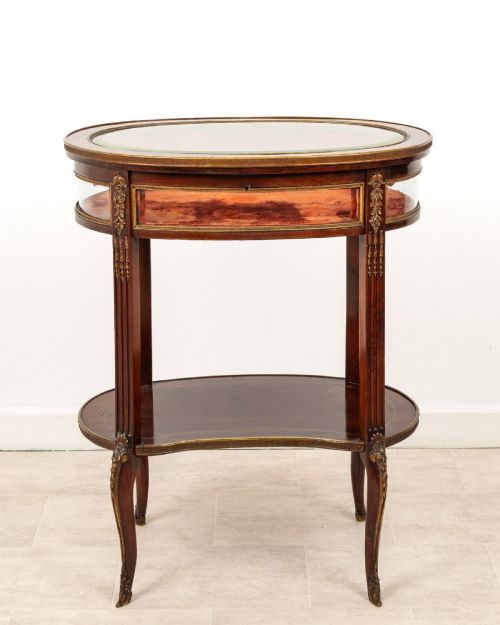
An oval vitrine table functions as a specialised display surface for jewellery, letters, and small collectibles while remaining a graceful piece of period furniture. These tables combine the function of a display cabinet with the compact footprint of a parlour table, featuring glazed tops and sides that allow objects to be viewed from multiple angles. When you search for an oval vitrine table, you encounter pieces primarily originating from the Victorian, Edwardian, and late nineteenth-century periods, often finished with French Louis XVI style influences.
Most examples found here date from the late nineteenth century up through the Edwardian era, spanning the 1880s to around 1900. You will frequently find them described interchangeably as bijouterie tables, display cabinets, or boudoir cabinets depending on their exact proportions and depth. Mahogany and satinwood form the foundation of these tables, frequently enhanced by intricate marquetry or satinwood inlay work.
How they were made
Cabinet makers constructed these display pieces using solid timbers like mahogany and satinwood, often applying delicate marquetry and contrasting wood inlays to the curved aprons and legs. The glass tops and panels were fitted securely into wooden frames, designed to protect delicate collections from dust while keeping them visible. Many French-inspired examples incorporate cast or chased ormolu mounts and brass fittings to accent the curved oval contours.
Interiors were traditionally lined with velvet or soft fabric to cushion jewellery and delicate collectibles against the wood. The joinery required precision to achieve the smooth, sweeping curves of the oval glass top and the tapered legs typical of the Louis XVI style revival.
Oval Vitrine Table Retail Price Guide 2026
Typical asking prices for oval vitrine table among the pieces listed under this phrase on Sellingantiques today, from the lower quarter to the upper quarter. They describe what is for sale here now, not the wider market.
Listings span the late nineteenth century and the Edwardian era, featuring materials such as mahogany, satinwood, ormolu, and velvet.
What varies in quality
The sophistication of the timber work and the crispness of the marquetry inlay distinguish standard production from exceptional cabinet making. Finely cast ormolu mounts with sharp detailing elevate a piece above those fitted with simpler brass edgings.
The harmony of the proportions, particularly how cleanly the glass curves into the frame and the refinement of the leg tapering, marks the distinction between ordinary workshop output and superior craftsmanship.
The Oval Vitrine Table Glossary
- Vitrine
- A glass-fronted cabinet or table designed for displaying fine objects or curiosities. These pieces originated primarily as display furniture for the wealthy collector.
- Bijouterie table
- A shallow table with a glazed top and compartment designed specifically for holding jewellery and small trinkets. They often feature hinged lids for easy access.
- Ormolu
- Gilded bronze mounts applied to furniture for decorative accent. This technique was heavily favoured in French cabinet making during the eighteenth century and later revival periods.
- Marquetry
- Decorative patterns formed by the insertion of different woods, veneers, or shell into a solid wood matrix. This intricate work defines the top surfaces of many finer display tables.
- Satinwood
- A lustrous tropical hardwood with a yellow-gold sheen used extensively for fine cabinet work and inlay. It provides a bright contrast against darker woods like mahogany.
Oval Vitrine Table: Frequently Asked Questions
What is an oval vitrine table used for?
These tables served historically as elegant furniture pieces designed to showcase personal collections of jewellery, coins, and small precious objects. The glazed top and velvet-lined interior kept delicate items protected from dust while remaining clearly visible to guests.
Today, they function brilliantly in sitting rooms or hallways to display cherished ornaments, family photographs, or small curiosities without cluttering traditional surfaces.
How do I date an oval vitrine table?
Dating relies on examining the timber species, inlay techniques, and stylistic influences present in the construction. Pieces influenced by the French Louis XVI style frequently date from the late nineteenth century, spanning the 1880s to 1900.
Edwardian examples often display lighter satinwood framing and simpler marquetry patterns compared to the heavier, richly mounted Victorian equivalents.
Are these tables sturdy enough for daily use?
While structurally sound, these delicate display pieces were built primarily to hold lightweight collectibles and jewellery rather than heavy books or everyday items. The slender legs and glazed frames require gentle handling and placement away from heavy traffic areas.
Careful placement in a stable room environment protects the delicate wood veneers and fabric interiors from excessive wear or sunlight damage.