


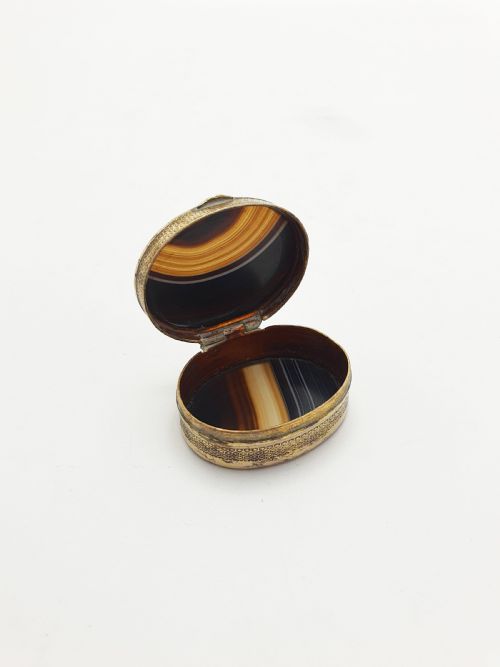

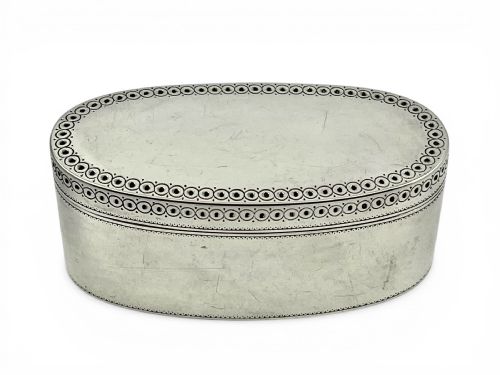


Oval Trinket Box
When you search for an oval trinket box, you find small lidded vessels shaped to fit the pocket or sit upon a dressing table.
Oval Trinket Box
An oval trinket box serves to hold small valuables, pills, patches, or snuff, appearing across the Georgian, Victorian, and Edwardian periods.
The form spans silver, brass, tortoiseshell, enamel, and wood, taking the shape of pocket snuff boxes, desk pieces, and dressing table containers.
Pieces on this page range from 18th-century Bilston enamel patch boxes to Edwardian sterling silver pill boxes and mid-century Danish dressing table boxes.
How they were made
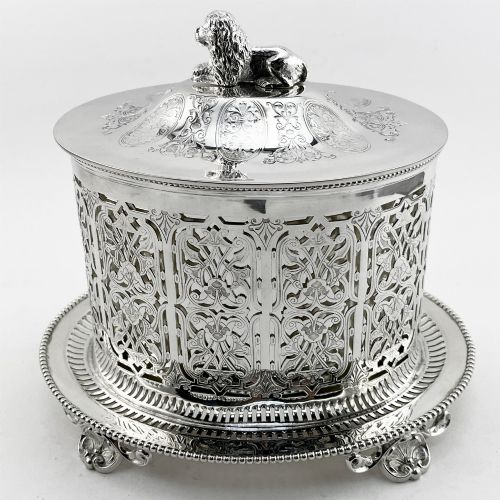
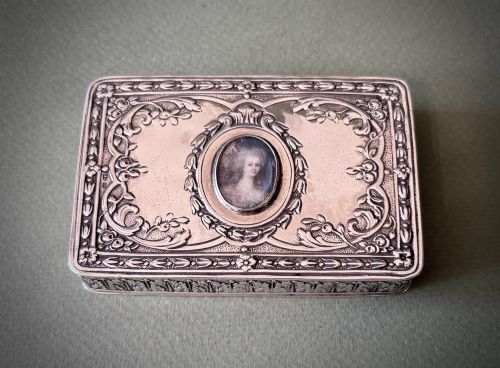
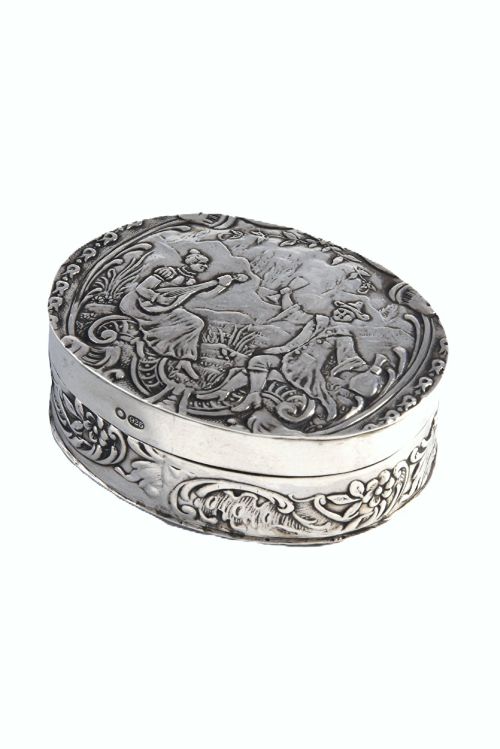
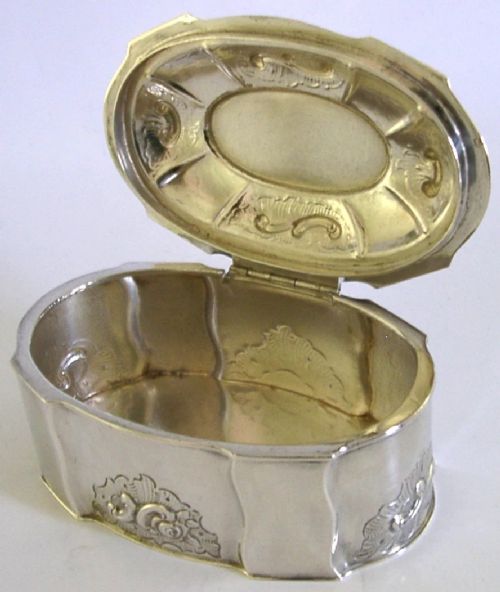
Silver boxes rely on hammering, piercing, and bright-cut engraving to create hinged lids and decorated bodies.
Enamel and porcelain examples combine metals with fired mineral colours, often set into gold or gilt brass mounts.
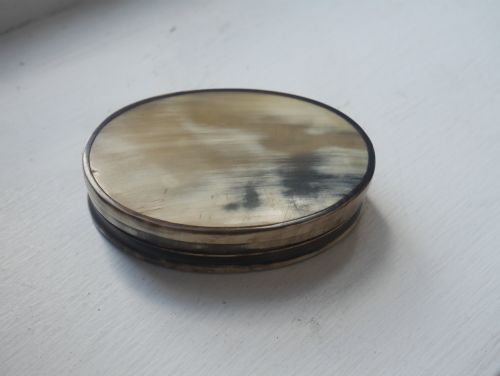
Organic materials such as tortoiseshell, horn, mother of pearl, and mahogany utilise careful inlays and fitted hinges.
Oval Trinket Box Retail Price Guide 2026
Typical asking prices for oval trinket box among the pieces listed under this phrase on Sellingantiques today, from the lower quarter to the upper quarter. They describe what is for sale here now, not the wider market.
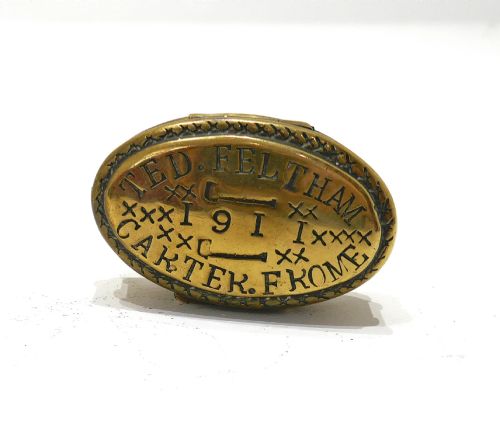
One brass snuff box preserves the engraved name of Ted Feltham from Frome, dated 1911.
What varies in quality
The weight of the metal and the precision of the hinge separate standard containers from heavier desk boxes.
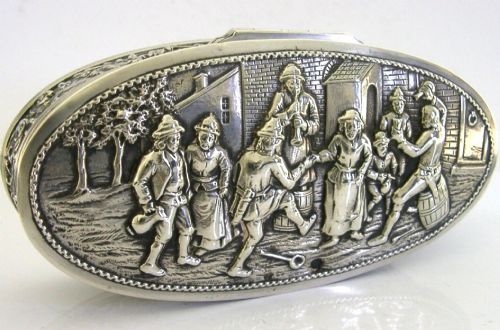
Surface decoration ranges from simple engine-turning to detailed hand engraving and figural relief work.
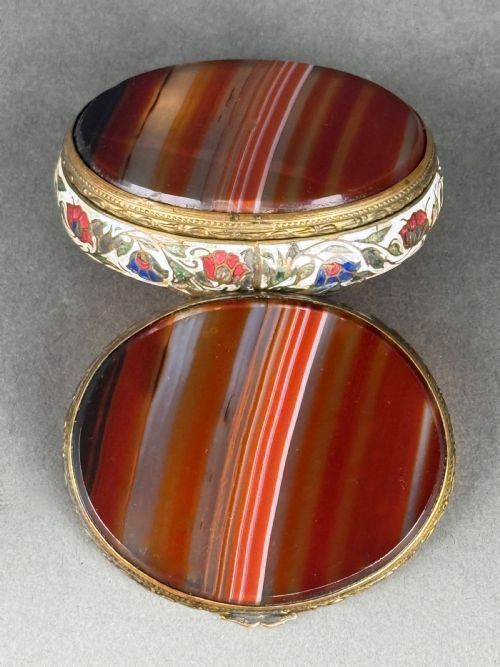
The integration of delicate panels like agate, enamel, or tortoiseshell dictates the refinement of the piece.
Samuel Pemberton·Joseph Ash·Cooper Brothers
The Oval Trinket Box Glossary
- Patch box
- A small container used in the 18th century to hold cosmetic face patches. These enamel or metal boxes often feature mirrored interiors.
- Snuff box
- A small pocket-sized vessel designed to hold powdered tobacco. They require tight-fitting lids to keep the contents dry.
- Bilston enamel
- Enamel painted on copper, produced in Staffordshire during the 18th century. These pieces display distinct coloured grounds and floral motifs.
- Bijouterie table
- A glass-topped display table designed for small valuables and trinkets. They share the same decorative impulses as smaller tabletop boxes.
- Bright-cut engraving
- A surface decoration technique using faceted cuts to create geometric or floral patterns that reflect light. It appears frequently on Georgian silver.
Oval Trinket Box: Frequently Asked Questions
What were oval trinket boxes used for?
These boxes held items such as snuff, medicinal pills, cosmetic patches, and small jewellery items like rings.
Their compact size made them suitable for carrying in pockets or placing on dressing tables and desks.
How do I date an antique silver box?
Dating relies heavily on hallmarks stamped into the metal, which indicate the assay office and year of production.
Stylistic clues such as Rococo revival scrolls or Edwardian inlay also help narrow down the decade.
How should I clean antique metal boxes?
Silver pieces require a soft cloth and minimal polish to preserve fine engravings and hallmarks without thinning the metal.
Boxes with enamel, tortoiseshell, or paste stones need dry dusting to avoid damaging sensitive surface materials.
Are all oval boxes made of silver?
The listings show a wide variety of materials extending well beyond silver.
Common alternatives include brass, copper, wood, tortoiseshell, glass, porcelain, and enamel.