


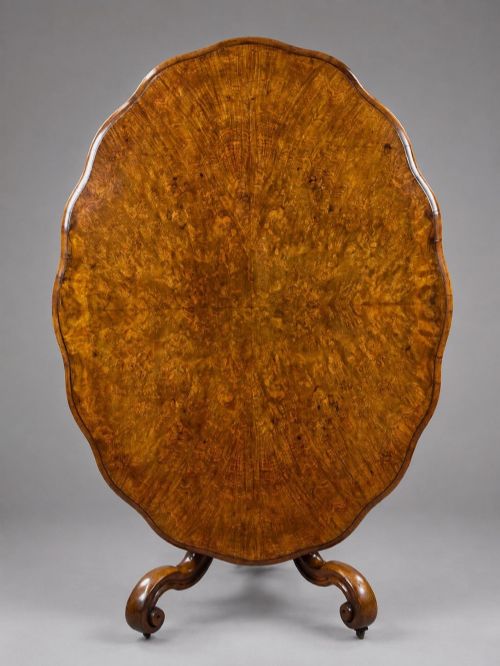
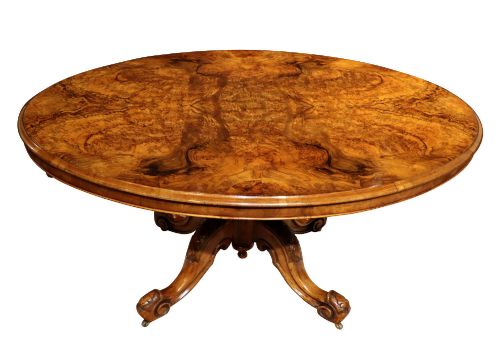
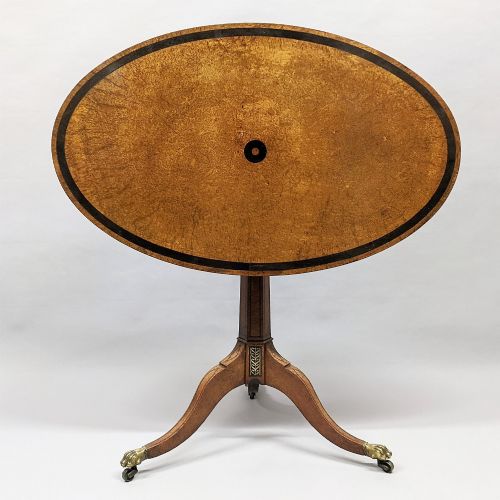
Oval Tilt Top Centre Table
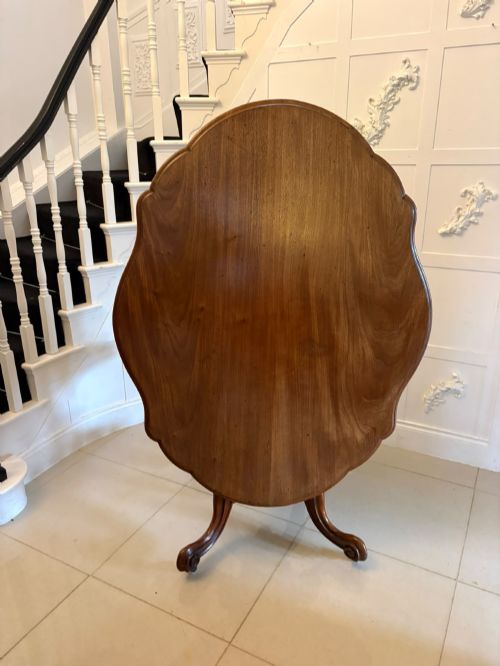
An oval tilt top centre table offers a practical surface that folds away neatly when not in use.
Oval Tilt Top Centre Table
These tables typically feature a mechanism that allows the top to tilt into a vertical position for storage or movement. Alongside grand six-seater dining tables, the selection includes smaller occasional, lamp, and coffee tables adapted from the same foundational form.
How they were made
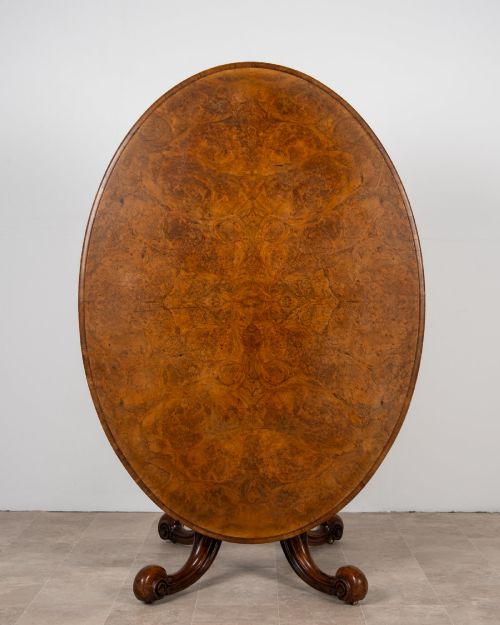
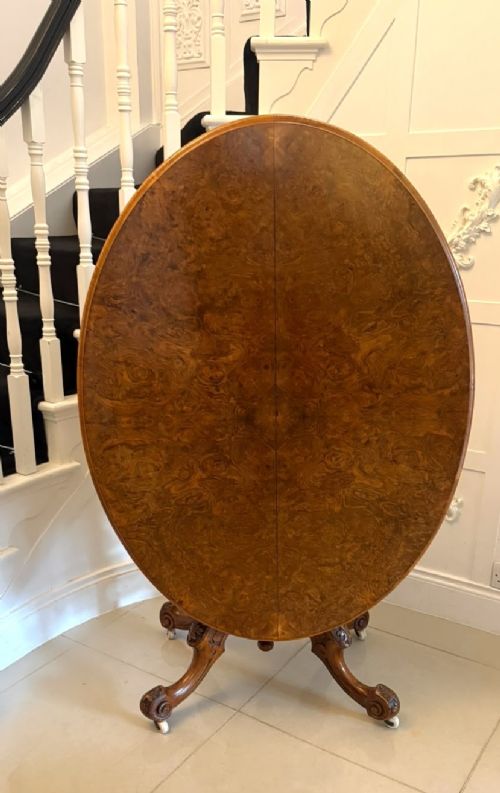
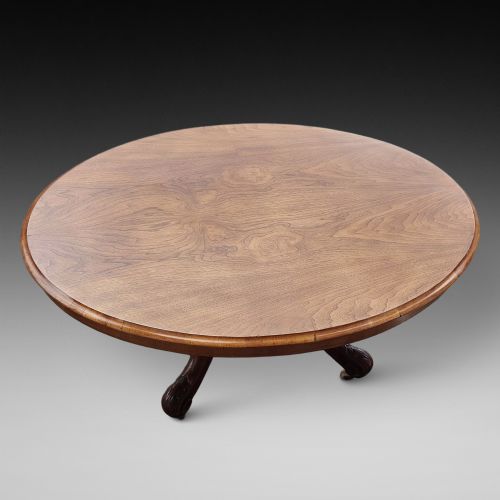
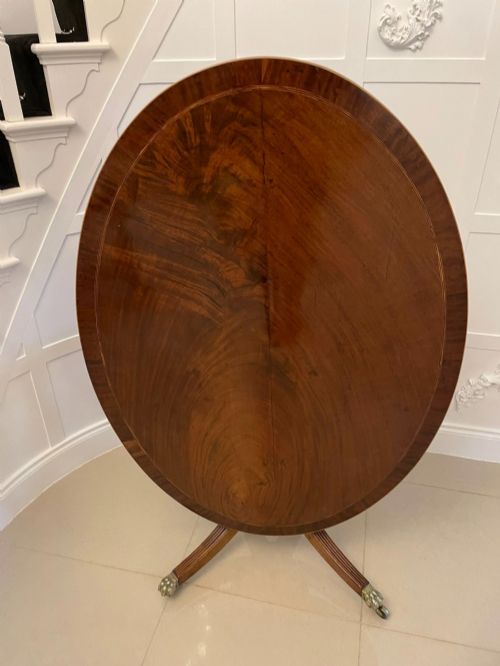
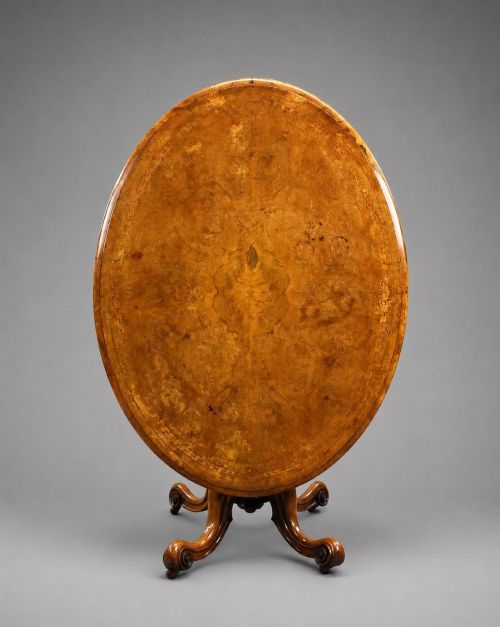
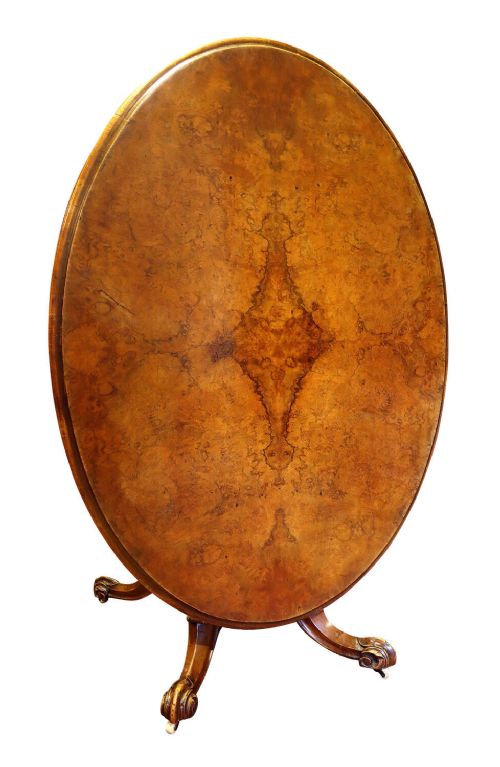
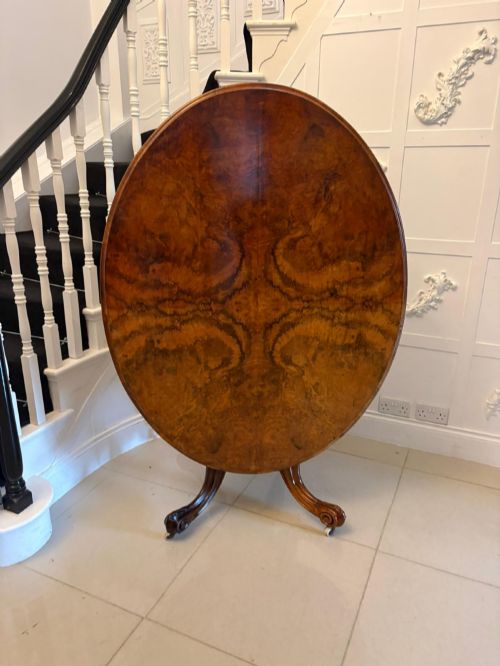
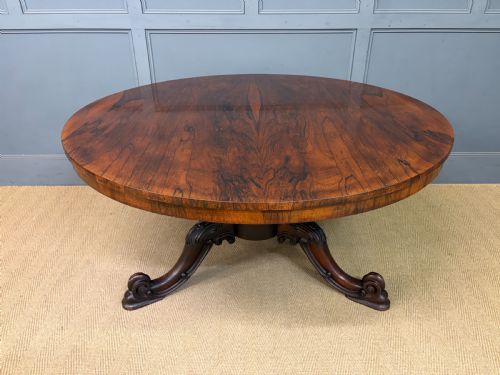
Cabinetmakers constructed the tops using fine timbers such as burr walnut, rosewood, and mahogany, frequently applying veneers over solid secondary woods to display rich grain patterns. Boxwood inlay, crossbanded borders, and marquetry details were added to enhance the visual depth of the surface.
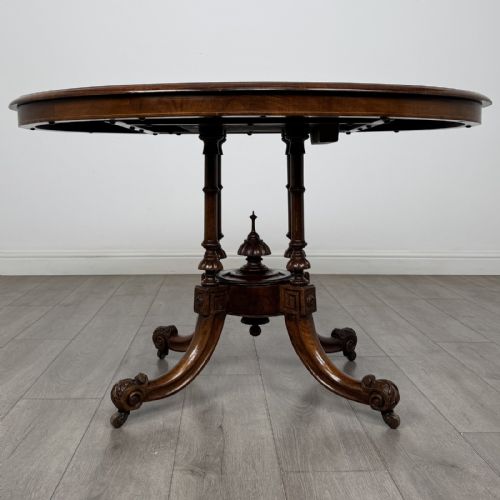
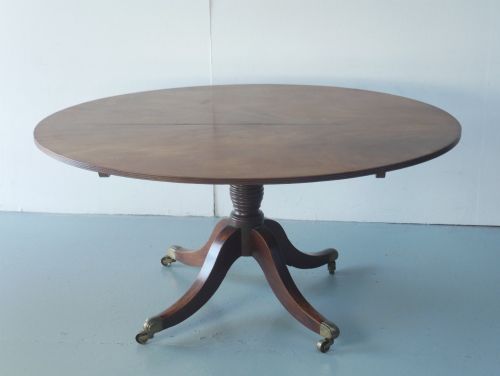
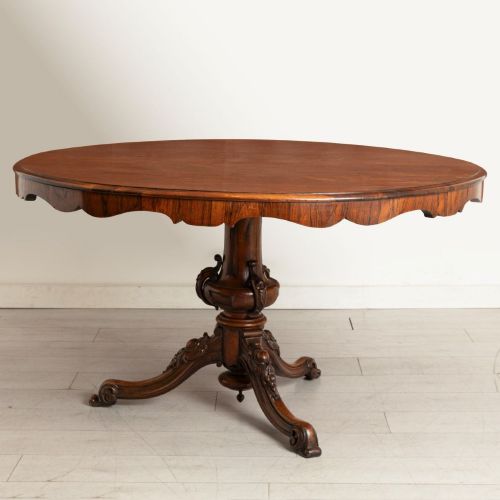
The pivoting mechanisms required robust central pillars, often mounted on carved quadrapod or tripod bases supported by brass castors. Solid rosewood and mahogany provided the necessary structural strength for these heavy turned and carved pedestals.
Oval Tilt Top Centre Table Retail Price Guide 2026
Typical asking prices for oval tilt top centre table among the pieces listed under this phrase on Sellingantiques today, from the lower quarter to the upper quarter. They describe what is for sale here now, not the wider market.
Several tables retain their original brass castors, designed to help nineteenth-century hosts roll heavy walnut dining surfaces out of the way before evening dancing began.
What varies in quality
The distinction between standard examples and finer pieces lies in the choice of timber and the precision of the cabinetwork. Burr walnut with lively, highly figured grain patterns and crisp boxwood inlay indicates a higher tier of production.
Structural integrity of the tilt mechanism and the crispness of the hand-carved details on the base also separate workshop tiers. Pieces retaining their original solid bases and smooth-functioning catches demonstrate superior original manufacture.
Gillows
The Oval Tilt Top Centre Table Glossary
- Tilt top
- A tabletop mounted on a pivot mechanism that rotates ninety degrees to store flat against the pedestal. This clever design saved valuable floor space in nineteenth-century drawing rooms.
- Loo table
- A large round or oval parlour table used for card games such as loo during the Victorian era. These versions combine dining proportions with the convenience of a tilting mechanism.
- Burr walnut
- A prized timber harvested from the gnarled growths of walnut trees, yielding swirling, knotty grain patterns. Cabinetmakers sliced this wood into thin veneers for decorative table surfaces.
- Crossbanding
- A narrow strip of veneer laid around the border of a tabletop with the grain running perpendicular to the centre. This technique frames the primary wood and provides a clean visual edge.
- Quadrapod
- A four-legged pedestal base supporting the central column of a larger table. These bases often terminate in brass castors to help move heavy dining and loo tables.
Oval Tilt Top Centre Table: Frequently Asked Questions
What is an oval tilt top centre table used for?
These tables served primarily as multi-purpose furniture for nineteenth-century drawing rooms, functioning as dining surfaces, breakfast tables, or card tables. Their central placement allowed people to gather around them from all sides.
When not in use, the top tilted vertically so the table could be pushed against a wall or stored in a corner to free up floor space. Today, buyers frequently use them as striking centrepieces or large coffee tables.
How do I tell a Victorian table from a Regency one?
Victorian tables on this page frequently employ burr walnut veneers, rich marquetry inlay, and heavy carved pedestals dating from the mid to late nineteenth century. They often manifest as large loo tables with elaborate quadrapod bases.
Regency examples typically date from the early nineteenth century and lean towards mahogany or rosewood with cleaner architectural lines, subtle crossbanded borders, and less exuberant carving.
How do I care for a burr walnut top?
Burr walnut requires stable indoor humidity and protection from direct sunlight to prevent the delicate veneer from drying or fading. Regular dusting with a soft, dry cloth maintains the surface sheen.
Avoid placing hot cups or damp items directly on the polished wood. Using coasters and occasionally applying a suitable wax helps preserve the historic finish.
How does the tilt mechanism work?
The mechanism relies on a pivoting block beneath the top secured by a brass catch or wooden wedge. Releasing this catch allows the heavy tabletop to swing from horizontal to vertical.
Buyers should operate the pivot carefully, supporting the weight of the top with both hands. Ensuring the catch locks securely back into place prevents accidental movement.