

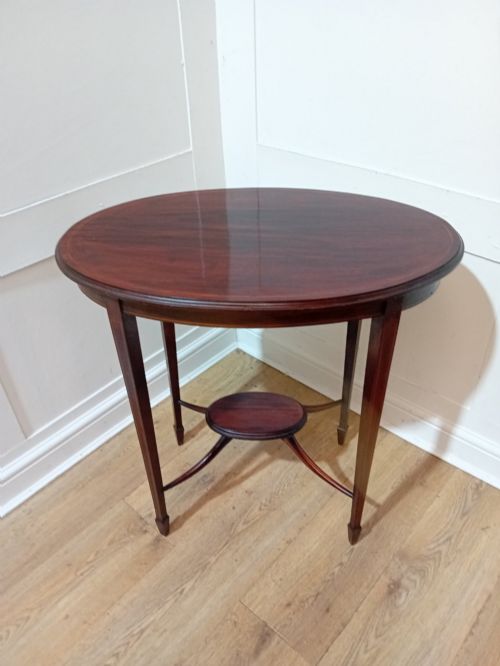
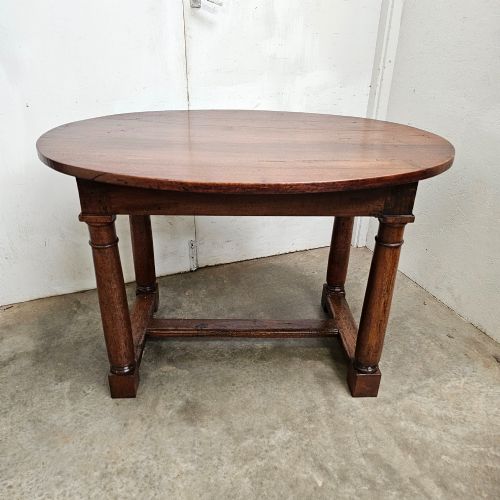
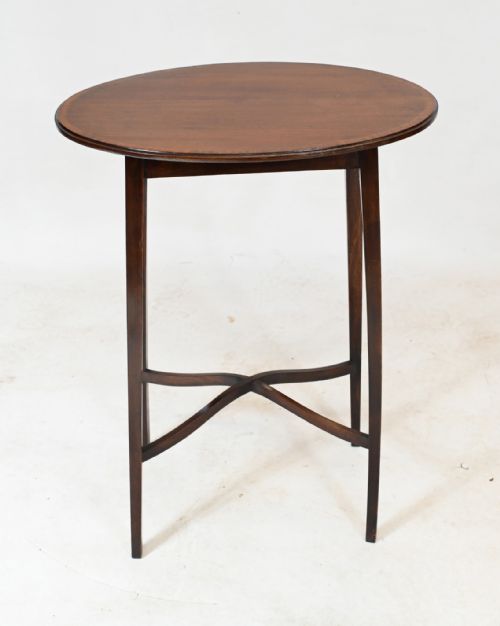


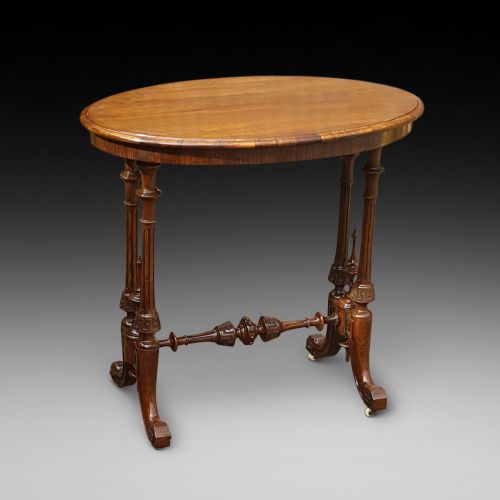
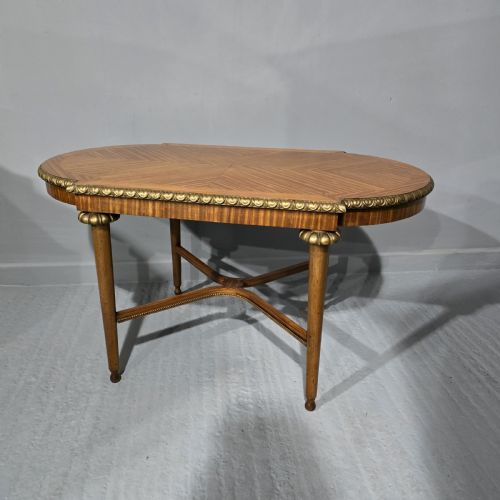


Oval Stretcher Table
An oval stretcher table brings a softer silhouette to a room, offering practical surface space joined by sturdy underframing.
Oval Stretcher Table
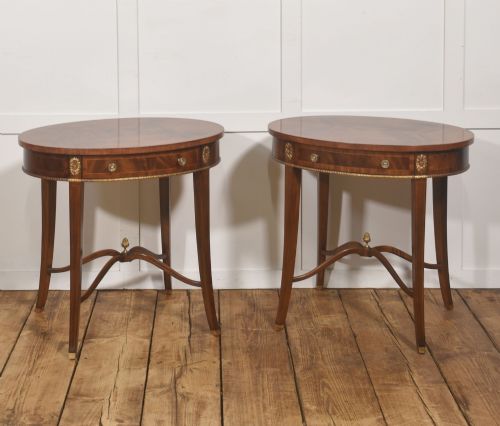
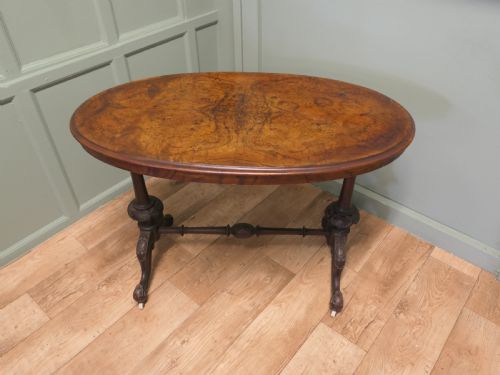
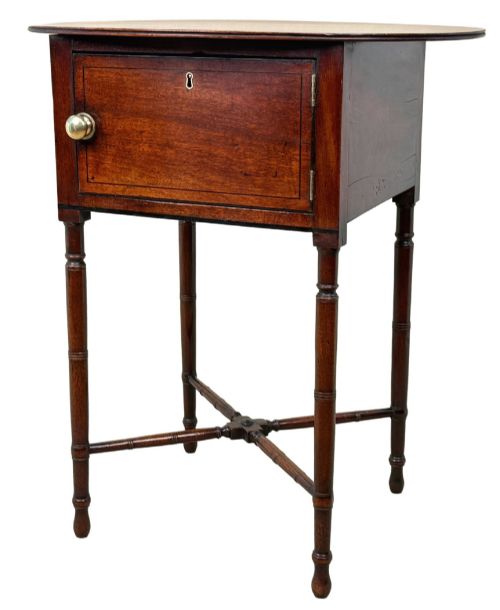
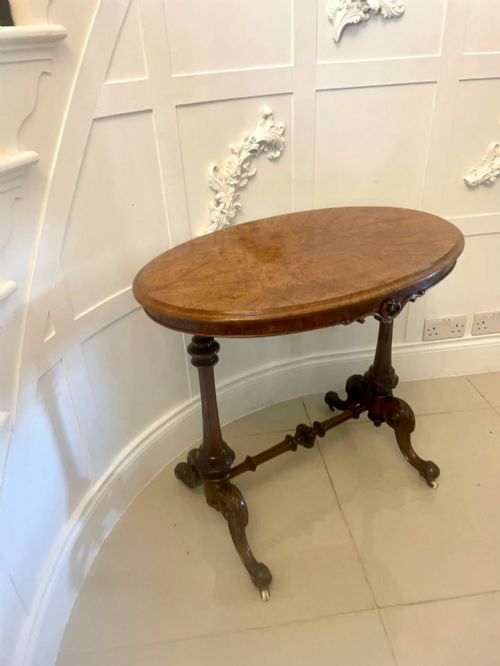
An oval stretcher table is a domestic surface defined by its curved top and connecting underframing, taking the form of occasional tables, centre tables, and side tables. These pieces appear across several periods including the Georgian era, Victorian period, and Edwardian years.
The versions most commonly found here display timber construction such as mahogany, walnut, and oak. They serve functional roles in reception rooms and hallways, bridging the gap between decorative occasional furniture and sturdy dining formats.
How they were made
Cabinetmakers constructed these tables using solid timbers and decorative veneers such as burr walnut, flame mahogany, and satinwood, frequently enhanced with boxwood inlay. Brass components like galleries and fittings appear on selected examples to accent the timber.
Joinery methods adapted to the period, linking shaped oval tops to robust stretcher bases that provided lateral stability. Surfaces received polished finishes to highlight the natural grain patterns of the wood.
Oval Stretcher Table Retail Price Guide 2026
Typical asking prices for oval stretcher table among the pieces listed under this phrase on Sellingantiques today, from the lower quarter to the upper quarter. They describe what is for sale here now, not the wider market.
Materials appearing across these tables include mahogany, burr walnut, oak, satinwood, and brass hardware.
What varies in quality
The standard of timber selection and veneer matching defines the visual impact of an oval stretcher table. Superior examples employ finely figured burr walnut or flame mahogany paired with crisp inlay work.
Construction rigidity at the joints and the crispness of turned or shaped stretchers separate standard production pieces from finer cabinetwork. The integrity of the polished finish also contributes significantly to the overall presence of the piece.
The Oval Stretcher Table Glossary
- Stretcher
- A horizontal timber connecting the legs of a table to provide structural stability. It often forms an H or X shape beneath the top.
- Veneer
- A thin layer of figured wood applied to a secondary timber base to create decorative surfaces. Burr walnut and flame mahogany are frequently used for this purpose.
- Gallery
- A raised decorative rail, often made of brass, fitted around the edge of a tabletop. It prevents items from sliding off.
- Occasional table
- A small, movable table designed for a specific, non-permanent use within a room. These pieces function easily beside seating or in hallways.
Oval Stretcher Table: Frequently Asked Questions
Where should I place an oval stretcher table?
An oval stretcher table fits well in a hallway as a centrepiece or beside seating in a drawing room. The curved top softens straight architectural lines in a space.
Smaller occasional versions work effectively as lamp tables, while larger formats suit dining or central display purposes.
How do I care for a polished timber top?
Maintain the finish by dusting with a dry, soft cloth and avoiding placement near direct heat sources or strong sunlight. Wax can be applied periodically to nourish older wood surfaces.
Keep liquids away from unsealed joints and use protective mats beneath any items placed on the table.
How do I identify a Victorian oval table?
Victorian pieces often feature dense timbers such as burr walnut or mahogany, sometimes incorporating elaborate stretcher bases or inlaid details. Look at the construction methods and wood ageing underneath the top.
Proportions and hardware styles also help distinguish nineteenth-century examples from later revival pieces.
What is the difference between a centre table and an occasional table?
Centre tables are traditionally designed to stand free in the middle of a room, often finished on all sides with decorative bases. Occasional tables are lighter and more easily moved for specific tasks.
Both forms utilise the oval top and stretcher configuration for stability and visual balance.