

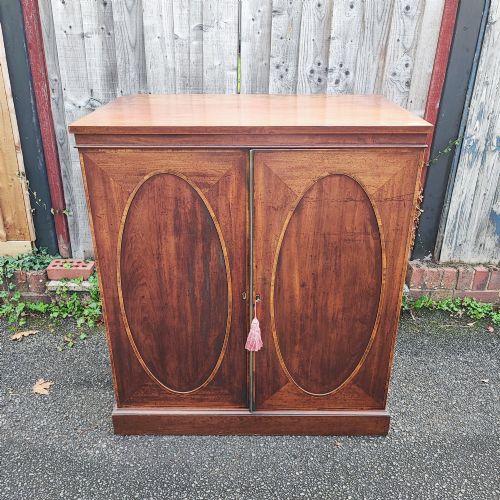
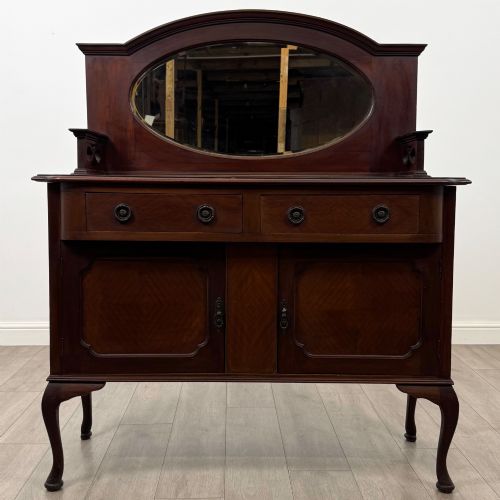
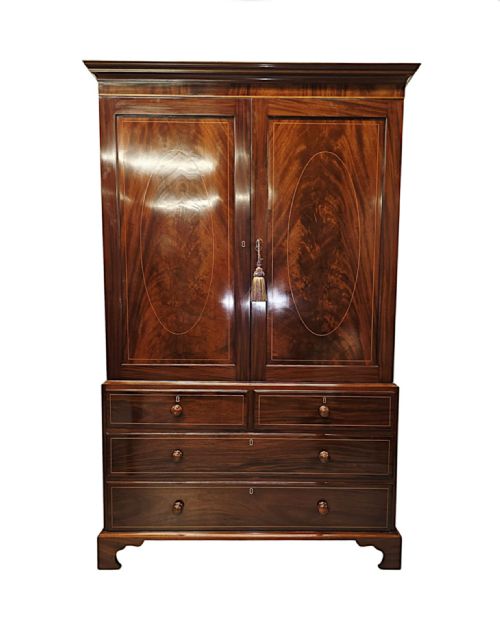
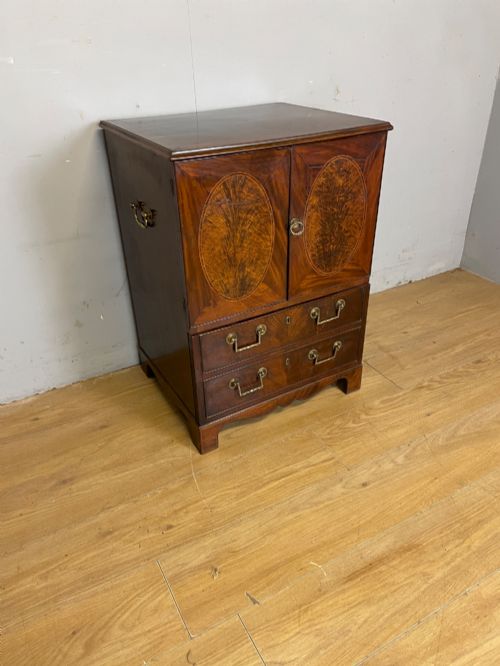


Oval Storage Cabinet
These oval storage cabinet examples bring practical timber craft to everyday rooms, offering curved timber fronts and useful enclosed space.
Oval Storage Cabinet
An oval storage cabinet brings curved timber proportions to domestic spaces, combining enclosed shelving with distinctive rounded doors or mirrored backs. The selection here leans heavily towards mahogany, flame mahogany, and satinwood pieces spanning Georgian eras through the Edwardian period.
Buyers will encounter various forms under this heading, ranging from large linen presses and side cabinets to smaller pedestal cupboards and wardrobes. Many examples incorporate boxwood inlay, glass panels, or brass hardware, reflecting the Georgian, Edwardian, and revival styles recorded in the inventory.
How they were made
Cabinet makers built these pieces using solid timbers like mahogany, oak, and walnut, often applying flame mahogany veneers to create striking figure on curved surfaces. Boxwood inlay provided sharp linear contrast against the darker wood grains.
Joinery techniques included traditional panel construction for doors and robust framing to support curved forms. Brass fittings served both structural and decorative roles, securing doors and drawers while accentuating the timber tones.
Oval Storage Cabinet Retail Price Guide 2026
Typical asking prices for oval storage cabinet among the pieces listed under this phrase on Sellingantiques today, from the lower quarter to the upper quarter. They describe what is for sale here now, not the wider market.
Materials across the selection range from solid oak and olive wood oyster veneer to bright brass fittings and delicate boxwood stringing.
What varies in quality
Quality rests upon the selection of timber veneers and the precision of the curved joinery. Pieces featuring well-matched flame mahogany and crisp boxwood inlay stand apart from simpler constructions.
The sophistication of internal fittings, such as sliding linen trays or small proportional drawers, marks the distinction between standard utilitarian cupboards and finer workshop productions.
The Oval Storage Cabinet Glossary
- Flame mahogany
- A veneer cut from the fork of a mahogany tree where the branches join the trunk, producing a distinctive fire-like pattern. This figure was highly prized for prominent cabinet doors.
- Boxwood inlay
- Narrow strips of pale boxwood set flush into a contrasting darker timber background to create geometric borders or decorative motifs. It requires steady hand-cutting and precise fitting.
- Linen press
- A tall cupboard featuring upper doors enclosing sliding trays for folded textiles, mounted above a chest of lower drawers. They served a central role in period bedroom storage.
- Pediment
- The decorative architectural crown mounted at the very top of a tall cabinet or wardrobe. Swan-neck versions use graceful curved scrolls meeting at a central point.
Oval Storage Cabinet: Frequently Asked Questions
Where should I place an oval storage cabinet?
These cabinets suit hallways, bedrooms, or living spaces where a softened corner profile helps circulation. Their curved doors allow them to sit comfortably in rooms where sharp rectangular edges might dominate.
Ensure the clearance around the curved doors is sufficient for full opening. Positioning them away from direct heat sources protects the timber and veneer surfaces from drying out.
How do I distinguish Georgian pieces from later revivals?
Examine the secondary timbers used inside drawers and backboards, along with the hand-cut nature of the dovetail joints. Eighteenth-century pieces typically show specific timber choices and tool marks distinct from later revival work.
Revival pieces from the Edwardian era or the nineteen-thirties often employ standardised internal construction methods and cleaner, more uniform machine-sawn timber elements.
Can these cabinets hold modern media equipment?
Many side cabinets and cupboards offer deep internal spaces suitable for contemporary storage needs once internal shelving is assessed. The proportion of the cabinet dictates what items fit comfortably behind the doors.
Check the internal depth and shelf configuration rather than external dimensions alone. Some pieces feature fixed partitions or sliding trays that cannot be easily removed.
How do I care for antique mahogany surfaces?
Maintain the finish using traditional beeswax applied sparingly and buffed with a soft cloth to nourish the timber. Avoid synthetic silicone sprays that can build up a hazy film over time.
Keep the timber away from direct sunlight to prevent fading of the rich reddish-brown tones. Consistent room humidity prevents the solid woods and veneers from shrinking or cracking.