




Oval Silver Bowl
These oval silver bowl examples combine traditional smithing with practical utility, offering collectors enduring forms forged in sterling and plate.
Oval Silver Bowl
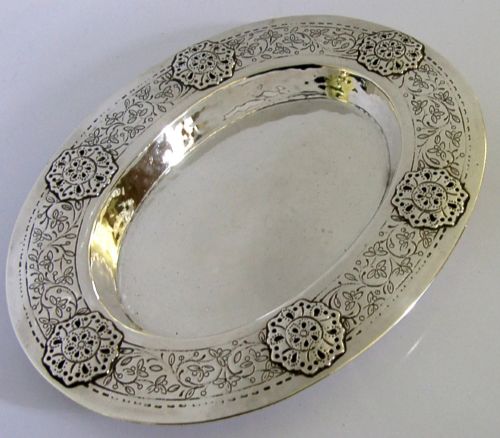
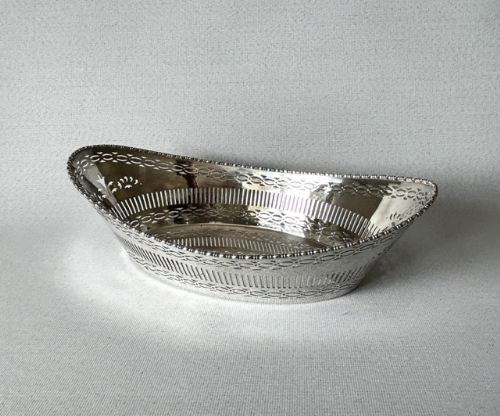
An oval silver bowl is a versatile vessel designed for serving, display, or dining table presentation, spanning periods from the George III era through to the Edwardian period. The selections visible here include sterling silver iterations alongside silver plate, EPNS, and mixed media compositions incorporating glass, copper, and wood.
Makers fashioned these pieces across diverse aesthetic movements, encompassing Victorian, Edwardian, Art Nouveau, Arts and Crafts, and Chinese Export traditions. Common functional forms take shape as bread dishes, entree dishes, pierced serving dishes, sugar baskets, and pedestal stands.
Materials and construction methods
Silversmiths utilised solid sterling silver and durable silver plate over base metals, shaping metal through hammering, casting, and piercing techniques. Pierced work required meticulous hand-sawing to create intricate openwork patterns along the rim and body of the vessel.
Engraving and floral embossing frequently decorated the surface, whilst makers incorporated structural elements like wooden bases or glass liners to support the metal framework. Hallmarks stamped into sterling pieces recorded the assay office, maker, and year of creation.
Oval Silver Bowl Retail Price Guide 2026
Typical asking prices for oval silver bowl among the pieces listed under this phrase on Sellingantiques today, from the lower quarter to the upper quarter. They describe what is for sale here now, not the wider market.
One unexpected survival in the collection is a lawn bowling plaque, proving silver had competitive uses far beyond the dining table.
Distinctions in quality
Quality rests upon the weight of the metal, the crispness of any pierced or chased ornamentation, and the preservation of the original plating on silver-plated items. Solid sterling pieces bearing clear hallmarks by notable makers command greater attention than unmarked plated wares.
The integrity of the construction, from soldered pedestal joints to balanced oval rims, dictates the standard of the piece. Subtle hand-engraved detailing distinguishes superior examples from standard factory output.
Liberty and Company·Mappin and Webb·Walker and Hall·Benjamin Prosser·William Comyns·Martin Hall·WMF
The Oval Silver Bowl Glossary
- Sterling silver
- An alloy containing 92.5 percent silver by mass, denoting solid precious metal construction.
- Silver plate
- A thin layer of silver fused to a base metal core, offering the appearance of solid silver.
- EPNS
- Electroplated nickel silver, a common base metal method utilised for durable domestic tableware.
- Pierced work
- Decorative openwork cut through the metal wall to form geometric or floral patterns.
- Hallmark
- Official stamps struck into precious metals to guarantee purity, origin, and maker.
Oval Silver Bowl: Frequently Asked Questions
How do I clean an oval silver bowl?
Use a specialised silver polish and a soft cloth to gently remove tarnish without abrading the surface detail or piercing.
Avoid harsh chemical dips, particularly on silver-plated or mixed-material items, to preserve the finish.
Can I use these bowls for serving food?
Solid silver and silver-plated bowls function effectively for serving dry foods, bread, or fruit during dining.
Ensure you wash them by hand promptly after use and dry them thoroughly to prevent corrosion.
What is the difference between solid silver and plate?
Solid silver consists entirely of precious metal alloy throughout its structure, whereas plated items feature a thin silver coating over a base metal.
Examining hallmarks helps determine whether a piece is sterling silver or electroplated.
How do I identify the period of a bowl?
Maker marks, assay office symbols, and date letters stamped into sterling pieces provide exact chronological attribution.
Stylistic cues such as Art Nouveau curves or Victorian piercing also point toward specific decades.