

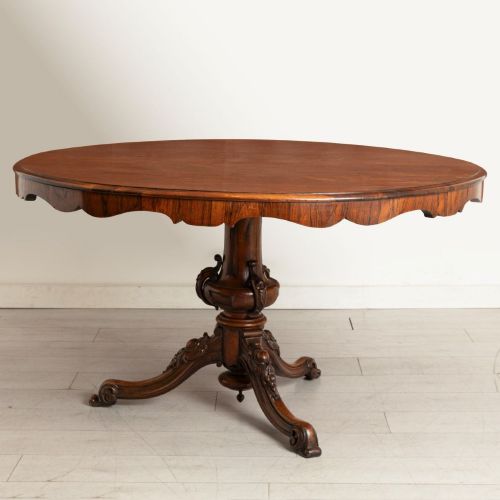
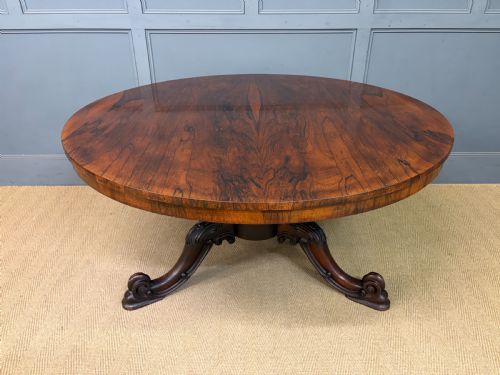


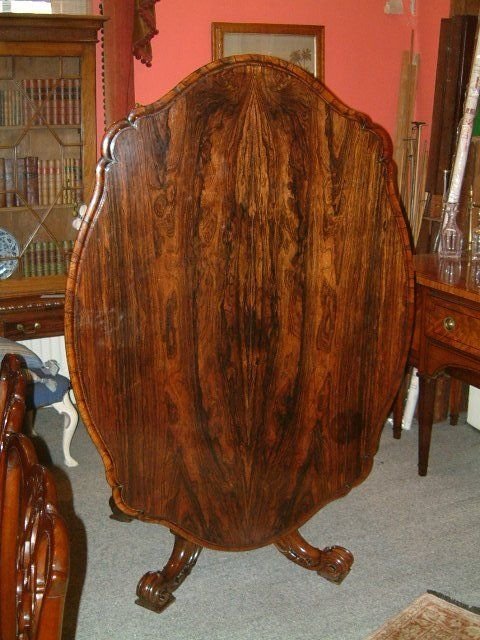

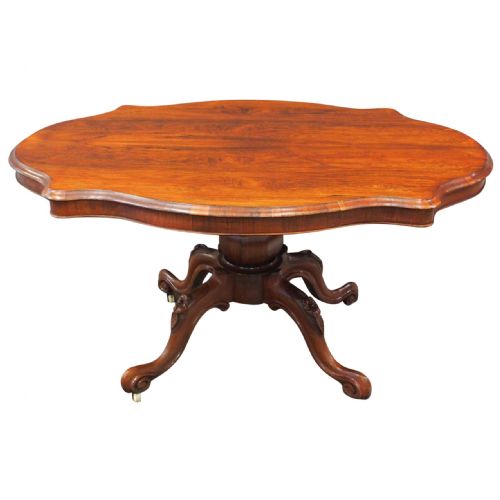


Oval Rosewood Breakfast Table
An oval rosewood breakfast table brings tactile warmth and formal presence to a room, offering the rich grain and sturdy pedestals that collectors prize.
Oval Rosewood Breakfast Table
An oval rosewood breakfast table is a substantial piece of furniture designed for central placement in a Victorian or earlier interior, often doubling as a loo table or dining table. These tables typically feature a polished wooden top supported by a central pedestal base, frequently incorporating a tilt-top mechanism for convenience when not in use.
On this page, the pieces you encounter span the Victorian and William IV periods, alongside earlier George III examples. The forms range from large centre tables and loo tables to smaller Pembroke tables, all showcasing the characteristic oval shape in rosewood.
The timber itself defines the visual impact of these tables, presenting deep reddish-brown tones with dark figuring. Whether designated as a breakfast table or a centre table, each piece reflects the domestic habits and cabinet-making standards of the nineteenth century.
How they were made
Cabinet-makers constructed these tables using solid rosewood and rosewood veneer applied over secondary timbers, occasionally incorporating exotic woods like satinwood, calamander, or albuera wood for contrast. The tops were frequently set on turned and carved solid rosewood bases that provided the necessary structural support for heavy timber.
Inlay work involving brass added decorative contrast to the rich rosewood surfaces on certain examples. Joinery techniques ensured that large central pedestals could bear the weight of tilting or fixed oval tops without compromising stability.
Oval Rosewood Breakfast Table Retail Price Guide 2026
Typical asking prices for oval rosewood breakfast table among the pieces listed under this phrase on Sellingantiques today, from the lower quarter to the upper quarter. They describe what is for sale here now, not the wider market.
Some tables tilt up so your breakfast can slide straight onto your lap if you forget the latch.
What varies in quality
Quality in these tables rests primarily on the selection of timber and the ambition of the carving on the pedestal base. Pieces utilising finely figured rosewood veneer or contrasting woods such as calamander sit at a higher tier than plain surfaces.
The execution of the pedestal and the integration of functional elements, such as tilt-top mechanisms or brass inlay, distinguish standard production from exceptional cabinet work. Carved details on the solid rosewood base show the hand of a skilled maker rather than routine workshop output.
Gillows
The Oval Rosewood Breakfast Table Glossary
- Rosewood
- A dense, heavily figured timber valued for its deep colour and durability in nineteenth-century furniture. It takes a high polish that accentuates the dark grain.
- Tilt-top
- A hinged mechanism allowing the table top to pivot to a vertical position for storage or movement. This feature is common on pedestal tables of the Victorian era.
- Loo table
- A large round or oval table designed for evening card games such as loo. These tables often feature tilt-top mechanisms to save space in the drawing room.
- Pembroke table
- A small table with hinged drop leaves on two opposing sides. They often date from the Georgian period and incorporate fine veneers like satinwood and rosewood.
Oval Rosewood Breakfast Table: Frequently Asked Questions
What is an oval rosewood breakfast table?
An oval rosewood breakfast table is a nineteenth-century pedestal table featuring a polished rosewood top, often designed to tilt.
These pieces served functional and decorative roles in Victorian and earlier interiors as dining or centre tables.
How do I use a tilt-top table?
The tilt-top mechanism allows the heavy wooden top to pivot vertically when the table is not in use.
This practical feature enabled nineteenth-century households to clear floor space in drawing rooms and parlours.
How do I tell Victorian from Georgian tables?
Victorian tables on this page typically feature heavier proportions, bold turned pedestals, and rich rosewood veneers.
Georgian pieces, such as Pembroke tables, often display lighter framing and decorative use of contrasting woods like satinwood.
Where should I place a centre table?
A centre table is designed to stand free in the middle of a room rather than against a wall.
This placement showcases the turned and carved pedestal base from all angles while providing a functional surface.