

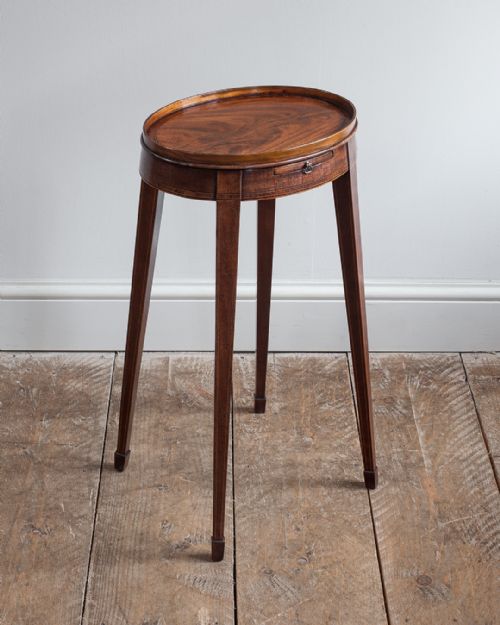


Oval Pedestal Tea Table
An oval pedestal tea table brings warmth to a room, offering a surface supported by a central column.
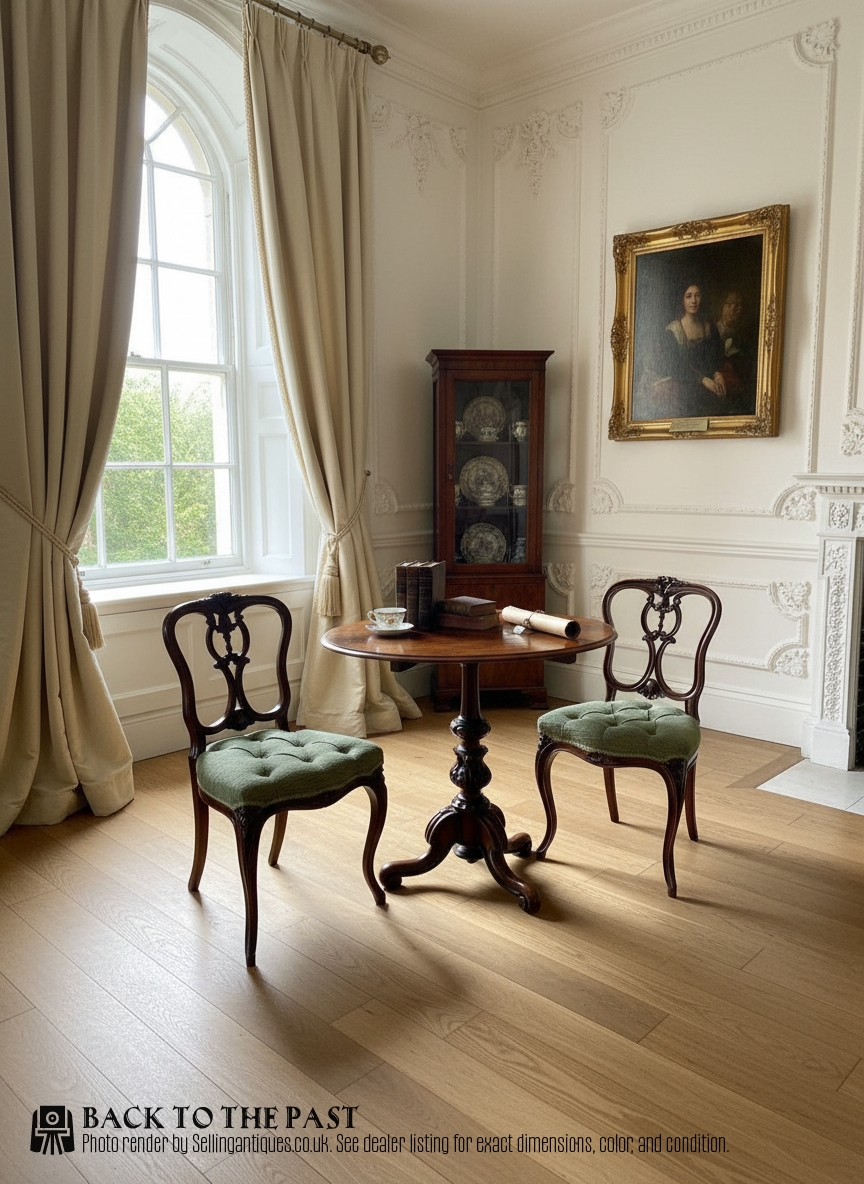
Oval Pedestal Tea Table
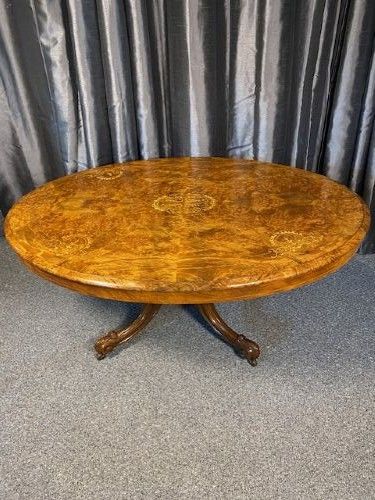
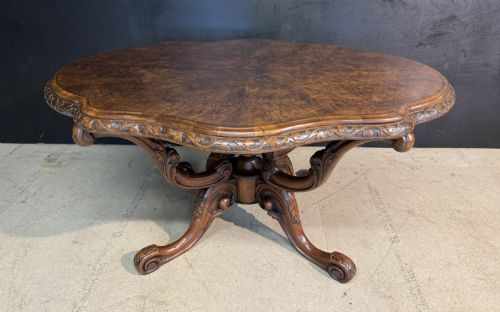
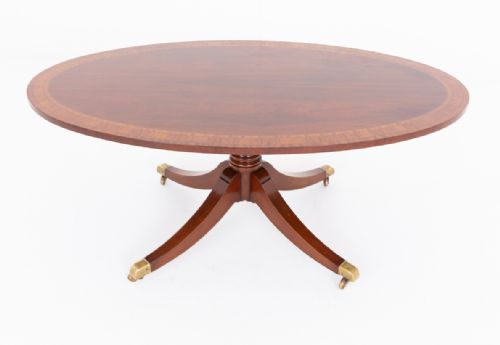
An oval pedestal tea table is a domestic surface designed for sitting rooms, most commonly found here originating from the Victorian and Edwardian periods. These pieces take the form of centre tables, lamp tables, and occasional tables, resting upon a central pillar rather than four standard corner legs.
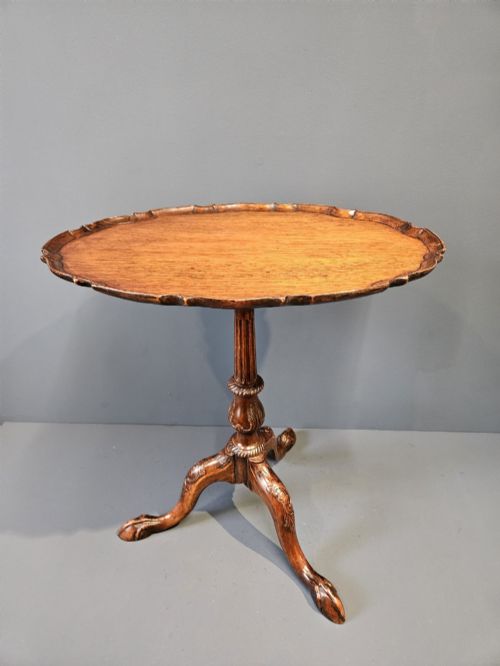
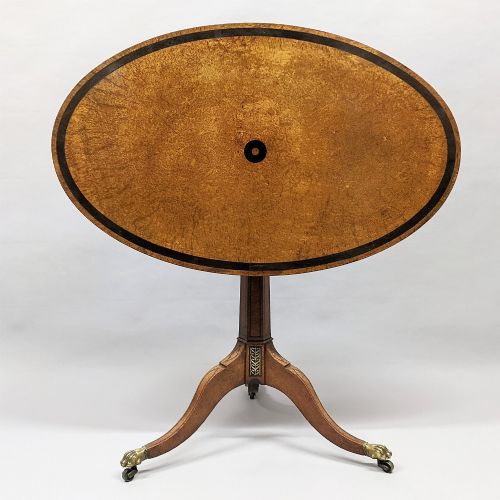
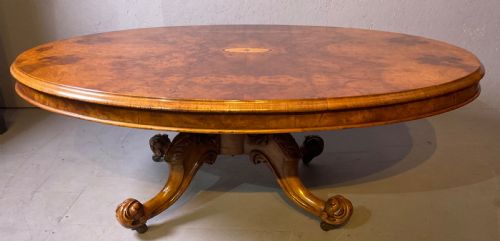
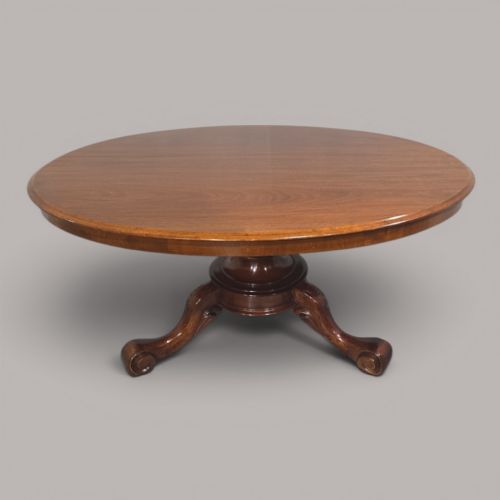
The materials appearing across these listings are predominantly walnut and burr walnut, alongside mahogany, rosewood, amboyna, and satin birch. Tables often feature boxwood inlay, marquetry, and hand-carved bases, while specific examples incorporate tilt-top mechanisms or pie crust edges.
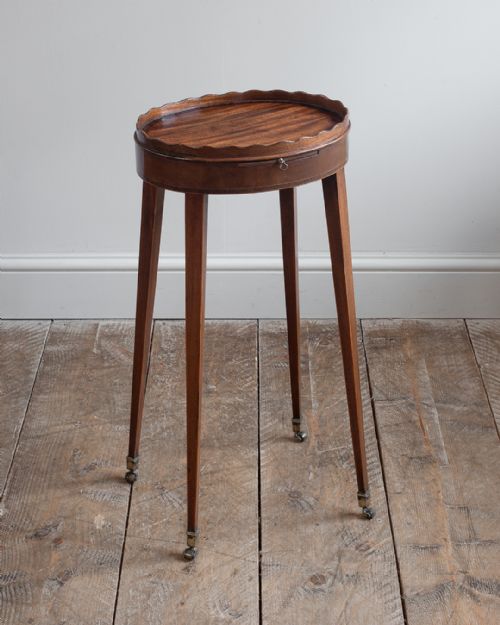
Buyers seeking an oval pedestal tea table will encounter designs spanning the eighteenth century through to the early twentieth century. Victorian examples in figured walnut dominate the selection, accompanied by Georgian urn stands and later Edwardian occasional tables.
How they were made
Cabinet makers utilised dense hardwoods such as mahogany and rosewood for structural stability, applying veneers of burr walnut and amboyna to the visible top surfaces. These veneers were selected for their swirling grain patterns and applied with animal glues.
Inlaid decoration required precise hand-cutting of contrasting timbers, such as boxwood and ebony, fitted directly into recesses carved into the primary wood. Bases and pedestal columns frequently received hand-carved detailing, utilising chisels and gouges on solid walnut or mahogany.
Tilt-top tables relied on timber catch mechanisms and brass fittings to allow the top to pivot vertically when not in use. Pedestals typically split into tripod or quadruped scroll feet, joined securely to the central pillar to support the weight of the tabletop.
Some tables tilt up entirely to hide against the wall, serving as polite wooden shields when tea time finishes.
What varies in quality
The distinction between tiers of quality rests upon the selection of timber veneers and the depth of skill in the hand-carving. Superior tables display highly figured burr walnut with matching grain symmetry across the entire oval top, whereas simpler pieces use plain timber or show less careful grain alignment.
Marquetry and inlay work mark another divergence in craftsmanship, as finer examples integrate intricate boxwood scrolls without gaps or filler. The execution of carved mouldings on the pedestal base and the crispness of the turning on the central column reveal the hand of a more accomplished maker.
Gillows
The Oval Pedestal Tea Table Glossary
- Burr walnut
- A wood harvested from the abnormal growth of a walnut tree, yielding dense and highly figured circular grain patterns. Cabinet makers prized this timber for creating decorative table tops.
- Tilt-top
- A table construction featuring a mechanism that allows the top to pivot into a vertical position. This design saved floor space when the table was placed against a wall between uses.
- Marquetry
- The art of applying small pieces of veneer to a structure to form decorative patterns and pictures. Artisans used diverse woods and tinted bones to achieve tonal contrast.
- Pie crust edge
- A carved, raised wooden rim around the perimeter of a tabletop, shaped with undulating curves resembling pastry work. This detail required patient hand-carving from a solid timber blank.
- Lamp table
- A compact occasional table designed to hold a light source rather than heavy serving items. These pieces often feature a single central pedestal to maximise legroom in smaller spaces.
Oval Pedestal Tea Table: Frequently Asked Questions
What rooms suit an oval pedestal tea table?
These tables fit comfortably beside seating in drawing rooms or studies as lamp or occasional surfaces. Their curved perimeter softens the geometry of a room filled with rectangular furniture.
The central pillar construction ensures that chairs fit neatly around the edge without corner legs obstructing the space. Smaller forms serve well as wine tables or display stands in hallways.
How do I identify a Victorian walnut table?
Victorian examples frequently display rich burr walnut veneers with deep brown tones and intricate grain figures. Many incorporate boxwood stringing or floral marquetry inlay across the oval top.
The bases often feature carved walnut pedestals resting on scrolled tripod feet, sometimes accented with brass castors concealed underneath.
What is a tilt-top mechanism used for?
The tilt-top mechanism allows the wooden surface to pivot upright so the table can stand flat against a wall when not in use. This practical design originated in earlier centuries to preserve floor space in smaller domestic interiors.
A brass or wooden catch secures the top in the horizontal position when lowered for daily use.