
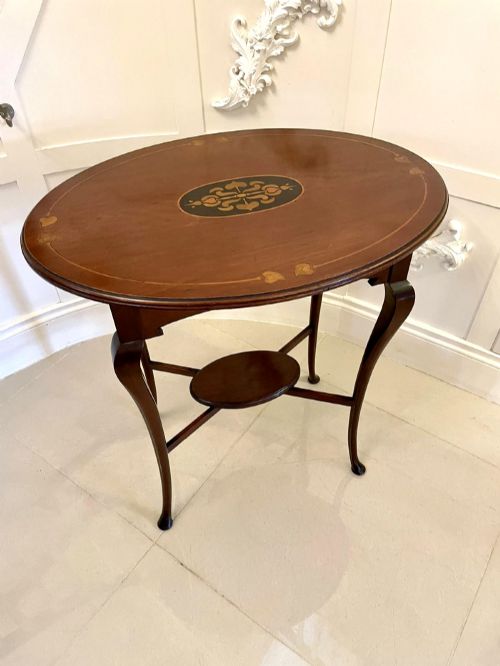
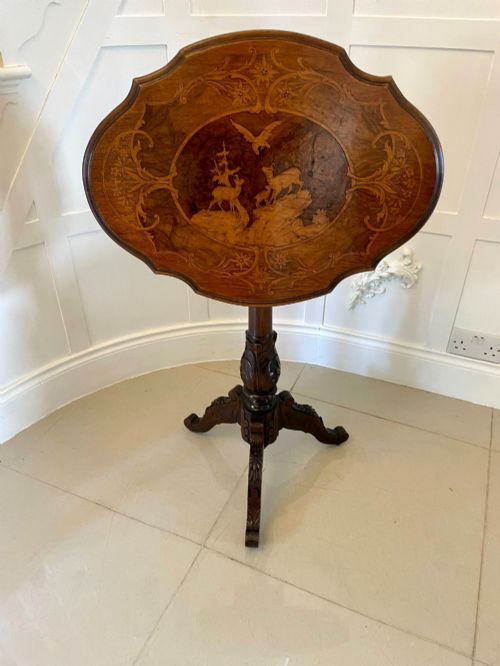
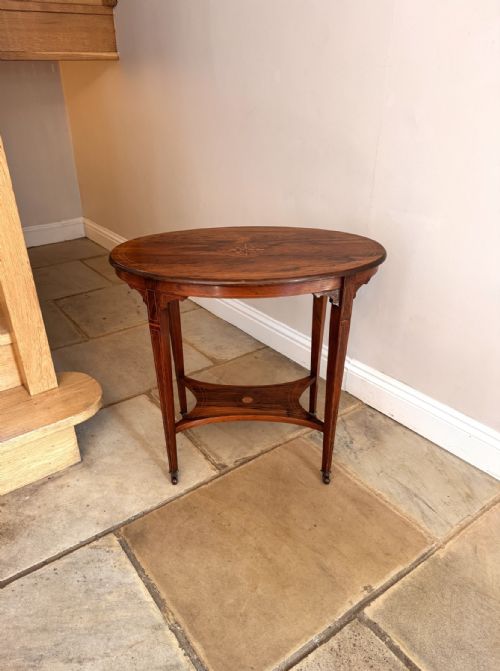
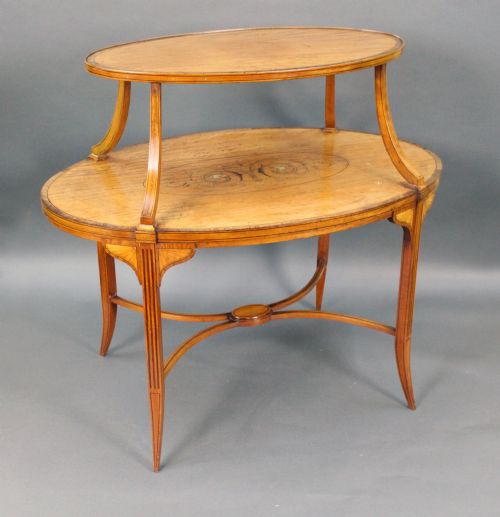


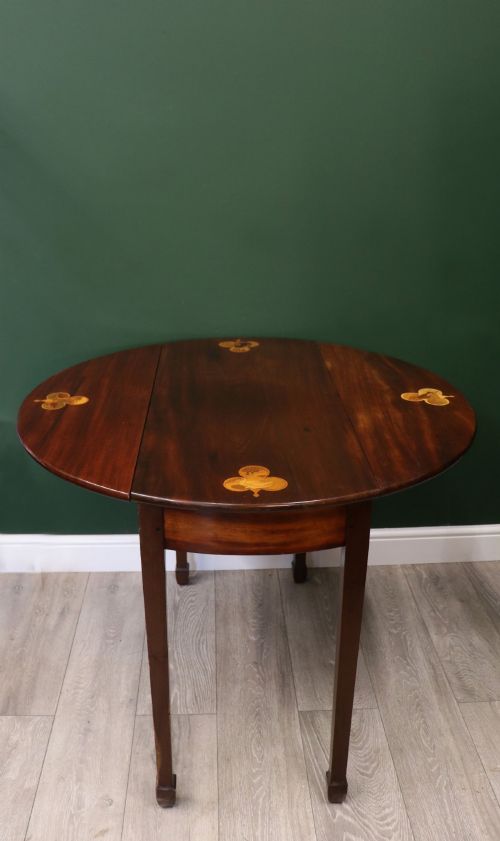
Oval Inlay Side Table
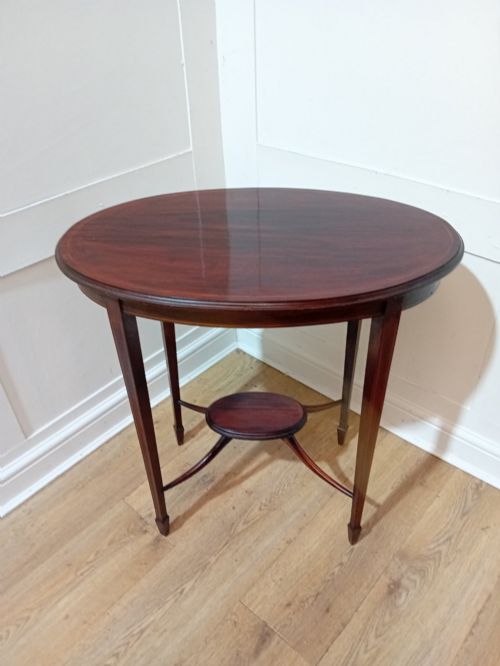
An oval inlay side table brings polished timber and delicate stringing to a corner, offering a compact surface suited to a lamp or a cup of tea.
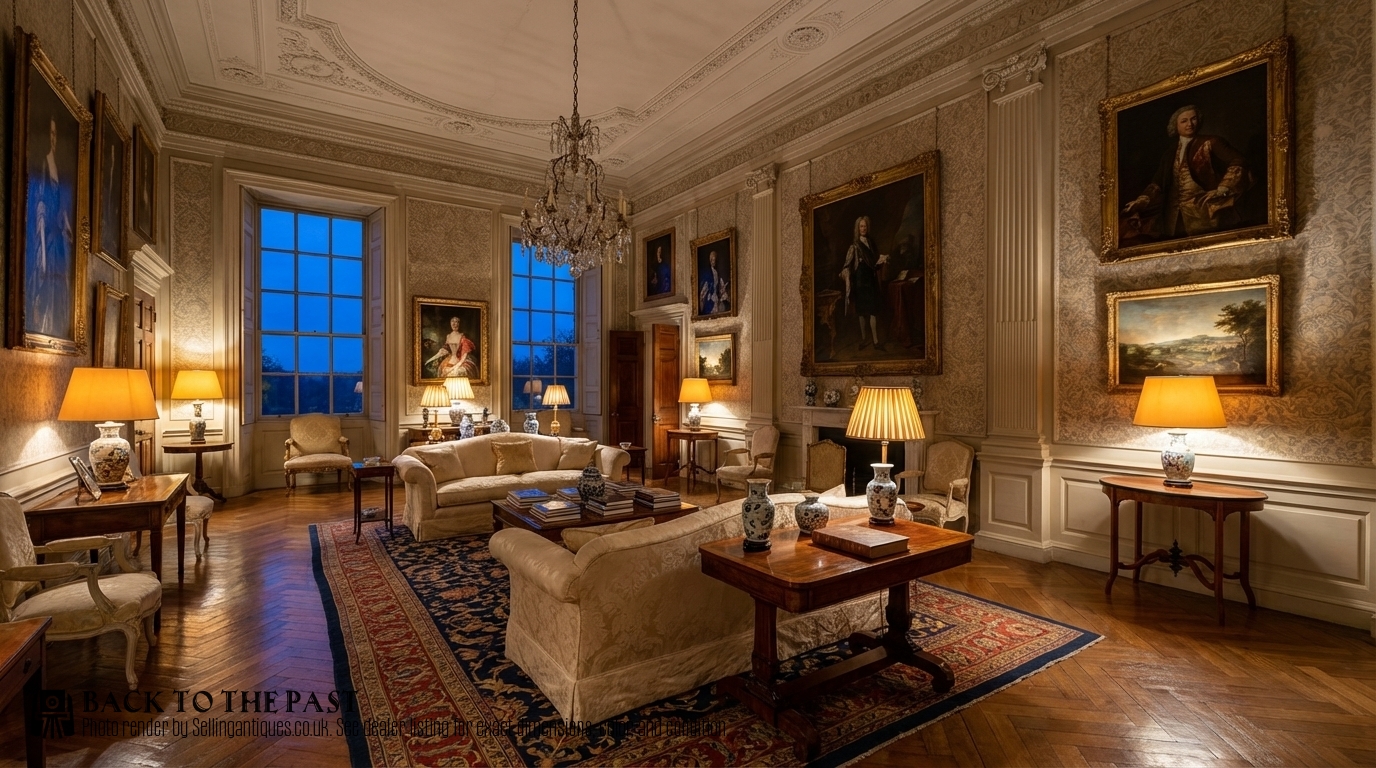
Oval Inlay Side Table
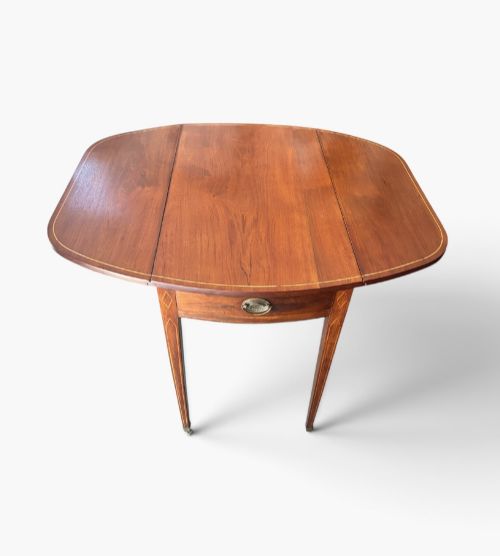
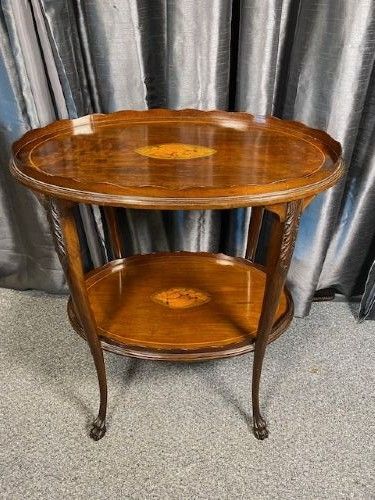
When you search for an oval inlay side table, you encounter a variety of forms spanning the Georgian, Victorian, and Edwardian periods. Occasional and lamp tables dominate the selection, alongside Pembroke and writing tables built with curved tops.
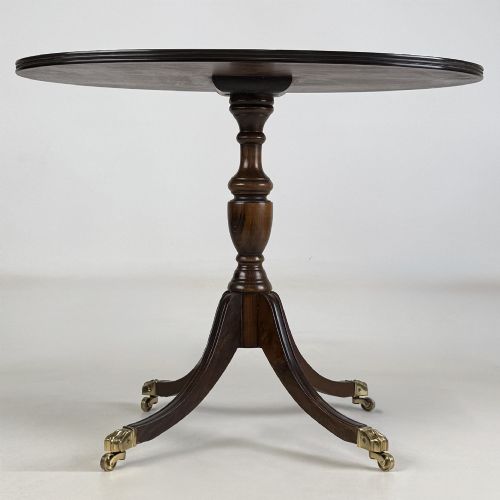
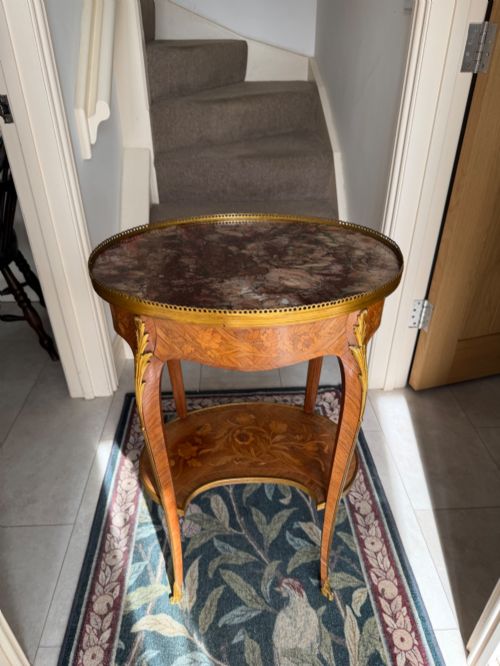
The pieces emerge from diverse design vocabularies including Sheraton Revival, Regency, and Louis XV style. Most examples rely on slender legs, sometimes joined by lower tiers, to support the figured wooden tops.
Origins stretch from English workshops to French and Indian makers, reflecting broad nineteenth and early twentieth century production. Buyers frequently meet Edwardian satinwood and mahogany versions alongside earlier nineteenth-century walnut pieces.
Materials and construction methods
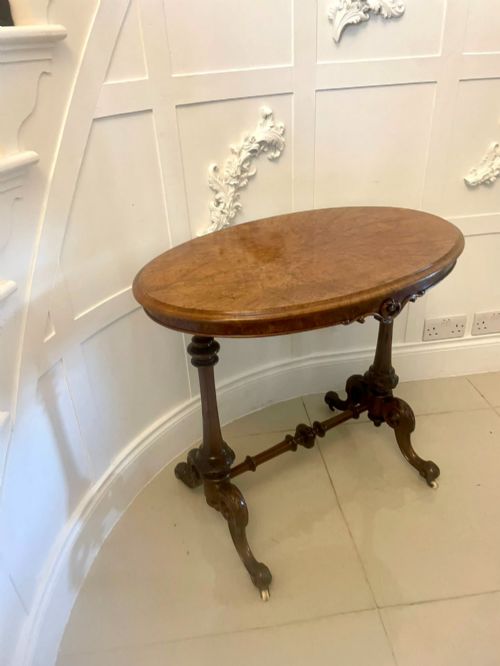
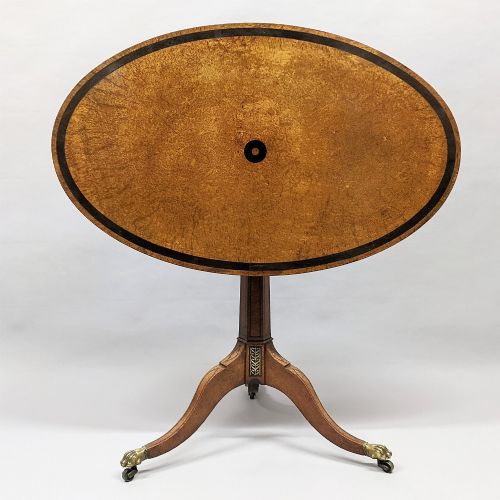
Cabinetmakers constructed these tables using a foundation of solid mahogany, walnut, or satinwood, often applying veneers to achieve smooth surfaces on the top and rails. Burr walnut and harewood provide distinct grain patterns across the primary planes.
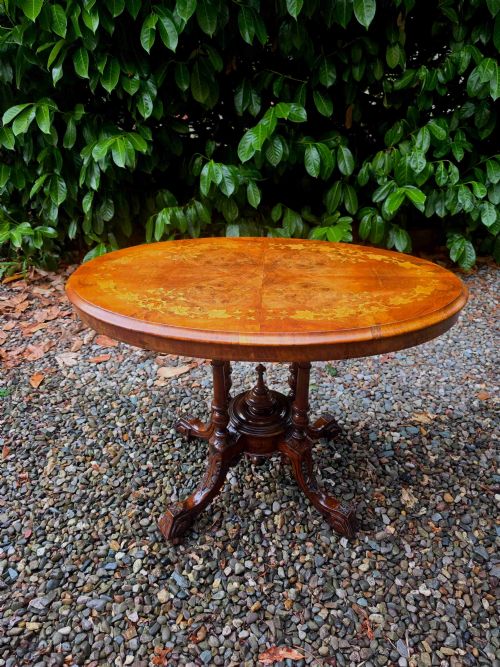
Inlay work utilises contrasting timbers such as boxwood, ebony, and satinwood to create geometric lines, floral motifs, or central paterae. Brass fittings, drop handles, and casters appear on select writing and Pembroke forms.
Some tables hide drop leaves and chess boards, proving that past generations enjoyed a sneaky game of cards.
Assessing craftsmanship and finish
The precision of the wood inlay distinguishes finer examples from simpler production, particularly where boxwood stringing meets tight curves on the perimeter. Crisp execution of floral marquetry and well-defined banding indicate higher skill levels in the workshop.
Timber selection drives variation, with burr walnut and figured satinwood commanding attention through rich natural patterning. Structural integrity in the joints and the crispness of the turned or tapered legs complete the measure of quality.
The Oval Inlay Side Table Glossary
- Inlay
- A technique where pieces of contrasting wood or other materials are inserted into depressions flush with the surface to form a decorative pattern. This method defines the primary visual appeal of these tables.
- Pembroke table
- A small occasional table featuring hinged drop leaves on two opposing sides. These tables often include a single drawer or dummy drawer.
- Satinwood
- A durable, lustrous timber native to India and Ceylon displaying a golden-yellow sheen. It frequently serves as a primary veneer in Sheraton Revival furniture.
- Marquetry
- Elaborate veneer work arranged in pictorial or decorative patterns across a surface. Unlike simple linear stringing, marquetry builds complex pictures using various tinted woods.
- Patera
- A circular ornamental disc carved or inlaid in low relief resembling a classical libation dish. It often centres the top of a Georgian or neoclassical table.
Oval Inlay Side Table: Frequently Asked Questions
Where should I place an oval inlay side table?
These tables fit easily beside a sofa, in an entryway, or as a lamp stand in a quiet corner. Their curved edges soften the straight lines of a room.
Because they occupy a small footprint, they function well in compact spaces where a standard rectangular table might block movement.
How do I clean an antique wood table?
Dust the surface regularly with a soft, dry cloth to prevent grit accumulation. Avoid modern silicone sprays that can build up on the French polish.
Apply a quality beeswax polish sparingly once or twice a year to nourish the timber and maintain the natural lustre of the grain.
Can I use an antique table for daily writing?
Certain models, such as Pembroke or writing tables, include drawers and sturdy tops designed for correspondence. Ensure you protect the timber surface if you write directly on paper.
Occasional and lamp tables possess lighter frames intended for decorative objects rather than heavy daily clerical work.
How do I distinguish Edwardian from Georgian pieces?
Georgian tables from the late eighteenth century often display heavier proportions and simpler structural lines with precise mahogany or satinwood veneers. Edwardian revivals from around 1900 frequently exhibit lighter satinwood and intricate marquetry.
Examine the secondary woods underneath and the style of the leg turning for additional clues regarding the manufacturing era.