

Inlay Coffee Table
An inlay coffee table brings dense botanical work, brass lines and figured timber into the sitting room.
Inlay Coffee Table
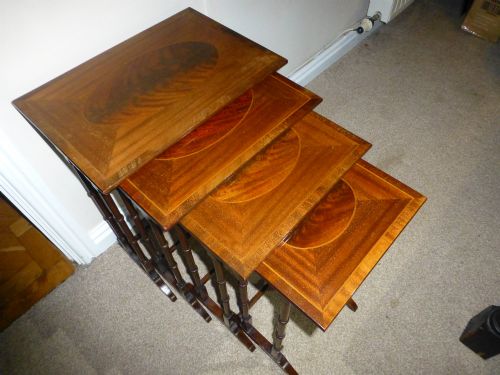
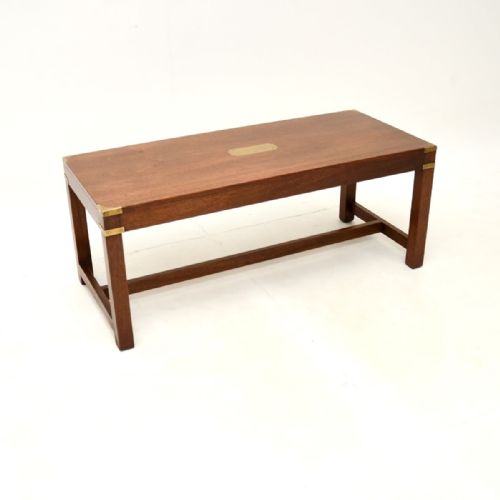
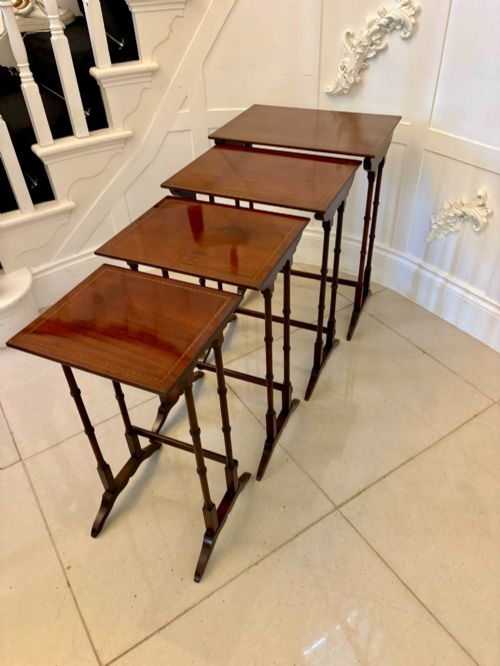
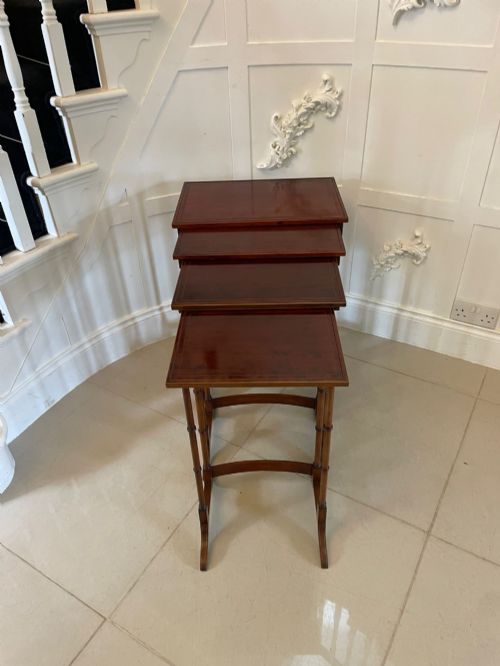
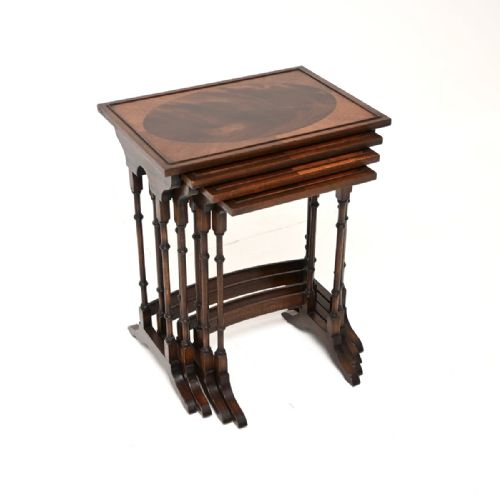
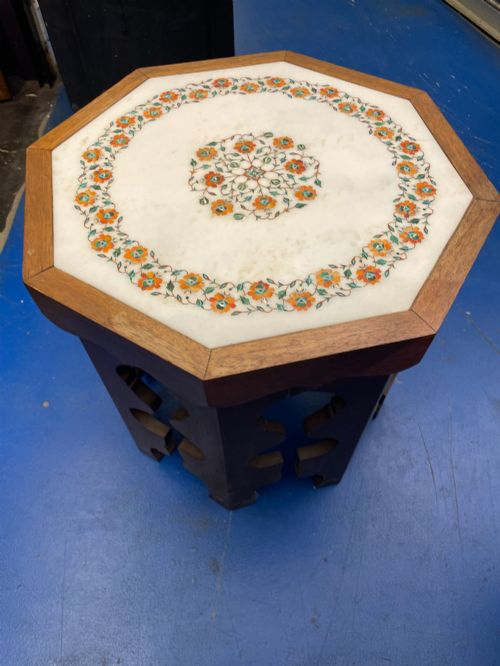
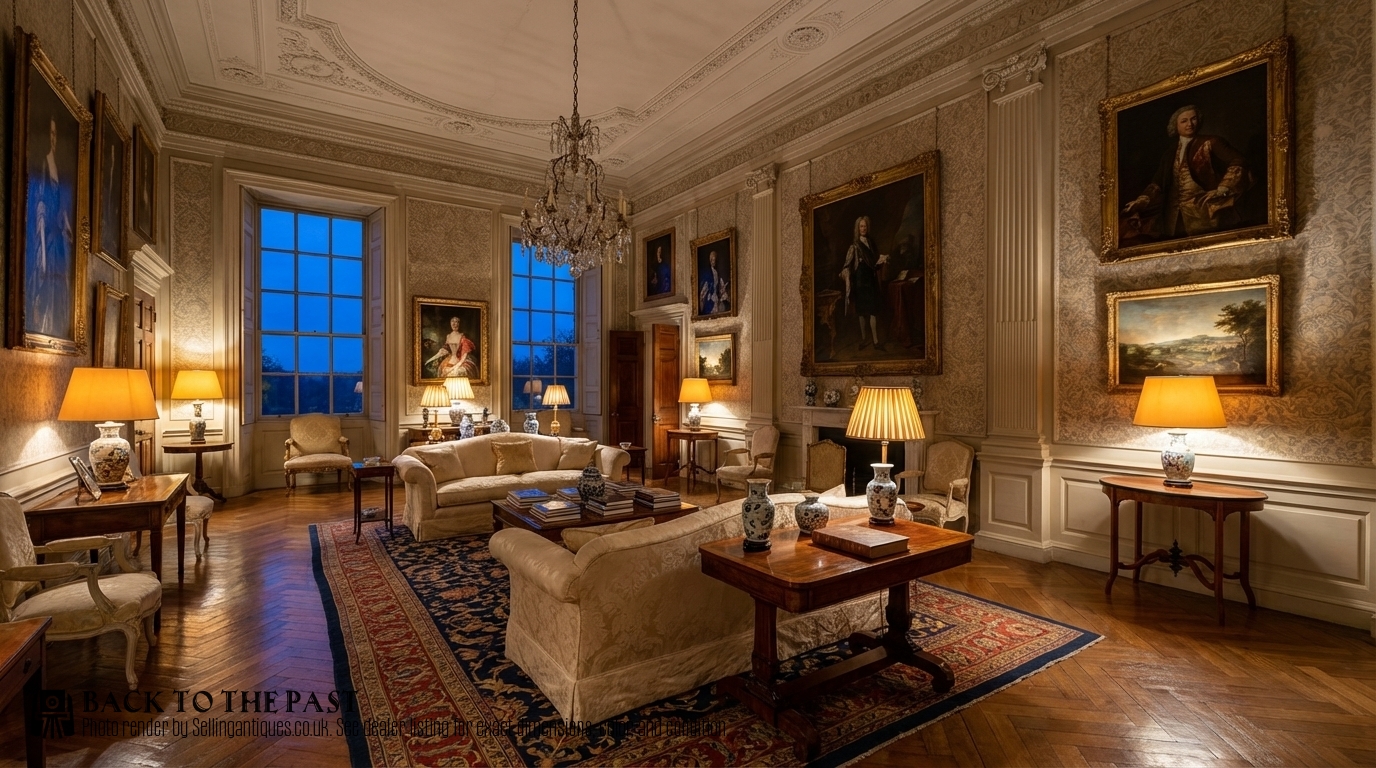
An inlay coffee table gathers formats originating as lamp tables, centre tables, occasional tables and nests of four into low level domestic use. Victorian and Edwardian examples in burr walnut, mahogany and satinwood share floor space with Anglo-Indian, Moorish and French imports.
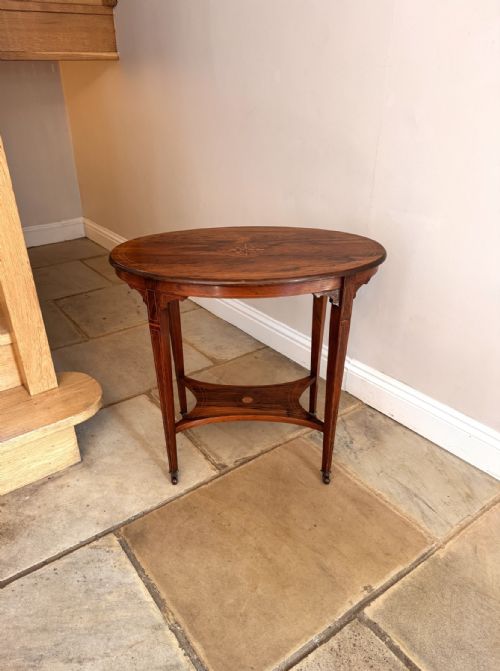
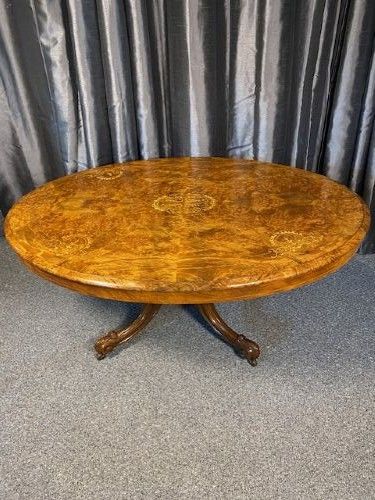
The octagonal shape appears frequently, alongside oval, circular and rectangular formats. Many pieces represent earlier occasional or centre tables lowered for contemporary seating heights during later adaptation.
Materials and construction methods
Cabinet makers utilised dense hardwoods including walnut, mahogany, rosewood and teak as bases for intricate surface decoration. Boxwood, satinwood and fruitwoods were cut into thin veneers to form contrasting botanical patterns.
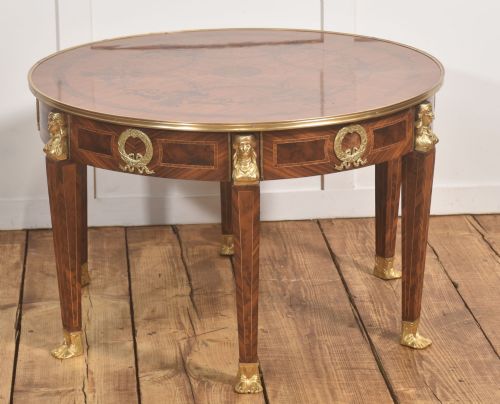
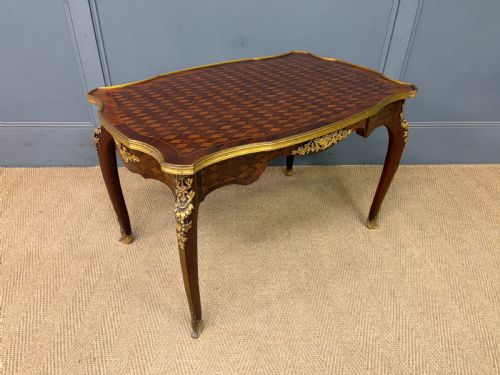
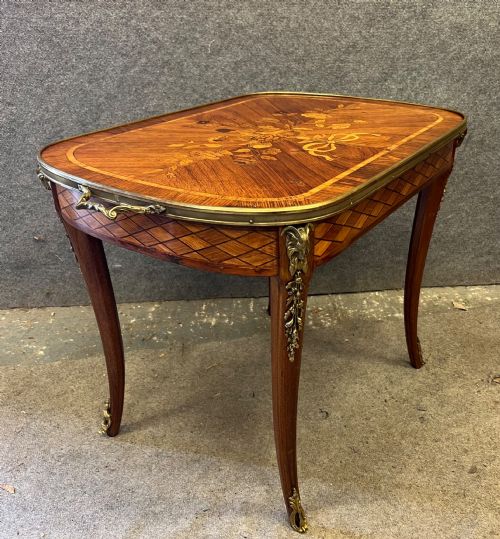
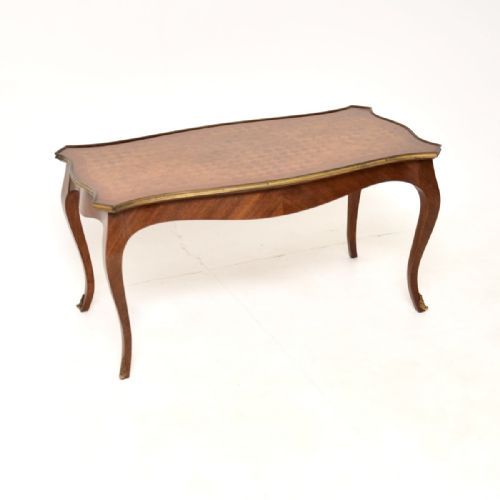
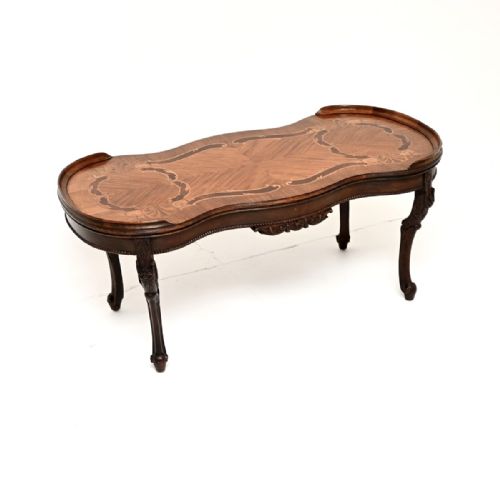
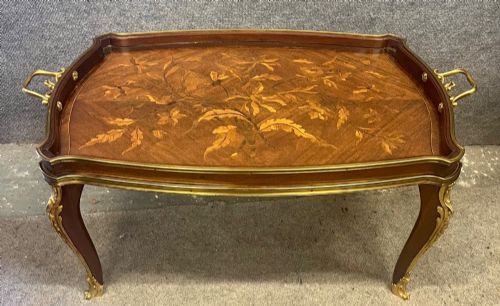
Detailing incorporates brass wire, mother of pearl and carved bone pressed into timber grounds. French pieces introduce ormolu mounts and parquetry, while Middle Eastern and Indian examples combine carving with geometric inlay.
The inventory spans Victorian, Edwardian and Art Deco periods, encompassing French, British and Indian workshops.
Distinctions in execution and timber selection
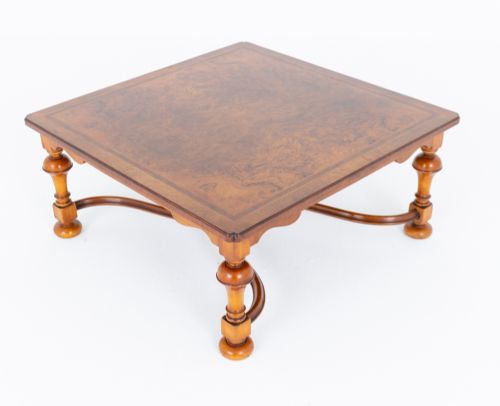
Quality rests upon the crispness of the cutting and the selection of figured timber grounds such as burr walnut and yew. Superior pieces display tight, seamless joints where contrasting woods meet without filler.
The depth of the decorative scheme separates standard production from exceptional work. Hand-carved elements, intricate mother of pearl placement and substantial brass wire define the finer examples.
Liberty & Co·Hoshiarpur
The Inlay Coffee Table Glossary
- Marquetry
- The art of creating decorative patterns on a wooden surface using fitted veneers of various woods, shells or metals. This technique produces pictorial or floral designs across tabletops.
- Parquetry
- Geometric mosaic woodwork arranged in regular patterns like cubes or triangles. It differs from marquetry by using strict geometric grids rather than pictorial motifs.
- Quartetto
- A nest of four tables designed to slide neatly beneath one another. They appear frequently in mahogany and satinwood from the Edwardian period.
- Ormolu
- Gilded bronze mounts applied to furniture edges and legs. This decorative hardware is characteristic of French revival pieces.
Inlay Coffee Table: Frequently Asked Questions
Are these low tables original?
Many low tables originated as taller occasional, lamp or centre tables during the nineteenth or early twentieth centuries. Cabinet makers or later handlers reduced the leg heights to suit modern seating.
Evidence of alteration appears in the proportions of the legs and the turned blocks beneath the frame. Such conversion is standard practice for this furniture category.
How do I clean inlaid surfaces?
Dusting with a dry, soft cloth prevents particle buildup in the microscopic gaps between contrasting woods. Avoid liquid cleaners and harsh polishes that dissolve old adhesives within the channels.
Microcrystalline wax applied sparingly protects the timber and preserves the sheen without softening the original finish. Buff gently with clean cotton after application.
What timber species are used?
Primary construction relies on dense hardwoods including mahogany, walnut, rosewood and teak. Burr walnut and yew feature prominently for their swirling grain patterns.
Surface details utilise contrasting light timbers such as boxwood and satinwood, paired with organic materials like bone and mother of pearl.
How do I distinguish regional styles?
Anglo-Indian and Moorish examples display dense surface carving, octagonal formats and geometric brass or bone inlay. French revival pieces favour ormolu mounts, fluid cabriole legs and floral marquetry.
English Edwardian and Victorian forms lean towards clean oval or rectangular proportions in mahogany and burr walnut.