





Oval Glass Vanity Box
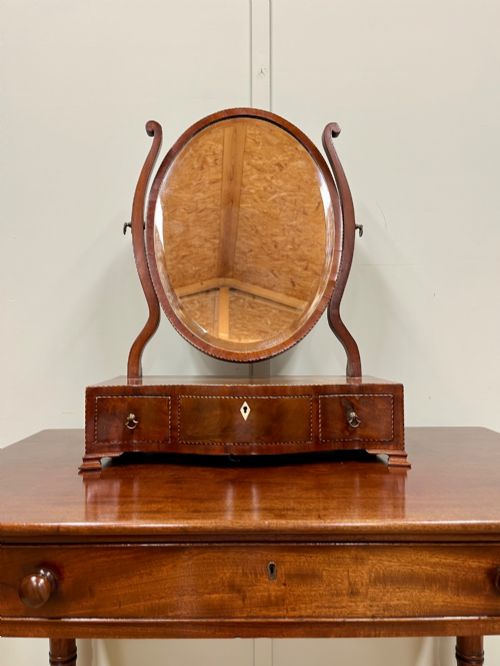
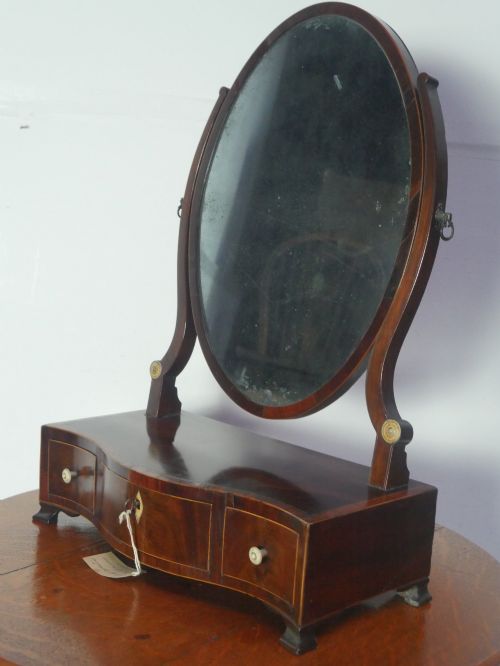
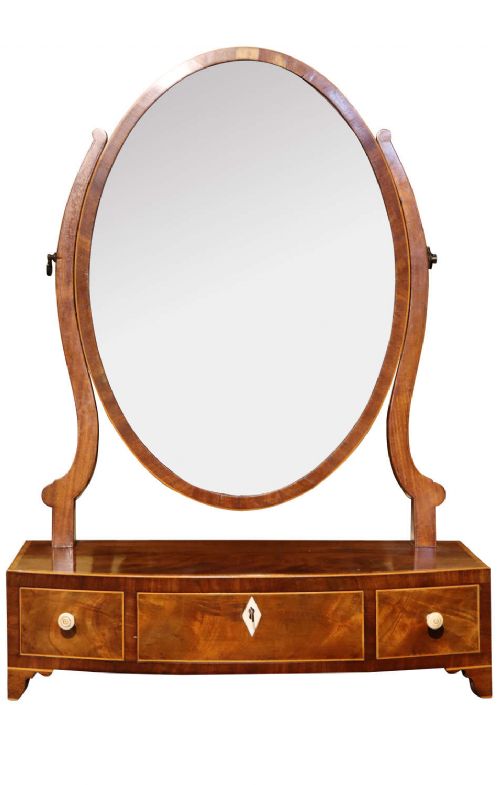
These oval glass vanity box pieces are Georgian dressing mirrors and patch boxes designed to sit upon a table while holding small articles.
Oval Glass Vanity Box
When you search for an oval glass vanity box, you encounter Georgian dressing mirrors and patch boxes dating from the eighteenth and nineteenth centuries. These items include toilet mirrors with serpentine fronts and three-drawer bases alongside smaller enamel patch boxes.
The mirrors are constructed in mahogany, often featuring crossbanding in satinwood and boxwood inlay. The glass components are paired with timber frames and brass fittings, creating functional dressing table accessories from the Georgian era.
How they were made
Cabinet makers utilised solid mahogany and mirror glass, incorporating boxwood inlay and satinwood crossbanding to ornament the timber frames. Brass was used for small fittings and hinges on the drawers.
Patch boxes from this period were produced using enamel techniques, creating small decorated containers suited for the dressing table.
Oval Glass Vanity Box Retail Price Guide 2026
Typical asking prices for oval glass vanity box among the pieces listed under this phrase on Sellingantiques today, from the lower quarter to the upper quarter. They describe what is for sale here now, not the wider market.
Georgian patch boxes were originally carried in pockets to hold small silk beauty spots used to cover blemishes.
What varies in quality
The refinement of the cabinet work dictates the standing of a piece, particularly in the shaping of the serpentine front and the precision of the boxwood inlay. Crossbanding executed with choice veneers elevates the visual weight of the mahogany.
The clarity of the mirror glass and the integration of the drawer structure within the base separate standard examples from finer works produced during the Georgian period.
The Oval Glass Vanity Box Glossary
- Serpentine
- A front edge curving outward in the centre and inward at the sides. This contour appears frequently on the base drawers of Georgian dressing mirrors.
- Crossbanding
- A strip of veneer applied to the border of a surface with the grain running at right angles to the main timber. It provides a neat framing effect on mahogany table mirrors.
- Boxwood inlay
- Small pieces of pale boxwood inserted into a darker wood surface to form decorative lines or patterns. This technique highlights the edges of mirror frames and drawer fronts.
- Patch box
- A small decorative container used in the eighteenth century to hold cosmetic patches. These enamel pieces form a distinct category alongside larger dressing mirrors.
Oval Glass Vanity Box: Frequently Asked Questions
What is an oval glass vanity box?
These items are Georgian dressing mirrors and patch boxes intended for the dressing table. They combine timber frames with mirror glass and small storage drawers.
The category encompasses both table mirrors with serpentine mahogany bases and small enamel containers used for personal grooming accessories.
How do I date a Georgian dressing mirror?
Dating relies on timber selection, structural characteristics such as serpentine drawer arrangements, and decorative details like boxwood inlay. Eighteenth-century pieces exhibit specific proportions and cabinet-making methods.
Makers of the period utilised solid mahogany and crossbanded veneers, which help distinguish Georgian examples from later reproductions.
Where were these mirrors placed?
They were designed to sit upon a dressing table or chest of drawers in a bedroom or dressing room. The adjustable mirror allowed the user to check their appearance.
The base drawers provided convenient storage for small personal items, rings, and cosmetic patches.
What woods are typical for these pieces?
Mahogany is the primary timber found in these dressing mirrors, supported by secondary woods in the drawer construction. Satinwood and boxwood appear as inlay and crossbanding.
These materials reflect the cabinet-making standards of the eighteenth and early nineteenth centuries.