


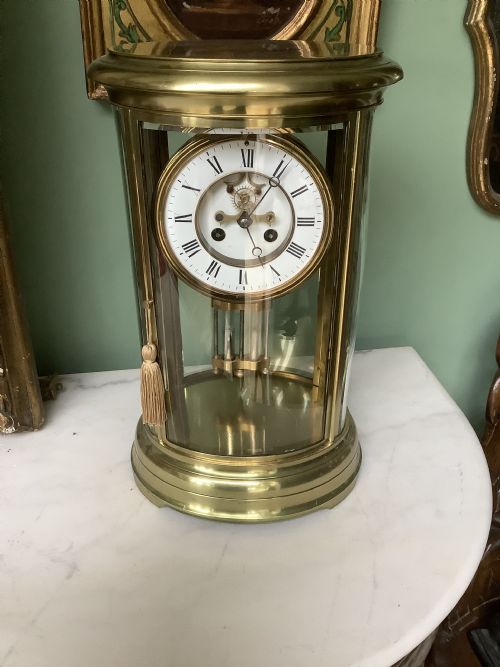


Oval Glass Clock
These oval glass clock examples bring together heavy brass frames and clear bevelled glazing to show off intricate movements.
Oval Glass Clock
When you search for an oval glass clock, you encounter tall four glass mantel pieces, smaller carriage designs, and crystal regulators from the Victorian and Edwardian eras. These timepieces house mechanical movements inside transparent enclosures, allowing a clear view of the escapement and gear trains from multiple angles.
The versions most commonly met on this page span French workshops and English makers dating from the nineteenth century into the early twentieth century. They range from petite brass cased travel clocks to substantial shelf clocks adorned with enamel dials and gilt frames.
Materials and construction methods
The heavy brass and gilt brass frames support thick glass panels on four sides, held together by precise corner pillars and bezels. Enamel dials feature painted numerals, sometimes accompanied by delicate hands and decorative diamontes or cloisonne work.
Many items incorporate wooden bases made from pine or lined with felt and fabric to protect the mounting surface. Display domes utilise blown or drawn glass shaped to fit over wooden plinths for protective showcases.
Oval Glass Clock Retail Price Guide 2026
Typical asking prices for oval glass clock among the pieces listed under this phrase on Sellingantiques today, from the lower quarter to the upper quarter. They describe what is for sale here now, not the wider market.
Some clocks wear diamontes like tiny jewels to catch the dim light of a Victorian parlour.
Judging quality in glass timepieces
The refinement of the movement and the crispness of the brass casting separate standard pieces from finer examples by known makers. Heavy gilding, intricate dial decoration, and unblemished bevelled glass indicate higher production standards.
The clarity of the glass panels and the integrity of the brass frame joints determine the overall presentation of the clock. Superior examples retain their original matching components and crisp dial markings without replacement parts.
Drocourt·AD Mougin
The Oval Glass Clock Glossary
- Four glass clock
- A mantel clock featuring glass panels on the front, back, and both sides to expose the movement. This design gained popularity during the Victorian period in France and England.
- Carriage clock
- A portable timepiece designed for travel, typically fitted with a swinging handle and a brass case with glass sides. These clocks often sit within fitted leather cases or glass display domes.
- Crystal regulator
- A mantel clock featuring bevelled glass panels held in a brass or gilt frame with a visible mercury or compensated pendulum. The style emerged in France during the late nineteenth century.
- Cloisonne
- An ancient technique for decorating metalwork objects, using vitreous enamel held in thin strips of metal welded to the body. Pieces utilise this method on dials or bezels for added colour.
- Diamonte
- A term used for small imitation gemstones or rhinestones set into clock bezels or dials. They add decorative sparkle to late Victorian and Edwardian pieces.
Oval Glass Clock: Frequently Asked Questions
What is an oval glass clock?
An oval glass clock is a mantel or carriage timepiece enclosed in curved or rounded glass panels with brass framing. These designs allow full visibility of the internal mechanical movement.
The style encompasses French four glass mantel clocks, crystal regulators, and brass cased carriage clocks from the Victorian and Edwardian periods.
How do I wind an antique carriage clock?
Antique carriage clocks typically require a key inserted into the winding arbor located on the backplate of the movement. Turn the key gently until you feel resistance, taking care not to overwind the mainspring.
Most mechanical examples run for eight days on a full wind, though some smaller miniature versions require attention every thirty hours.
Where should I place a four glass clock?
These clocks require a stable, level surface away from direct sunlight, drafts, and moisture to protect the delicate brass and glass housing. A solid mantelpiece or heavy sideboard provides adequate support without excessive vibration.
Because the movement is visible from all sides, placing the clock where light can pass through the glass panels enhances its visual appeal.
How do I date a Victorian glass clock?
Dating involves examining the style of the brass case, the shape of the enamel dial, and any maker stamps or serial numbers on the backplate. Victorian pieces often display registration marks or specific foundry stamps associated with French and English makers.
The presence of characteristic decorative elements like cloisonne or French Belle Epoque styling helps narrow the production period to the late nineteenth century.