



Oval Gallery Serving Tray
An oval gallery serving tray combines a raised perimeter with an elongated form, offering a practical way to present tea, drinks or decanters.
Oval Gallery Serving Tray
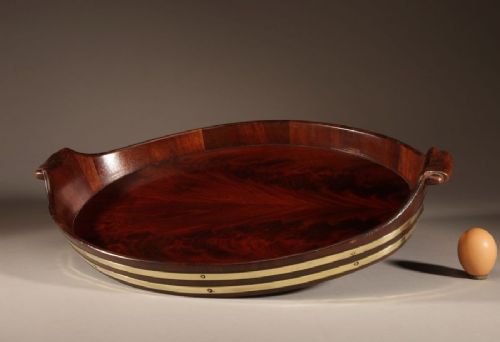
An oval gallery serving tray brings together a curved wooden or plated base and an upright surrounding rim, designed to keep glassware secure during transit. Examples span the eighteenth century through to the interwar period, drawing on Georgian, Victorian and Edwardian design traditions.
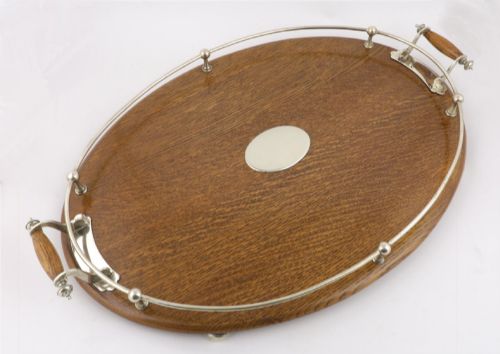
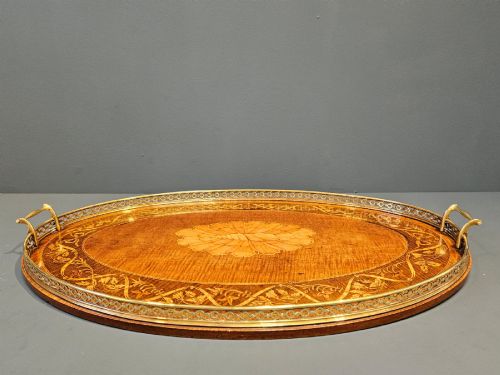
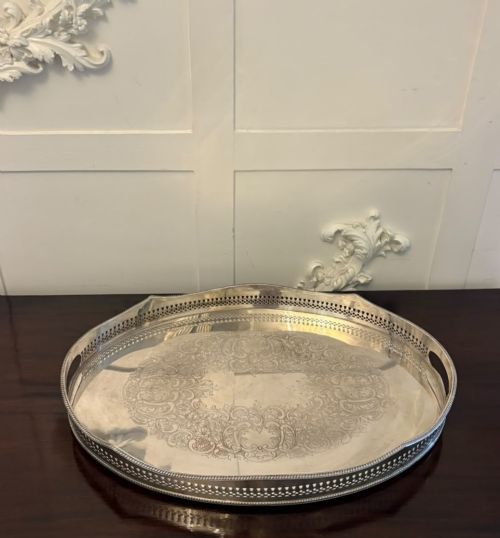
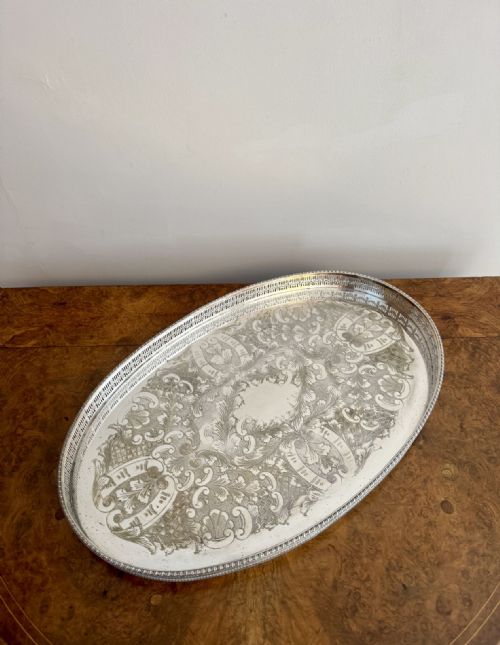
The version most commonly encountered on this page is the Edwardian silver plated model, often featuring engraved decoration and pierced metalwork. Mahogany and oak examples also appear frequently, alongside inlaid satinwood pieces fitted with brass galleries.
Forms range from small tea trays to large cocktail and decanter services, occasionally crossing into occasional table formats. These objects served utilitarian roles in formal dining rooms and drawing rooms before transitioning to display items.
Materials and construction methods
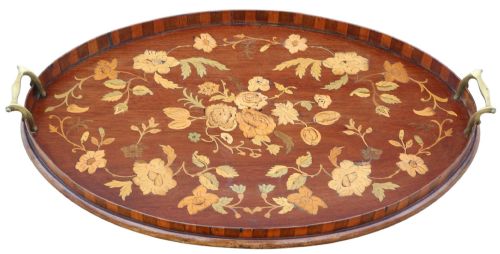
Cabinetmakers constructed the wooden bases using solid mahogany, oak or satinwood, frequently applying intricate veneers and contrasting stringing. Inlaid details often incorporate classical motifs or geometric lines.
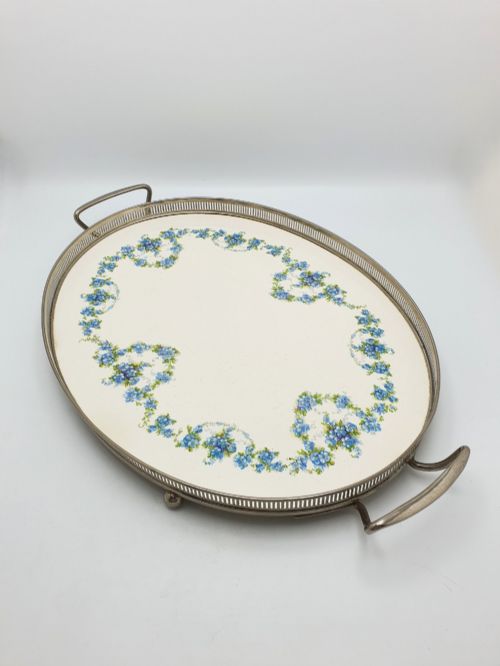
Metal components rely on silver plate, electroplated nickel silver or solid brass. Pierced galleries were worked by hand or machine to create openwork borders, while brass rails were secured around wooden perimeters.
Oval Gallery Serving Tray Retail Price Guide 2026
Typical asking prices for oval gallery serving tray among the pieces listed under this phrase on Sellingantiques today, from the lower quarter to the upper quarter. They describe what is for sale here now, not the wider market.
Several trays double as miniature architectural feats, enclosing tiny balustrades that look ready to keep a pint-sized monarch from tumbling off.
Judging execution and condition
The integrity of the gallery jointing and the crispness of the engraved decoration determine the standard of execution. Superior pieces exhibit tight joinery in the wooden framing and robust plating that remains intact across high-contact zones.
Inlaid items depend on the precision of the marquetry and the retention of original surfaces without excessive sanding. Pierced metalwork shows its merit in the clean finishing of each individual aperture.
Mappin & Webb
The Oval Gallery Serving Tray Glossary
- Gallery
- A raised miniature balustrade or railing running around the edge of a tray to prevent items from sliding off. It is often pierced or cast in brass and silver plate, or fashioned from turned wood.
- Electroplated Nickel Silver
- A base metal alloy of copper, nickel and zinc coated with a layer of pure silver through electrolysis. This technique became widespread during the nineteenth century for producing durable tableware.
- Marquetry
- The art of applying decorative pieces of veneer to a structural base to form intricate patterns and pictures. Craftsmen utilised timbers such as mahogany and satinwood to achieve contrasting tones.
- Coopered
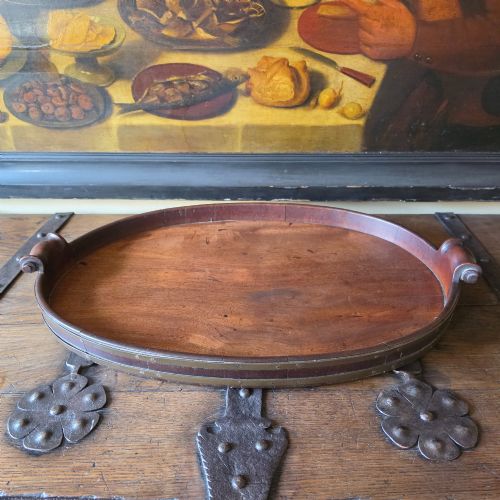
- Constructed from curved wooden staves joined edge-to-edge and bound with metal bands, similar to barrel-making. This technique appears in specialised serving vessels.
- Stringing
- A narrow inlay of contrasting wood inserted into shallow channels on a furniture surface. It forms linear borders around central panels.
Oval Gallery Serving Tray: Frequently Asked Questions
How were oval gallery serving trays used?
These trays were utilised in domestic settings to transport tea sets, decanters and cocktail glasses from kitchens to reception rooms. The raised gallery prevented bottles and cups from sliding off during movement.
Over time, many transitioned from active service to static display pieces on sideboards and occasional tables, holding silver or glassware.
How do I identify an Edwardian silver plated tray?
Edwardian silver plated trays often exhibit bright engraved floral or scroll motifs across the base surface, paired with pierced metal galleries. Makers utilised electroplated nickel silver as a durable base material.
They frequently include cast handles and carry hallmarks or maker stamps specific to early twentieth-century manufacturing practices.
What is the difference between mahogany and oak trays?
Mahogany trays tend to date from Georgian, Victorian or Edwardian periods, often featuring rich dark grain patterns and fine marquetry inlay. They were suited to formal dining and drawing room use.
Oak trays often present a heavier, sturdier construction combined with silver plate mounts, leaning towards utilitarian cocktail or drinks service.
How should I clean a silver plated tray?
Silver plated surfaces require gentle cleaning with a specialised soft cloth and mild silver cream to preserve the metallic layer. Abrasive cleaners strip the plating and expose the underlying base metal.
Wooden bases should be dusted with a dry cloth and treated occasionally with appropriate furniture wax to maintain the timber finish.