



Oval Drinks Table
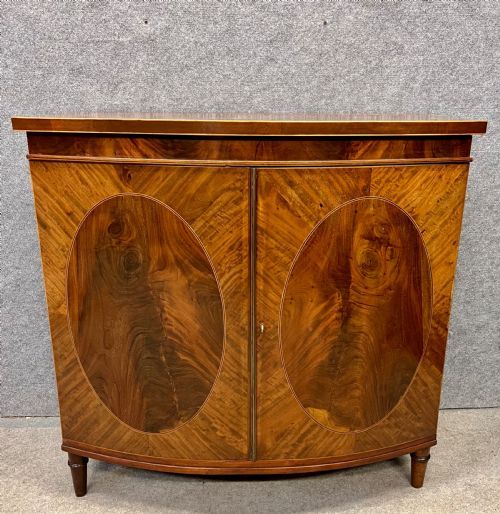
These oval drinks table pieces combine serving trays with sturdy stands, offering a practical surface for glassware that shifts easily between rooms.
Oval Drinks Table
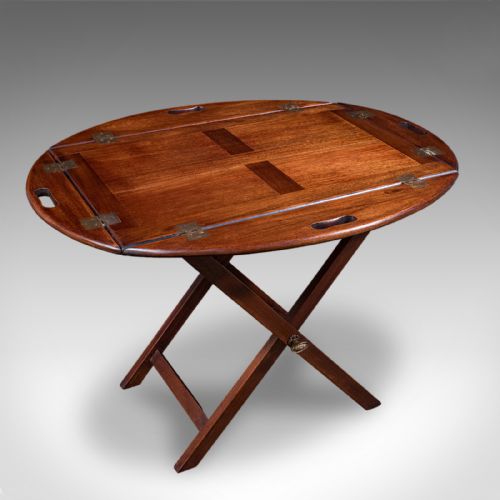
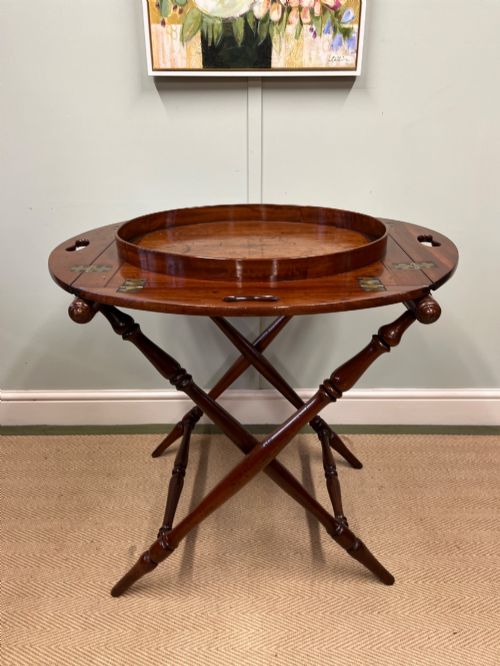
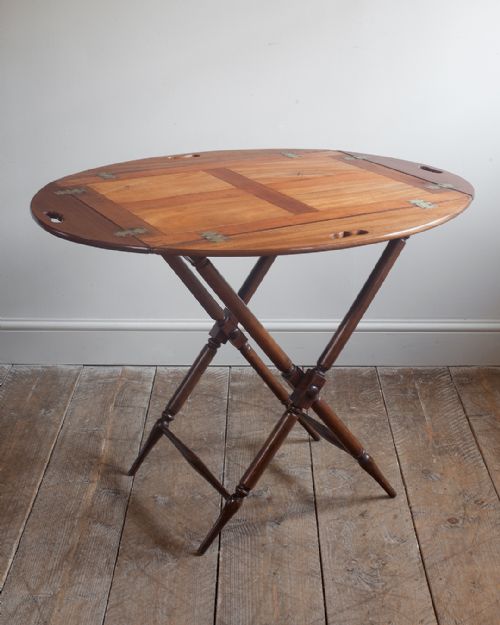
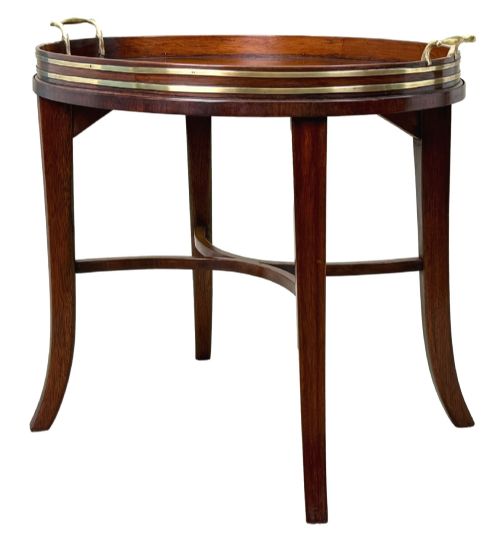
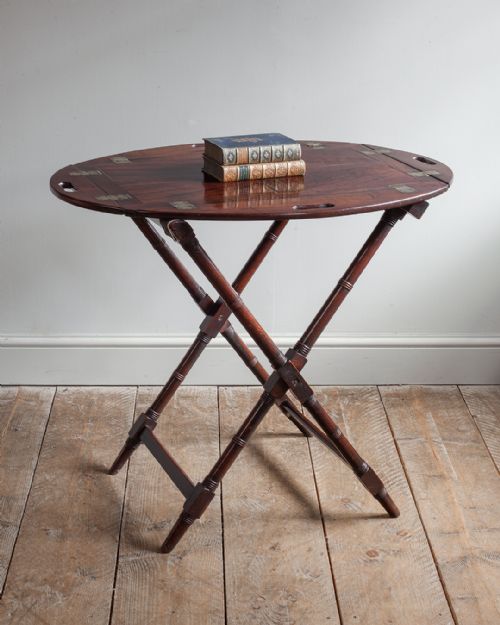
An oval drinks table serves as both a removable tray and a stable stand, descending largely from traditional butler's equipment used in formal houses. The versions most commonly encountered on this page take the form of mahogany or satinwood trays resting upon folding or fixed wooden stands, often featuring raised galleries or side cut-outs for handles.
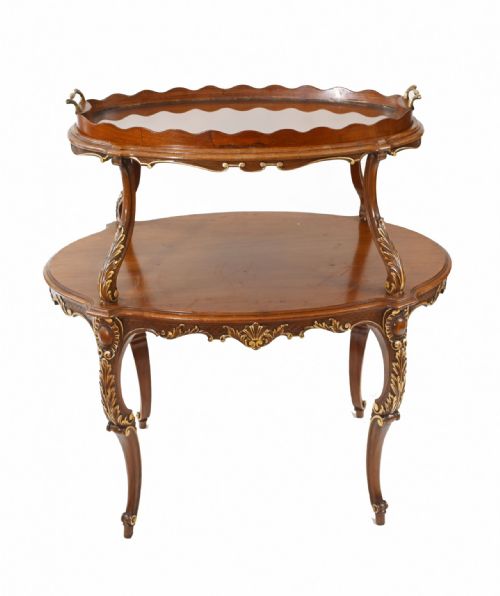
Beyond traditional butler's formats, the selection includes tiered etagere tables, occasional tables with glass serving trays, and occasional side tables from the Georgian, Victorian, and Edwardian eras. These pieces bridge the gap between portable serving equipment and permanent living room furniture.
Makers and craftsmen across the eighteenth, nineteenth, and early twentieth centuries adapted these forms in mahogany, walnut, and oak, sometimes incorporating brass banding or delicate inlay work. Each variation reflects the prevailing taste of its period, from the clean lines of the Georgian era to the revival styles popular in the Edwardian period.
Materials and construction
Cabinet makers relied primarily on mahogany and walnut as the foundational timbers for these pieces, often selecting figured grain for the tray surfaces and sturdy native hardwoods for the supporting stands. Satinwood inlay and contrasting stringing frequently provide decorative borders around the oval perimeter.
Metal components such as brass carrying handles, hinges, and decorative binding serve both a functional and an aesthetic purpose on butler's trays and campaign stands. Joinery methods prioritise durability to support the weight of bottles and glassware during transport.
Listings feature items spanning the Georgian, Regency, and Edwardian periods, constructed primarily in mahogany, walnut, and satinwood.
Assessing quality and craftsmanship
The distinction between standard utility items and superior examples lies in the selection of timber and the crispness of the inlay work. Finer pieces display carefully matched mahogany veneers, precise dovetail or mitred joints on the tray galleries, and substantial brass fittings that fit flush into the wood.
The integration between tray and stand dictates the overall harmony of the piece, where superior stands offer rigid support without wobbling while allowing the tray to lift off smoothly. Condition of the polished surface, retention of original brassware, and subtlety of satinwood or marquetry details separate workshop output from mass production.
The Oval Drinks Table Glossary
- Butler's tray
- A portable wooden tray with hinged or fixed sides, designed to rest on a folding or rigid stand for serving food and beverages. These trays often feature integral cut-out handles for easy lifting.
- Etagere
- A set of open tiered shelves used for displaying objects or serving drinks, popular in various forms from the nineteenth century onward. They provide multiple levels of surface area in a compact footprint.
- Gallery
- A raised wooden or metal rim running around the edge of a tray or table top to prevent items from sliding off. On better pieces, the gallery is formed from shaped timber rather than applied strips.
- Brass bound
- Reinforcement of edges or corners using strips of brass, commonly found on campaign and serving furniture to protect against heavy use. This detail also adds a distinct visual contrast to dark timbers like mahogany.
- Inlay
- The technique of inserting pieces of contrasting wood, such as satinwood, into recesses within a primary timber to create decorative patterns. It requires high precision from the woodworker to achieve tight joints.
Oval Drinks Table: Frequently Asked Questions
Can I use an antique tray on stand daily?
These pieces were built for active service in domestic environments, making them well-suited for holding drinks and glassware during gatherings.
Treat the polished wooden surfaces with standard care, using coasters to protect the antique finish from moisture rings.
How do I distinguish a Georgian tray from an Edwardian copy?
Georgian examples generally exhibit heavier timber construction, hand-cut joinery, and simpler functional lines without excessive factory-produced decorative elements.
Edwardian pieces often revive earlier styles but incorporate brighter satinwood inlay, lighter framing, and machine-assisted precision in the secondary woods.
Are the trays permanently attached to the stands?
Most traditional butler's trays lift completely off their folding or fixed bases, preserving the original dual function of portable tray and standing table.
Some etagere or tiered versions feature fixed shelves, so checking the specific format helps determine whether the top removes.
What woods were commonly used for these tables?
Mahogany remains the dominant timber across the majority of these pieces, valued for its stability and rich grain.
Walnut, oak, and satinwood appear frequently in specific regional or period items, often accented with brass hardware.