





Oval Cut Blue Sapphire
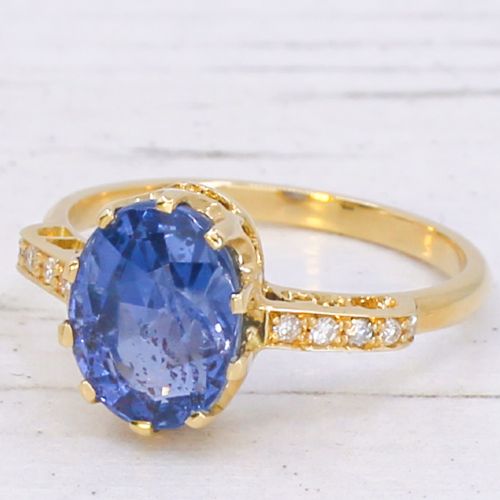
An oval cut blue sapphire possesses a distinct depth of colour that draws the eye across rings, earrings, and pendants.
Oval Cut Blue Sapphire
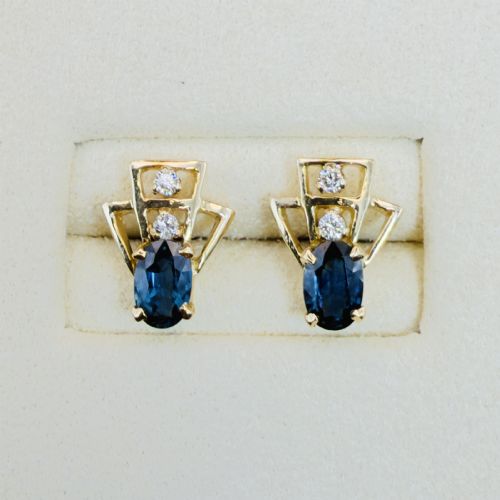
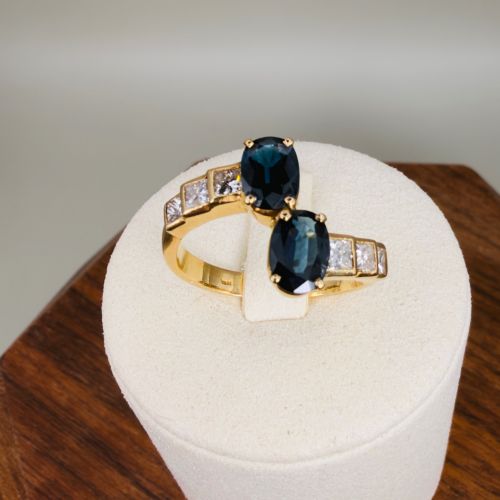
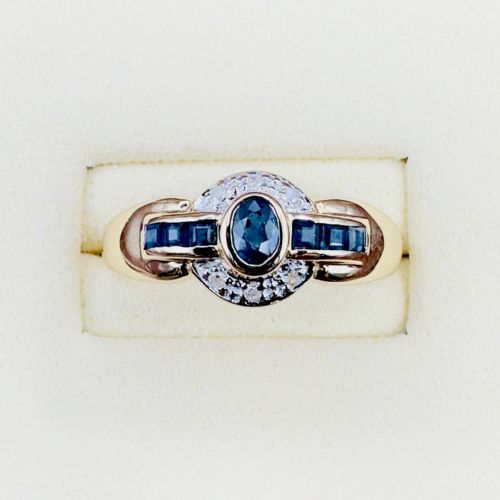
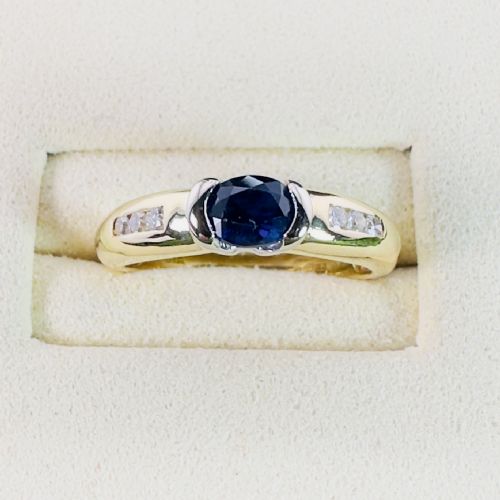
When you search for an oval cut blue sapphire, you encounter a selection of jewellery dominated by rings, alongside a smaller number of earrings and pendants. These pieces span several distinct eras, including Victorian, Edwardian, Art Deco, and Mid-Century designs.
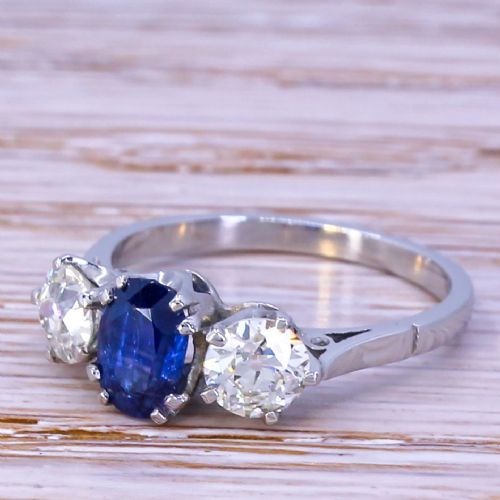
The stones themselves vary in origin and treatment, with notable examples originating from Ceylon and Burma. Many feature diamond surrounds or diamond accents set in cluster, solitaire, or trilogy arrangements.
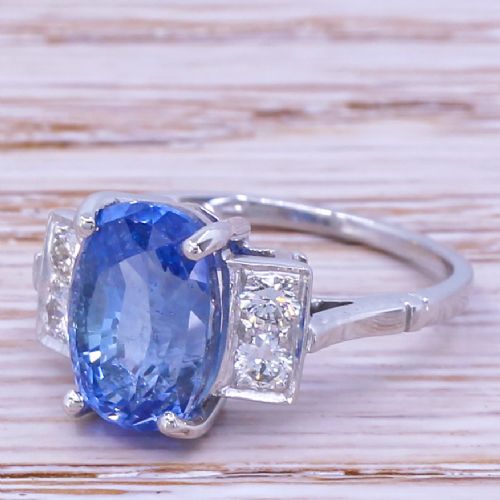
You are most likely to meet mid-century or art deco rings featuring central oval sapphires flanked by diamonds in gold or platinum settings. The historical scope ranges from antique Victorian creations up to late twentieth-century examples.
Materials and construction
Makers set these stones in a variety of precious metals, predominantly 18ct yellow gold, platinum, and occasionally 14ct or 9ct gold. Platinum and yellow gold frequently appear together in edwardian and art deco pieces to highlight the central gemstone.
Diamonds play a supporting role in the construction, utilising old cuts, rose cuts, princess cuts, and brilliant cuts to frame the primary oval stone. Cluster and trilogy settings are constructed to secure both the sapphire and its diamond surrounds safely within the metalwork.
Listings feature periods from the Victorian era through Art Deco and Mid-Century, utilising platinum and gold alongside Ceylon and Burmese sapphires.
Distinctions in quality
The distinction between tiers of pieces rests upon the provenance and natural state of the sapphire, particularly whether the stone is unheated and its geographical origin, such as Ceylon or Burma. Weight also plays a role, with larger carat sizes commanding attention.
The calibre of the accompanying diamonds and the precision of the metalwork, whether executed in platinum or gold during periods like the art deco era or mid-century, define the overall execution of the jewellery.
The Oval Cut Blue Sapphire Glossary
- Ceylon sapphire
- A sapphire originating from the island of Sri Lanka, known historically as Ceylon. These stones often exhibit a bright and vivid blue hue.
- Cluster ring
- A ring featuring a central gemstone surrounded by a group of smaller stones, typically diamonds. This arrangement maximises the visual impact on the finger.
- Trilogy ring
- A ring set with three stones in a row, often interpreted symbolically as representing the past, present, and future. In these listings, they pair an oval sapphire with diamonds.
- Old cut diamond
- A diamond cut by hand before modern machinery, characterised by a smaller table, higher crown, and open culet. These stones possess a softer, candlelit sparkle compared to modern brilliant cuts.
- Unheated sapphire
- A gemstone that has undergone no thermal enhancement to improve its colour or clarity. Natural stones of this description are prized by collectors.
Oval Cut Blue Sapphire: Frequently Asked Questions
What is an oval cut blue sapphire?
An oval cut blue sapphire is a faceted gemstone shaped in a symmetrical curve, set into items such as rings, pendants, and earrings. These stones often appear alongside diamonds in historical settings.
Such pieces range from Victorian examples to mid-century creations, utilising yellow gold, 18ct gold, and platinum as mounting metals.
How do I style a sapphire ring?
Sapphire rings work well worn alone as a focal point or paired alongside complementary bands. Their versatile oval shape flatters the hand.
Consider the metal colour of your other accessories when selecting between yellow gold, platinum, or two-tone mountings.
Are these sapphires natural?
The selection includes natural sapphires, with several specified as unheated stones originating from regions like Ceylon and Burma. Each piece reflects the gemstone characteristics of its period.
Treatments and origins are noted where recorded, distinguishing unheated stones from standard commercial gems.
What periods do these pieces come from?
The pieces originate from a diverse timeline spanning the Victorian and Edwardian eras, through the 1920s and 1930s art deco period, up to the 1950s and 1960s mid-century years.
Each era brings distinct design sensibilities, from delicate platinum edwardian clusters to bold mid-century solitaire and cluster configurations.