



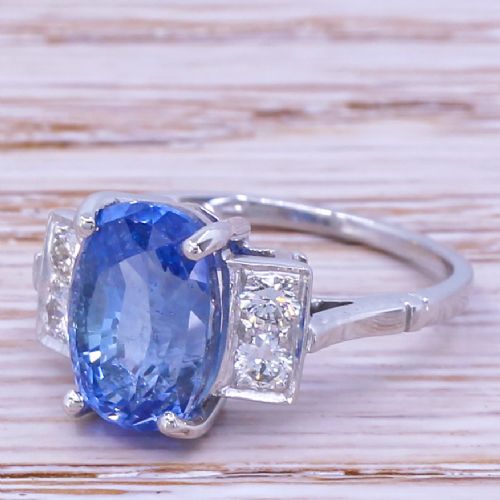

Oval Ceylon Sapphire Ring
An oval ceylon sapphire ring brings together a bright cornflower stone and the structured work of twentieth-century workshops.
Oval Ceylon Sapphire Ring
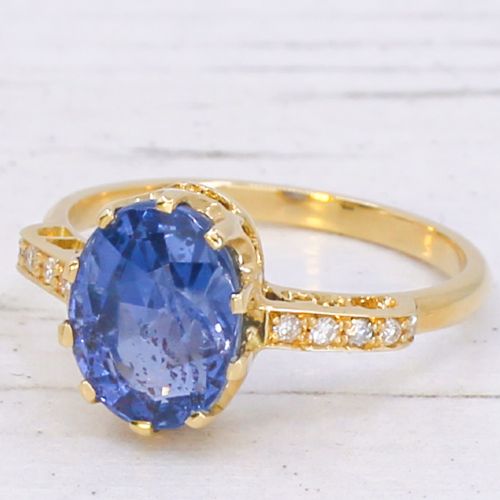
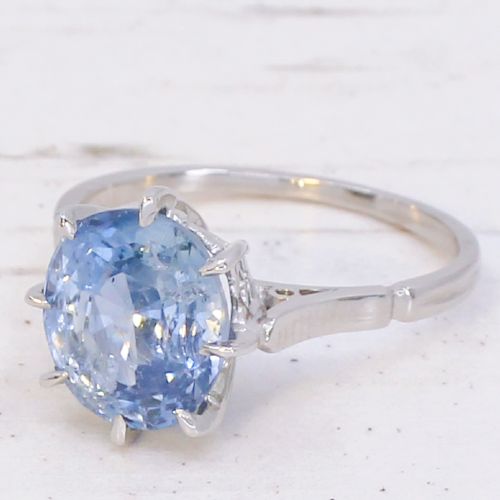
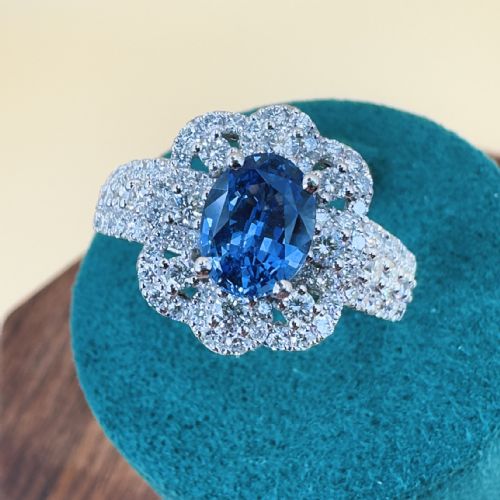
An oval ceylon sapphire ring centres on a distinct blue stone mined in Sri Lanka, shaped into a curved oval outline. These pieces appear across several twentieth-century periods, including Edwardian, Art Deco, and Mid-Century designs.
The collection relies heavily on rings and larger cocktail rings configured as solitaires, clusters, or trilogies. Platinum and yellow gold serve as the primary settings, frequently accompanied by diamonds or natural pearl.
Buyers meet examples spanning from late Victorian and Edwardian iterations through to mid-century modern and late twentieth-century creations. The stones range from modest weights up to substantial multi-carat examples.
Materials and construction
The construction relies on precious metals such as platinum and eighteen-carat yellow gold to secure the central stones. Master jewellers form robust claws or bezels to hold the heavy oval sapphires safely within the mount.
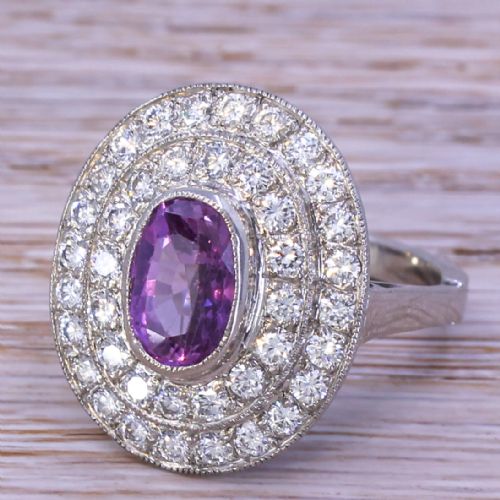
Diamonds appear alongside the main gems, often arranged in intricate cluster patterns or flanking the shoulders of the band. Natural pearls also feature in specific early trilogy configurations, paired with yellow gold.
The listings span seven distinct decades, stretching from late Victorian and Edwardian periods into the late twentieth century.
Assessing quality in the collection
Quality rests upon the natural clarity and saturation of the sapphire itself, alongside the precision of the stone-cutting. Unheated stones and those possessing significant carat weight hold a distinct place in the hierarchy of these rings.
The metalwork integrity and the harmony of the accompanying diamond settings dictate the overall standard of the piece. Fine claw work and well-balanced platinum or gold mounts separate standard output from exceptional examples.
Le Vian
The Oval Ceylon Sapphire Ring Glossary
- Ceylon Sapphire
- A natural corundum gemstone originating from Sri Lanka, known for a bright and lively blue tone. These stones form the central focus of the rings listed here.
- Cluster Ring
- A design featuring a central gemstone surrounded by a border of smaller stones, typically diamonds. This arrangement maximises the visual impact on the hand.
- Solitaire Ring
- A mounting holding a single dominant gemstone without supplementary side stones. This style showcases the character and scale of the central oval sapphire.
- Trilogy Ring
- A setting composed of three stones placed in a row across the finger. In these listings, the configuration pairs sapphires with natural pearls or diamonds.
- Cabochon
- A gemstone cut with a smooth, rounded convex top rather than faceted surfaces. This traditional polishing method highlights the depth of the material.
Oval Ceylon Sapphire Ring: Frequently Asked Questions
What periods do these rings come from?
The pieces span from late Victorian and Edwardian eras through Art Deco and Mid-Century modern periods. Later twentieth-century examples also appear within the selection.
Each era brings distinct mounting styles, ranging from delicate platinum cluster arrangements to bold yellow gold cocktail designs.
Are the sapphires treated?
Several listings specify unheated stones, noting their natural state directly from the earth. These untreated sapphires retain their inherent optical characteristics.
Other examples present natural ceylon sapphires shaped into smooth cabochons or brilliant oval facets.
What metals are used in the settings?
Platinum and yellow gold dominate the structural framework of the rings. Platinum provides a sturdy, bright white contrast for diamond clusters.
Eighteen-carat yellow gold appears frequently in early twentieth-century and trilogy configurations, lending warmth to the design.
How do cluster rings differ from solitaires?
Cluster rings surround the primary oval sapphire with a border of smaller diamonds, creating a wide presence on the finger. Solitaires feature the single central stone alone.
Both forms utilise high carat weights, though cluster designs incorporate substantial additional diamond content.