

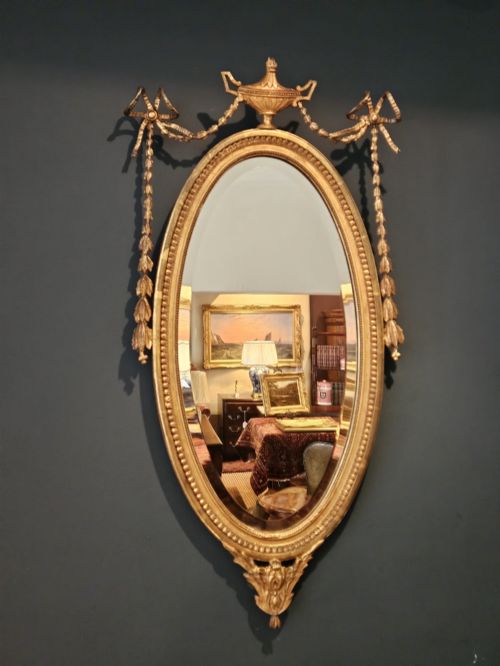
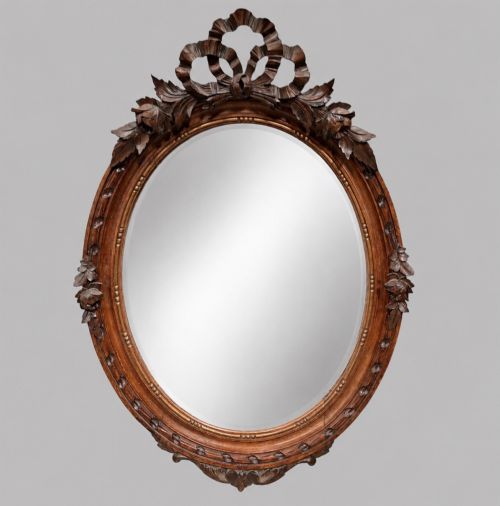
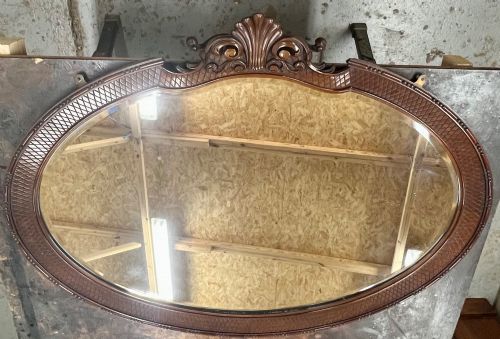
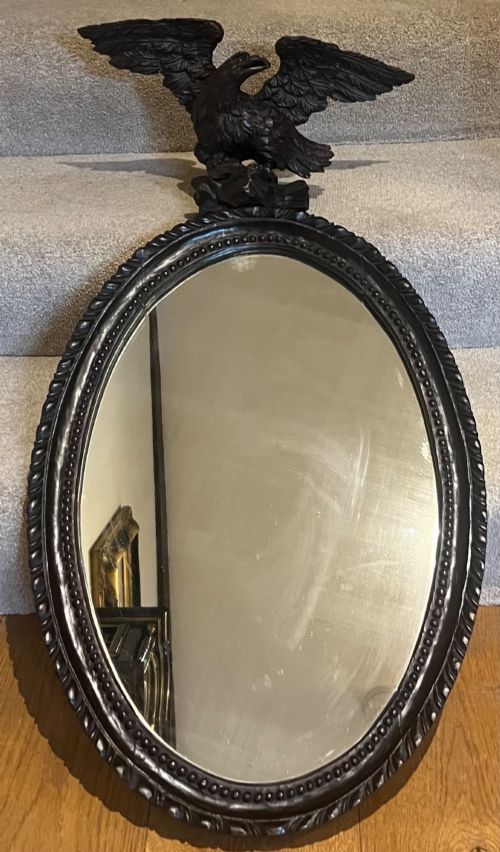


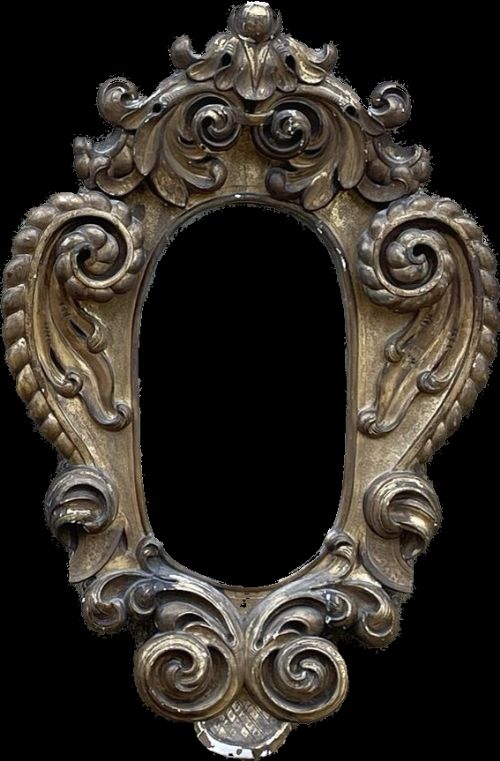
Oval Carved Wooden Mirror
An oval carved wooden mirror brings warmth and depth to a room, offering a softer silhouette than standard rectangular frames.
Oval Carved Wooden Mirror
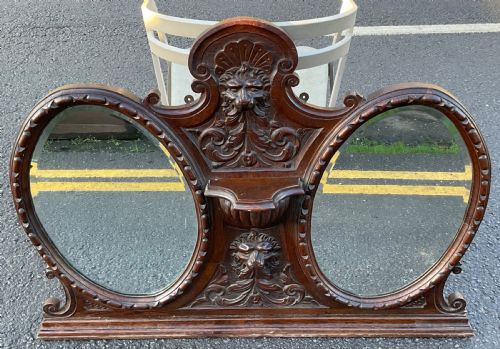
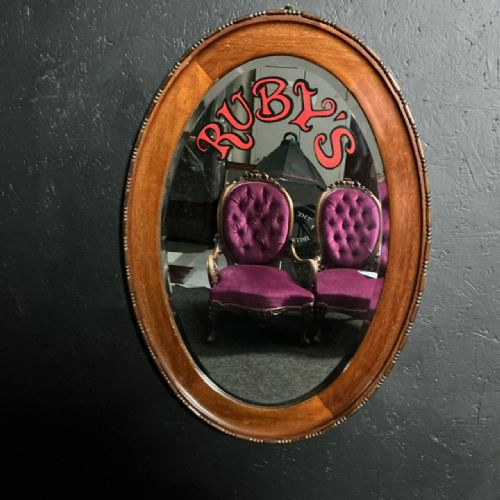
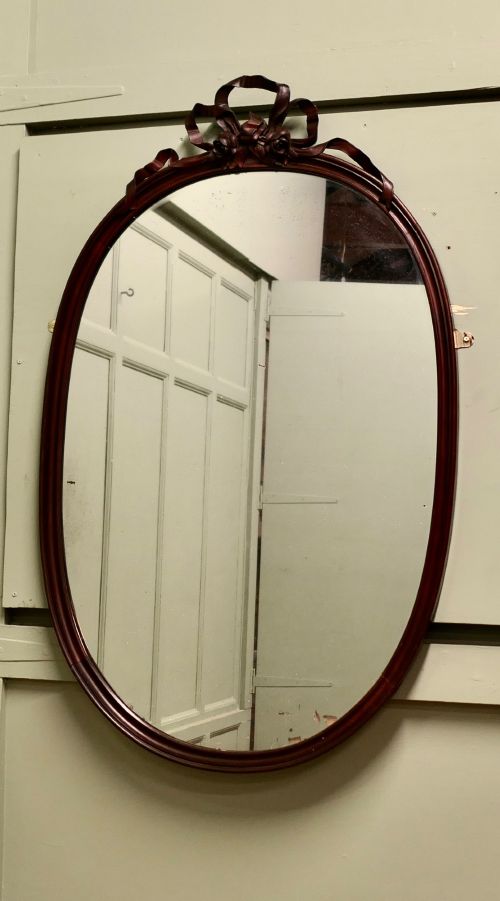
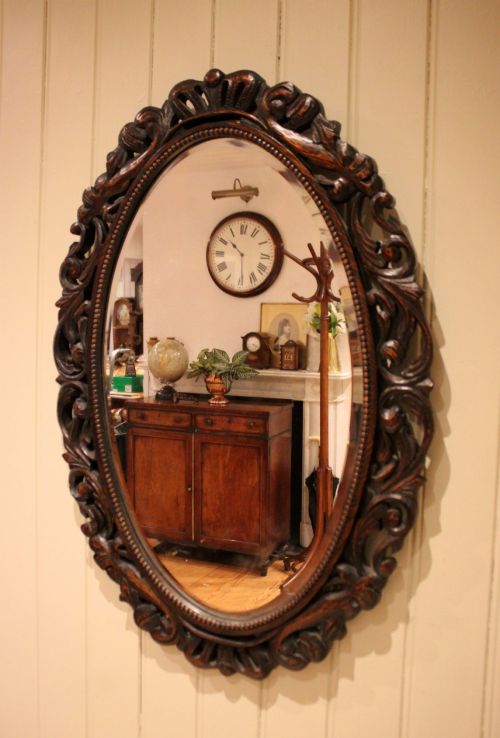
An oval carved wooden mirror is a functional and decorative wall hanging or table accessory, most commonly encountered here as a wall mirror or a dressing table mirror. These pieces span centuries of design, with domestic timber frames ranging from compact Edwardian examples to substantial country house proportions.
The selection encompasses diverse regional interpretations, including Scottish mahogany fretwork and Black Forest work alongside continental French Rococo and Italian Baroque styles. Buyers frequently select these items for hallways, living spaces, and bedrooms where the curved frame softens architectural angles.
How these mirrors were constructed
Makers utilised solid timbers such as mahogany, oak, and beech for the primary structure, often applying gesso and gold leaf to create gilded finishes on giltwood frames. Woodcarvers shaped the frames by hand, employing techniques visible in detailed foliage, rope twists, and crests.
Reflecting surfaces consist of glass, sometimes bevelled, set securely into the timber rebates behind protective backboards. Brass fittings and hardware frequently support the hanging mechanisms and swing pivots on dressing table iterations.
Oval Carved Wooden Mirror Retail Price Guide 2026
Typical asking prices for oval carved wooden mirror among the pieces listed under this phrase on Sellingantiques today, from the lower quarter to the upper quarter. They describe what is for sale here now, not the wider market.
The documented object types span wall mirrors, dressing table mirrors, cheval mirrors, and wardrobe mirror doors.
What separates the finest examples
Quality rests in the depth and crispness of the hand carving, where proficient artisans achieved clean undercut details and balanced symmetry across the wooden frame. The choice of timber also dictates the standard, with richly figured mahogany and substantial oak marking superior workshop production.
The integrity of the original giltwood, gesso, and surface finish influences the desirability of the piece. Retaining genuine antique glass and traditional joinery elevates an example above later replacements or mass-produced revivals.
The Oval Carved Wooden Mirror Glossary
- Giltwood
- Wood that has been coated with gold leaf over a prepared gesso ground. This finish appears frequently on formal 18th-century and 19th-century frames.
- Gesso
- A plaster-like mixture applied to wooden frames as a smooth base for gilding. It allows carvers to achieve sharp ornamental detail before applying gold leaf.
- Cheval mirror
- A freestanding full-length mirror hung on a frame with pivoting side supports. These large pieces allow the glass to tilt at various angles.
- Fretwork
- Thin wood ornamentation cut with a fretsaw into decorative open patterns. Scottish makers often applied this technique to mahogany frames.
- Bevelled
- Glass with edges ground and polished at an angle to create a framed optical border. This treatment adds perceived depth to the reflecting surface.
Oval Carved Wooden Mirror: Frequently Asked Questions
How do I hang a heavy wooden mirror?
Heavy carved wooden frames require secure fixings screwed directly into wall studs or masonry using appropriate wall plugs. Ensure the hanging wire or integrated brass loops can support the substantial weight of the timber and glass.
Position the mirror at eye level to balance the room and prevent strain on the wall fixings over time.
How do I clean antique wooden frames?
Dust the carved wooden frame gently with a dry, soft-bristled brush to remove accumulated dirt from the recesses without disturbing the surface. Avoid using liquid polishes or harsh chemical sprays that can degrade historic wood finishes and gilding.
Clean the glass with a mild glass cleaner applied to a cloth rather than sprayed directly, preventing moisture from seeping behind the mirror plate.
Are these mirrors suitable for bathrooms?
Most antique wooden mirrors feature historic finishes and unsealed timbers that are sensitive to high humidity and moisture fluctuations. Placing them in steam-prone bathrooms can cause the wood to warp and the silvering on the glass to degrade.
Keep these pieces in dry living areas, hallways, or bedrooms where the environment protects the frame and mirror plate from damage.
How can I tell a Georgian mirror from a later revival?
Examine the timber construction, backboards, and fixings for signs of age, hand-tool marks, and period-appropriate joinery. Georgian and Regency pieces typically show authentic patination and construction methods distinct from Edwardian or later revival interpretations.
Look closely at the glass plate, as older mirrors often exhibit subtle distortions, minor foxing, or handmade characteristics absent in modern replacements.