
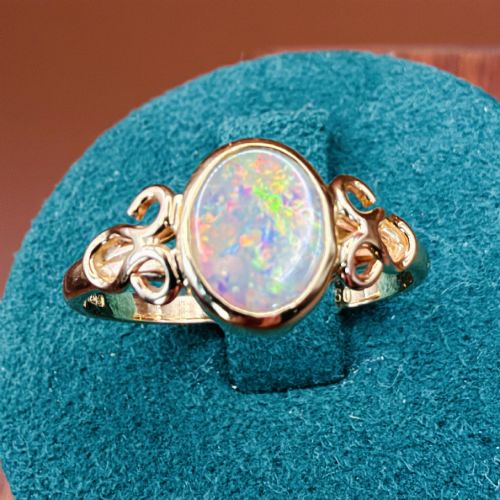
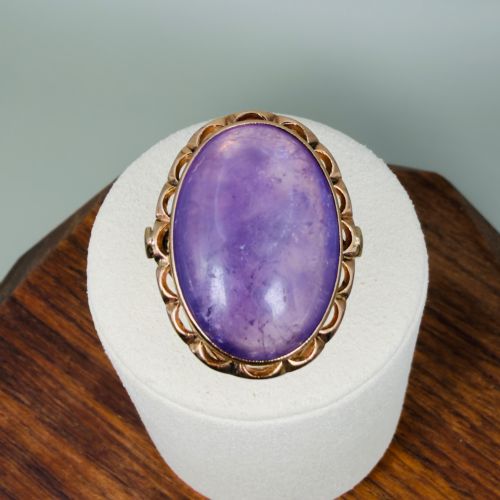
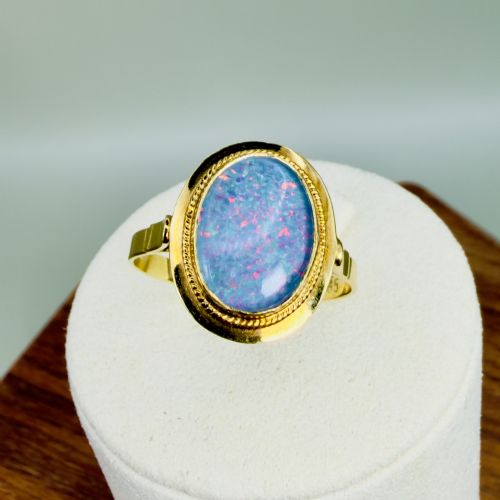
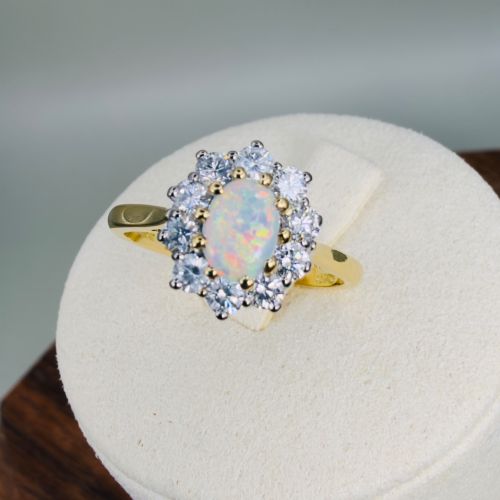




Oval Cabochon Ring
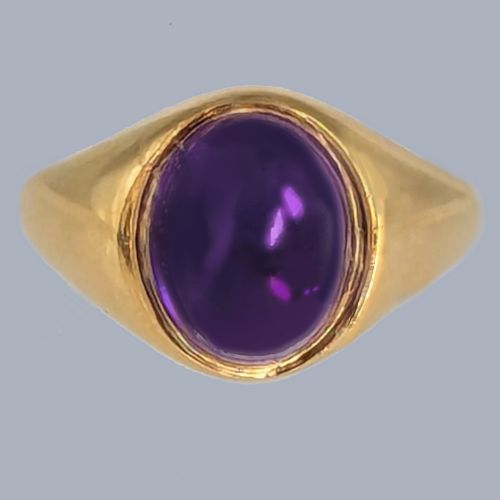
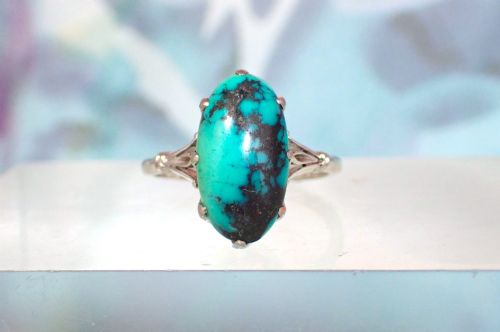
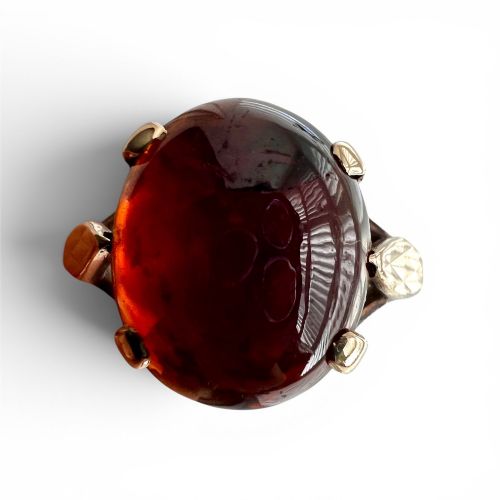
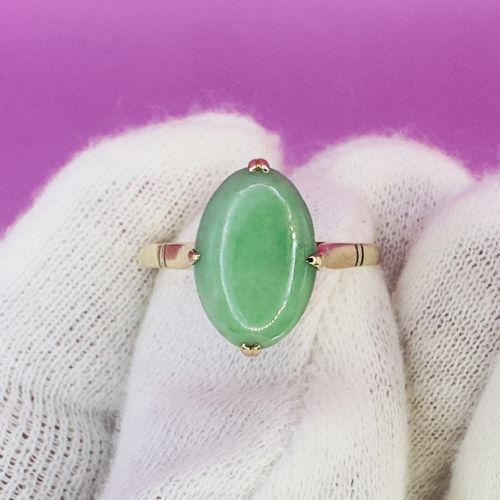
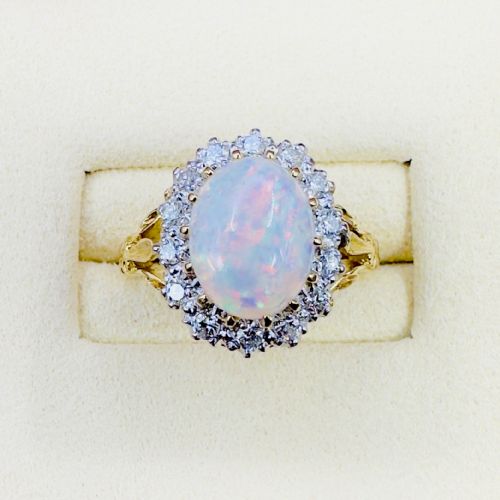
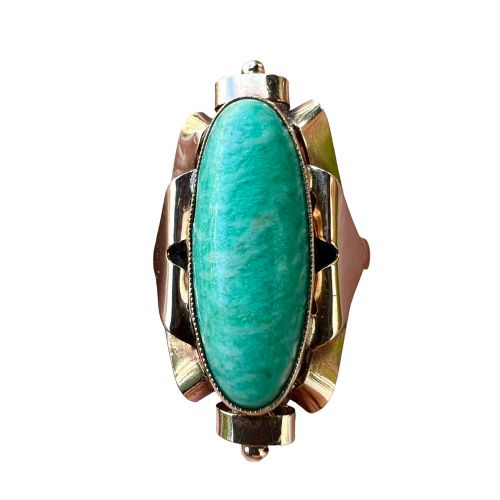
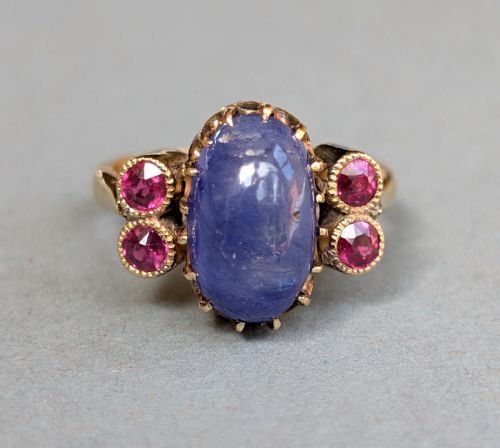
An oval cabochon ring brings together a smooth, rounded polished stone and a secure metal setting that draws the eye directly to the depth of the gem.
Identifying an oval cabochon ring
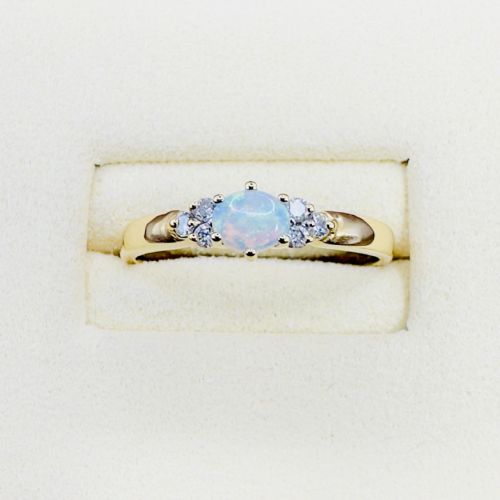
The most common iterations on this page include solitary stones mounted on simple bands or surrounded by smaller accent gems. Gems span red carnelian, deep amethyst, black boulder opal, and substantial sapphires.
Metal choices vary across eras, ranging from nine-carat and fourteen-carat yellow gold to platinum. The forms range from eighteenth-century Georgian designs to mid-century heavy gold dress rings.
Materials and construction
Metals such as platinum and various carats of gold form the structural bands and settings that hold the large central stones. Workshops shaped these metals by hand or cast them to accommodate the curving profiles of the polished gems.
Stones are cut as cabochons rather than faceted, meaning lapidaries ground and polished rough material into smooth domes. This technique highlights the natural optical properties, colour banding, or inclusions within the minerals rather than creating surface sparkle.
Retail Price Guide 2026
Typical UK retail prices for oval cabochon ring, calculated from the Sellingantiques database of over a million retail prices indexed since 2003. This retail price guide relies exclusively on Sellingantiques data; no external sources or auction records are used, so the figures do not describe the wider market.
Some mid-century stones weigh nearly twelve carats, ensuring your hand gets a proper daily workout.
Distinguishing quality
Quality rests in the optical character and saturation of the central stone, whether it is a colour-rich sapphire or a vibrant boulder opal. A superior stone displays depth and strong internal light without distracting blemishes.
The weight and gauge of the metal setting also dictate standard. Substantial gold weights and precise claw or bezel work reflect higher craftsmanship compared to lighter, thinner mounts.
The Oval Cabochon Ring Glossary
- Cabochon
- A gemstone shaped and polished with a smooth, convex dome rather than flat facets. This cut is historically used for opals, stars, and deeply coloured stones.
- Solitaire
- A piece of jewellery featuring a single set gemstone. This setting draws focus entirely to the central mineral.
- Bezel setting
- A method of holding a gemstone in place using a narrow strip of metal that wraps around the perimeter of the stone. It offers secure protection for softer minerals.
- Hallmark
- An official stamp or marks pressed into precious metal indicating purity and origin. These tiny marks help verify the period of manufacture.
Frequently Asked Questions
How do I care for my ring?
Clean your jewellery gently using warm water and a soft cloth to avoid scratching softer gems like opals.
Store pieces separately in lined boxes to prevent stones from rubbing against each other.
Are these rings suitable for daily wear?
Durable metals and hard stones like sapphire handle regular wear well when set securely in a mount.
Softer or porous materials like opal require more care and should be removed during heavy manual tasks.
How can I tell the period?
Examine the metal hallmarks, setting style, and overall cut of the gemstone for clues regarding era.
Georgian and Victorian pieces often feature hand-cut foils or closed-back settings, while Art Deco leans towards geometric platinum layouts.
What is a boulder opal?
A boulder opal is a natural type of opal where the precious stone remains embedded in its host ironstone matrix.
This background matrix provides strength and adds dramatic contrast to the play of colour across the dome.