



Oval Brass Bucket
An oval brass bucket is a sturdy, bound container that brings period craftsmanship and practical storage to a hearth or dining room.
Oval Brass Bucket
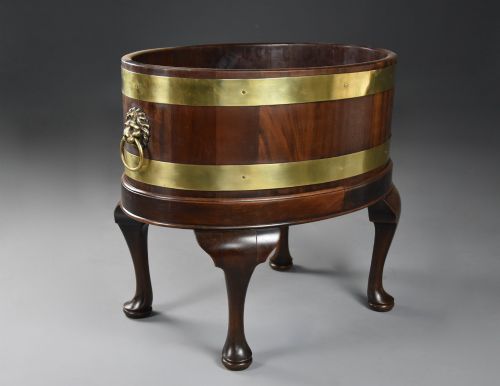
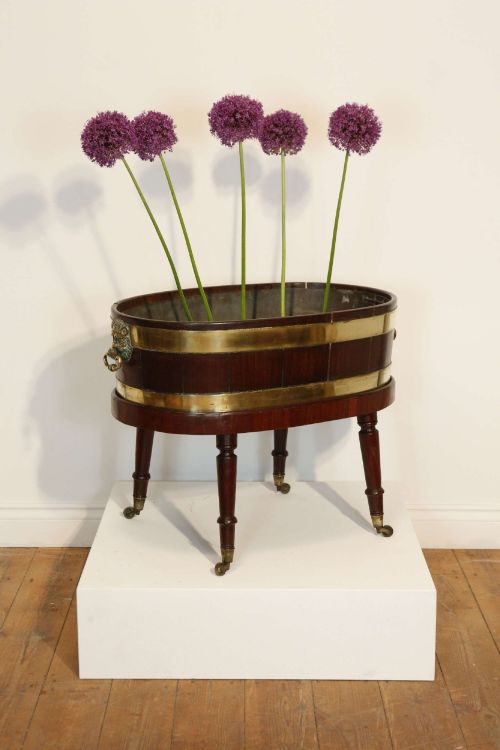
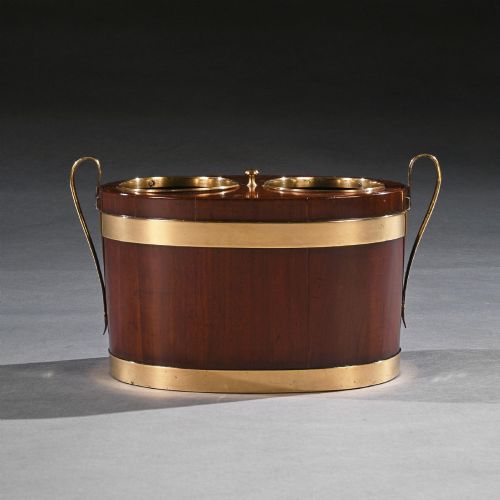
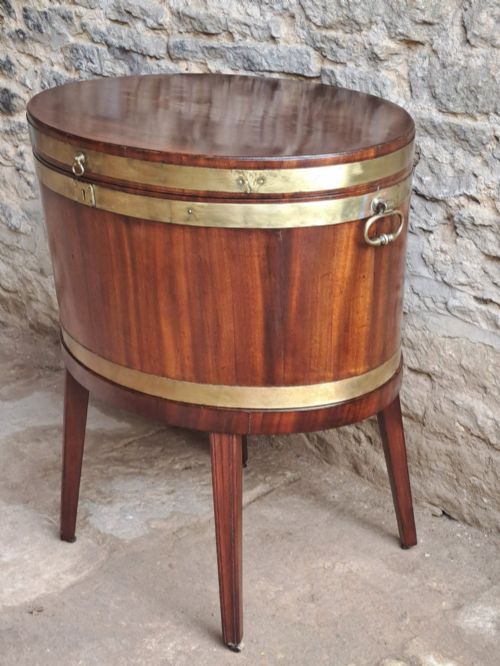
When you search for an oval brass bucket, you encounter primarily 18th century and Georgian wine coolers, cellarettes, and jardinières fashioned from rich timbers. These vessels served wealthy households for chilling wine or holding plants, often resting on matched stands or floorboards.
The most common examples on this page are George III mahogany wine coolers bound with heavy brass bands. You will also find Victorian peat buckets, walnut tea stoves, oak umbrella stands, and lidded copper or brass log bins from later periods.
How they were made
Coopers and cabinetmakers constructed these bodies using traditional stave construction, fitting solid timbers of mahogany, walnut, or oak together tightly. They then secured the curved sides with heavy brass bands and riveted straps.
Makers added zinc linings to protect the wood from moisture when used for ice, wine, or plants. Handles, lion mask rings, and occasionally inlaid boxwood details completed the exterior finish.
Oval Brass Bucket Retail Price Guide 2026
Typical asking prices for oval brass bucket among the pieces listed under this phrase on Sellingantiques today, from the lower quarter to the upper quarter. They describe what is for sale here now, not the wider market.
Listings span the Georgian, Victorian, and Edwardian eras, pairing solid mahogany, oak, and walnut with heavy brass and copper work.
What varies in quality
The distinction between ordinary and superior pieces lies in the choice of timber and the crispness of the cooperage. Finely figured mahogany and walnut with deep, warm patinas separate high-status dining room pieces from utilitarian hallway umbrella stands.
Original stands, intact zinc linings, and robust, heavy-gauge brass work elevate a piece. Later revivals and utilitarian items show simpler construction and less refined joinery.
Samual Norman
The Oval Brass Bucket Glossary
- Coopered
- Built from vertical wooden staves fitted together and bound with metal hoops, much like a barrel. This method gave the oval shape structural strength.
- Cellarette
- A bottle container used during formal meals to hold wine near the dining table. They frequently share the oval brass-bound bucket form.
- Jardinière
- An ornamental pot or stand designed to hold indoor plants or flowers. These often share the waterproofed interior of a wine cooler.
- Peat bucket
- A deep lidded container used to store peat fuel by the fireplace. They typically feature heavy brass carrying handles.
- Patina
- The surface sheen and colour developed by aged wood over centuries of handling and polishing. Good examples display a rich, deep glow.
Oval Brass Bucket: Frequently Asked Questions
What were oval brass buckets used for originally?
These vessels primarily functioned as wine coolers or cellarettes in Georgian dining rooms, holding bottles and ice during long meals. Some later variants served as indoor plant jardinières, umbrella stands, or hearthside log bins.
Their watertight zinc linings allowed servants to pack them with ice without damaging the polished mahogany or walnut staves on the exterior.
How do I tell an 18th century piece from a Victorian revival?
Eighteenth century examples rely on dense, richly grained mahogany or walnut timbers with hand-beaten brass bands secured by distinct handmade rivets. The patination on the wood shows deep age and regular historical maintenance.
Revival pieces from the Victorian era often use machine-cut components, brighter unaged brass, and timber finishes that lack the depth of Georgian cabinetwork.
Why do some buckets have stands and others do not?
Formal dining room wine coolers during the Georgian period frequently rested on dedicated wooden frames or low legs to keep them off cold floors and at a convenient height. Utilitarian items like umbrella stands, peat buckets, and log bins sat directly on the floor.
Pieces designed for stands often display mounting blocks or specific base mouldings underneath the main body.