




Oval Accent Mirror
An oval accent mirror brings focus and reflection to a room, drawing the eye with curved frames of giltwood, mahogany, or gesso.
Oval Accent Mirror
The search for an oval accent mirror reveals pieces spanning the nineteenth century through to the Edwardian period and the early twentieth century, taking forms such as wall mirrors, overmantle pieces, and hall mirrors.
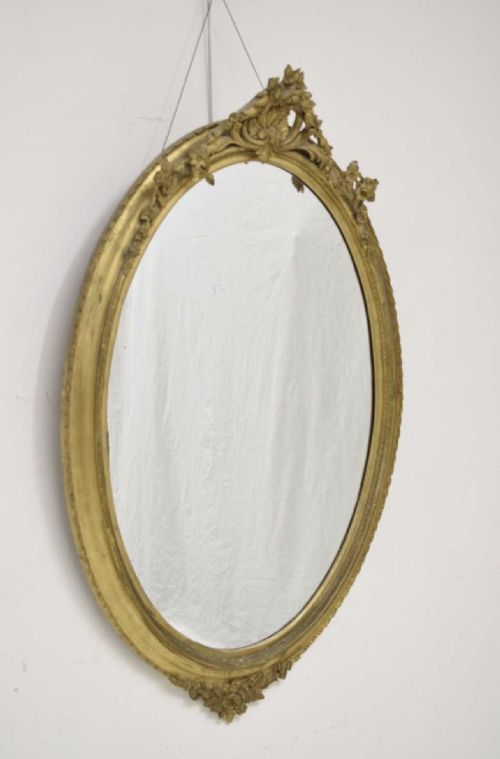
Buyers are most likely to encounter Victorian and Edwardian examples rendered in carved giltwood and gesso, alongside styles that channel Neoclassical, Rococo, Adam, and Louis XVI revivals.
Materials range from traditional timber frames in mahogany and walnut to simulated wood finishes, painted silk, and mirrored glass set within ornate plasterwork.
Materials and construction
Makers shaped wooden carcasses from mahogany, walnut, and general timber before applying coats of gesso and gold leaf to create luminous, reflective frames.
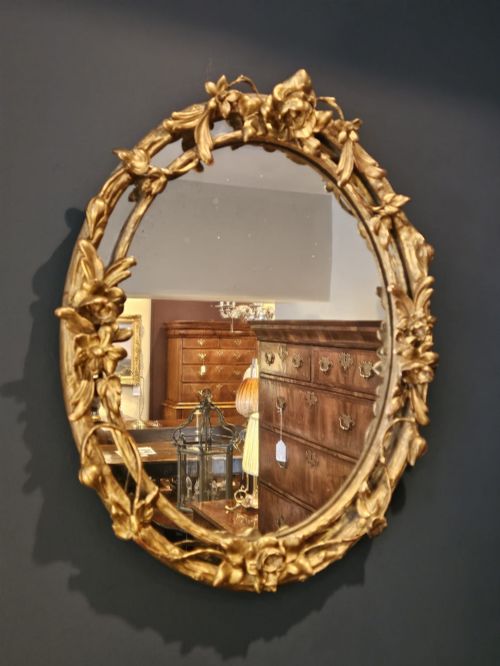
Carved details, rose vine motifs, ribbons, and bows were modelled in composition or carved directly into the wood to achieve the elaborate relief work seen in revival styles.
Oval Accent Mirror Retail Price Guide 2026
Typical asking prices for oval accent mirror among the pieces listed under this phrase on Sellingantiques today, from the lower quarter to the upper quarter. They describe what is for sale here now, not the wider market.
One unexpected piece pairs an oval frame with hand-painted silk, trading traditional gilding for a delicate botanical canvas.
Distinguishing quality
The standard of a piece rests upon the crispness of the hand-carved ornament and the depth of the gilding applied over the gesso base.
Finer examples display harmonious proportions between the central mirrored glass and the surrounding frame, whether executed in rich mahogany or intricate giltwood.
The Oval Accent Mirror Glossary
- Giltwood
- Wood that has been coated with gold leaf. This finish defines many of the classical wall mirrors on this page.
- Gesso
- A plaster-like mixture applied to wood frames as a base for gilding and relief moulding. It allows for sharp decorative details.
- Composition
- A moulded mixture of whiting, resin, and oil pressed into ornament. It is often found on Victorian revival frames.
- Overmantle
- A large mirror designed to hang above a fireplace. These pieces anchor the decor of a traditional room.
- Parcel Gilt
- Woodwork where only specific carved elements are highlighted in gold leaf. The remaining surface shows the natural grain of mahogany or walnut.
Oval Accent Mirror: Frequently Asked Questions
Where should I hang an oval mirror?
These pieces suit hallways, drawing rooms, and above mantelpieces where their curved frames soften hard architectural lines.
Position them at eye level to bounce light across smaller spaces and create a sense of depth.
How do I identify a Victorian mirror?
Victorian examples often feature deep carved giltwood, elaborate rose vine motifs, or heavy gesso frames reflecting revival styles.
Check the timber backing and the characteristics of the glass to understand the age of the piece.
What is an Adam style mirror?
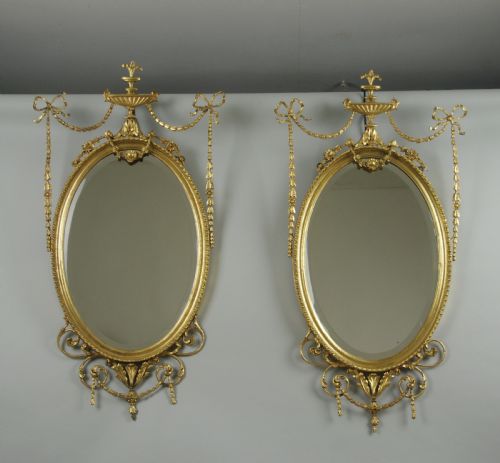
Adam style pieces draw on Neoclassical design principles, featuring symmetrical plaster ornament, urns, and ribbons.
They offer a restrained and balanced aesthetic compared to heavier Rococo revival work.
How do I clean an antique frame?
Dust giltwood and gesso frames gently with a soft dry brush to protect the delicate gold leaf and raised composition details.
Avoid liquid cleaners and moisture, which can damage aged plaster and traditional finishes.