



Ornate Wooden Credenza
An ornate wooden credenza brings substantial architectural presence and rich timber figure into a room.
Ornate Wooden Credenza
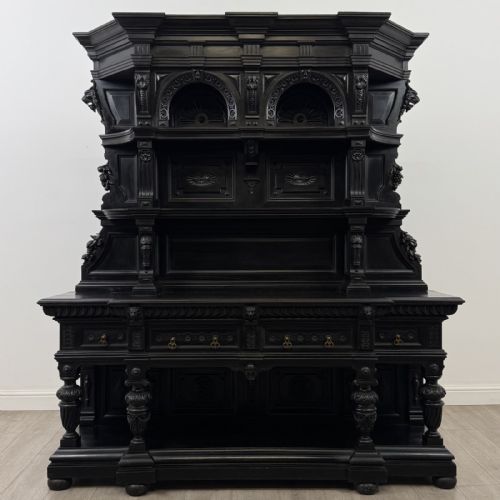
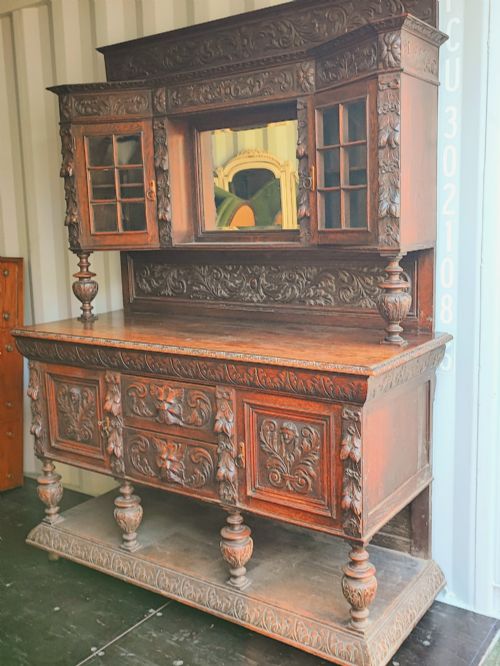
When you search for an ornate wooden credenza, you encounter large storage furniture primarily from the nineteenth century, including Victorian examples alongside revival styles like Renaissance, Jacobean, and Gothic. These pieces function as prominent display cabinets and sideboards, frequently incorporating mirror backs, open shelving, and enclosed cupboards.
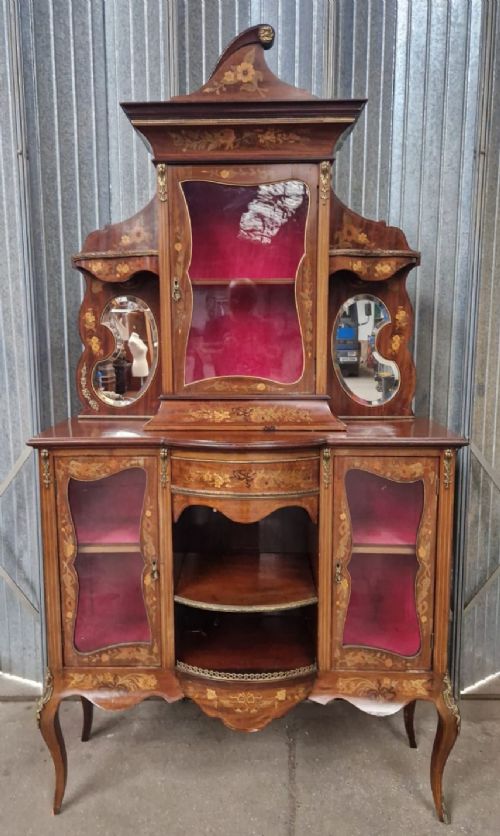
The variants appearing here span from walnut and burr walnut to ebonised hardwood, oak, and padauk. You find serpentine shapes, breakfront pedestals, and cabinets on stands, reflecting diverse nineteenth-century tastes from French and Italian revivals to Anglo-Indian craftsmanship.
Materials and construction methods
Cabinet makers utilised dense hardwoods such as walnut, burr walnut, and oak as the foundational structure, often applying intricate marquetry and contrasting ebonised timber. These surfaces were frequently enhanced with carved details, including lion masks and figural sculpture.
Metalwork played a structural and decorative role, with brass hardware, ormolu mounts, and mirrored glass integrated into the cabinet doors and backsplashes. Joinery combined traditional cabinet-making techniques to support heavy marble or timber tops and substantial glass panels.
Ornate Wooden Credenza Retail Price Guide 2026
Typical asking prices for ornate wooden credenza among the pieces listed under this phrase on Sellingantiques today, from the lower quarter to the upper quarter. They describe what is for sale here now, not the wider market.
One exceptional cabinet carries the hand of a master wood sculptor who clearly believed a simple sideboard needed an Italian fantasy.
Distinctions in quality
Quality rests upon the crispness of the timber carving and the precision of the marquetry inlay. Superior pieces exhibit deeply undercut relief work and carefully selected grain patterns that align harmoniously across the doors and panels.
The integration of secondary materials defines the tier of execution, distinguishing standard production from masterworks featuring specialised ormolu mounts, bevelled mirror glass, and named sculptural provenance.
The Ornate Wooden Credenza Glossary
- Marquetry
- The art of applying pieces of veneer to a structure to form decorative patterns and pictures. Makers select varied timber tones to create pictorial depth.
- Ormolu
- Gilded bronze mounts applied to furniture for decoration. This technique adds metallic contrast to dark wooden surfaces.
- Ebonised
- Timber treated to resemble ebony through staining or painting. This finish gained popularity during the Victorian era to create dramatic dark surfaces.
- Breakfront
- A cabinet design where the central section projects forward from the side sections. This creates visual rhythm and depth across the facade.
Ornate Wooden Credenza: Frequently Asked Questions
Where should I place a credenza?
These large timber cabinets suit dining rooms, grand hallways, or living spaces with sufficient wall length to accommodate their proportions. Their mirror backs and display surfaces work effectively to reflect light and showcase objects.
Ensure the floor is level and sturdy enough to support heavy hardwood furniture, particularly pieces incorporating stone tops or extensive glass components.
How do I care for nineteenth-century walnut?
Maintain walnut and burr walnut surfaces by dusting regularly with a soft, dry cloth and avoiding direct sunlight that can fade the timber grain. Apply specialist wax sparingly to nourish the wood without building up residue.
Keep these cabinets away from direct heat sources and dramatic humidity shifts, which cause timber to warp and veneers to lift over time.
What is the difference between a sideboard and a credenza?
While both provide dining room storage, a traditional credenza often sits lower and may feature sliding or hinged glass doors designed for displaying porcelain and silver. Sideboards frequently incorporate more extensive drawer configurations for cutlery and linens.
Victorian cabinet makers often blurred these distinctions, applying the term credenza to grand display furniture with mirrored backs.
How do I identify revival styles?
Renaissance and Gothic revival pieces display heavy architectural motifs, including columns, carved tracery, and figural reliefs such as lion masks. French and Italian revival designs favour curved serpentine lines, marquetry, and elaborate ormolu mounts.
Examining the secondary timbers, hardware fixings, and carving depth helps distinguish nineteenth-century interpretations from earlier periods.